What you'll get
Digital Product Payment Infrastructure for Global Sellers
Choose digital product payment infrastructure for global sales by comparing processors, Merchant of Record duties, total costs, payouts, and ad research.

Founder & Editor
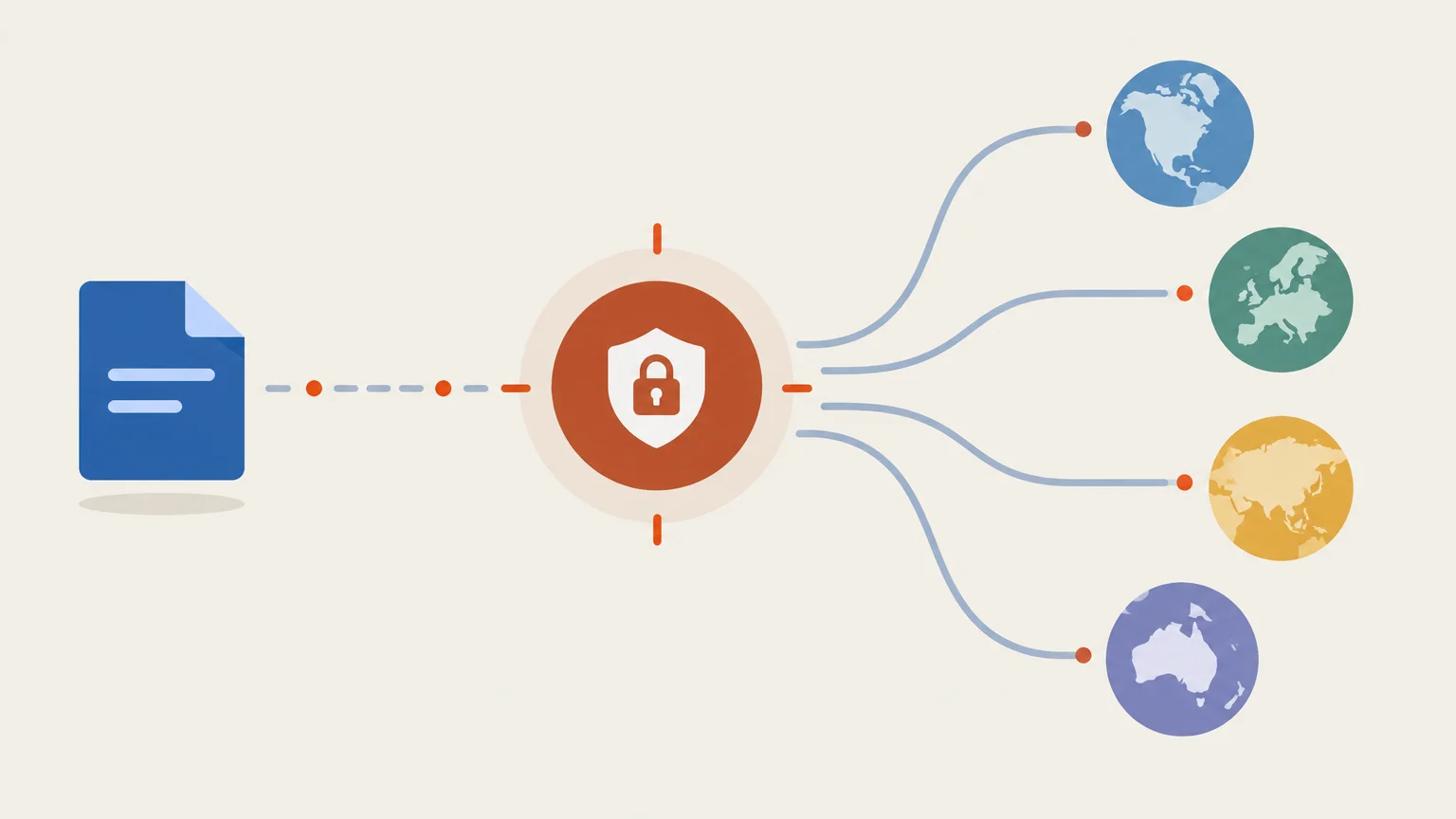
A checkout can accept a customer’s card and still leave the seller with a payout problem, unclear tax duties, or a payment account under review. A useful digital product payment infrastructure connects the buyer’s payment to reliable settlement and product access, while matching the seller’s real business and residence details. Start your shortlist with payment processors for digital products, then check whether each provider’s onboarding rules fit your actual situation.
For a US LLC owner based abroad, “international” support is not one yes-or-no feature. The provider’s permitted business location, owner residency, payout options, customer payment methods, currency conversion, tax arrangement, and review policies all matter. Keep ad-intelligence research separate: a tool that surfaces ads or offers can inform what to test, but it cannot verify that your checkout, payouts, or legal responsibilities fit your business.
What belongs in digital product payment infrastructure?
- Checkout collects payment details and presents the methods a buyer can use.
- A processor or payment service provider routes transactions and reports their status.
- Payouts, records, refunds, disputes, taxes, and product access need their own checks.
A payment setup is more than the checkout button. The customer-facing layer may sit on a storefront or course platform, while a separate provider handles processing and a bank or payout service receives the funds. A download, course, membership, or software product also needs a way to grant access after payment and remove or adjust it when a subscription ends or a refund is issued.
The World Bank’s Global Payment Systems Survey covers payment infrastructure alongside legal and regulatory environments, technology, and business models. That wider view matters to a digital seller: a successful authorization does not, by itself, prove that the transaction can be settled to the seller’s account or that tax and delivery workflows are complete.
For a creator living outside the United States, map the full path before selecting a provider. Record the LLC’s formation country, the owner’s residence, the countries where customers live, the business bank account, and the expected payout destination. Then confirm that the provider accepts that combination. A US LLC alone does not establish that every provider will onboard a non-US resident or support every destination account.
Keep ad-intelligence tools outside this payment map. They help with researching visible ads and offers; they are not checkout providers, processors, payout services, or tax intermediaries. Treat them as a separate research input, not as part of the money movement itself.
Processor or Merchant of Record: who is responsible?
- A processor routes payments, but the seller generally remains the party selling to the customer.
- A Merchant of Record becomes the legal seller for the transaction under its terms.
- The contract, not a marketing label, determines the responsibilities transferred.
Consider a creator selling a downloadable template to buyers in several countries. With a standard payment service provider, the creator’s business typically remains the seller, so the business must understand its own tax, refund, and customer obligations. A Merchant of Record arrangement changes the legal selling relationship and may take on stated tax-related responsibilities. Review the provider’s agreement to see exactly what it assumes and what remains with the LLC.
The distinction is especially relevant for indirect taxes on digital sales. A 2026 IMF working paper brings together tax measures affecting cross-border services and examines them from legal and economic perspectives. It is useful context for why a payment provider’s role and a seller’s tax position should not be inferred from the fact that a checkout collects money.
Compare the arrangement against your tolerance for operating tax registrations, calculations, filings, refunds, and customer records yourself. If shifting some selling and tax-related duties is a priority, read our guide to merchant of record services. The guide can help you identify the questions to resolve, but the provider’s agreement and professional tax advice should determine your obligations.
Neither model is automatically right for every creator. A direct processor may suit a business that wants to remain the seller and manage its own obligations. A Merchant of Record may reduce some administrative work, while also changing the contractual relationship, settlement process, and overall economics. Compare the specific terms rather than assuming that either model covers every country or every tax scenario.
How should a global creator compare provider options?
- Check eligibility using the LLC, owner residence, bank account, and customer locations together.
- Calculate total cost, including processing, currency conversion, payout, subscription, and dispute charges.
- Read the contract for seller status, tax duties, account reviews, and access to funds.
For example, a provider that accepts cards from a customer’s country may still have different rules for onboarding the company or paying out to the owner’s chosen account. Confirm those details before migrating a live course or membership. Review payout methods, timing, reserve terms, account review procedures, and what documents the provider can request if activity changes.
| Option | Who sells to the buyer? | Tax and operating responsibility | What to verify |
|---|---|---|---|
| Direct processor | The creator’s business generally remains the seller. | The business retains its seller obligations, subject to local rules and its contract. | Business and owner eligibility, supported customer locations, payout destination, fees, review rules, and integrations. |
| Merchant of Record | The provider acts as the legal seller under its terms. | The provider takes on the responsibilities specified in the agreement; the seller retains any obligations not transferred. | Covered products and countries, tax scope, refunds, disputes, payout timing, and total charges. |
| Storefront or creator platform with checkout | This depends on the underlying payment arrangement. | The platform name alone does not establish who is seller or responsible for tax. | Identify the underlying processor or Merchant of Record and confirm the same contract, eligibility, and payout details. |
Compare effective cost, not just the advertised processing rate. Model a typical sale and a low-priced sale, then include any fixed transaction charge, currency conversion, payout charge, subscription billing, refunds, and dispute costs that apply. If an applicable value is not confirmed in the official pricing or legal terms, record it as “Non defini pour le moment,” rather than treating it as zero or estimating it.
Our comparisons examine costs at different revenue levels and account for relevant surcharges, currency conversion, subscriptions, and payouts. They also draw on hands-on testing, test accounts, public documentation, and fine print. Vendors do not pay for placement, and they do not review articles before publication; qualifying actions through disclosed affiliate links may generate a commission. These details matter when a comparison is being used to decide whether a headline rate reflects the seller’s actual operating cost.
Digital templates need another practical check: whether the checkout connects cleanly to the delivery process. When templates are the product, compare payment gateways for digital assets against your storefront, file delivery, refunds, and customer support workflow. The payment method is only useful if the buyer receives the correct product and the seller can reconcile the sale.
McKinsey’s 2026 Global Payments Report describes value shifting from checkout screens toward a control layer involving trust, routing, and embedded software. For an online creator, that is a reason to examine the less visible operational details, such as transaction status, settlement records, and system connections, alongside the buyer’s checkout experience.
What can ad-intelligence tools validate?
- Ad research can reveal visible creative, positioning, and offer patterns.
- Offer validation still requires testing the product, audience, price, and conversion path.
- Payment infrastructure must be checked independently for eligibility, settlement, and buyer access.
An ad-spy tool can help an infopreneur study advertisements and the offers they promote. Use it to generate research questions: Which problem does the offer address? What promise appears in the creative? What product or landing page follows the ad? A visible ad is a clue that an advertiser is running a campaign, not proof of the advertiser’s revenue, profit, customer retention, or long-term success.
For offer validation, use a sequence of checks rather than treating ad activity as a verdict. Compare the offer with customer interviews or other direct evidence, check whether the landing page explains the product clearly, and test whether the proposed price makes sense against delivery and support costs. Avoid inferring performance from an ad’s appearance alone, especially when the tool does not establish the campaign’s spend, sales, or return.
Then test the payment path separately. Confirm that the provider accepts the business and owner, that buyers in intended countries can pay through available methods, and that completed payments trigger access to the digital product. For recurring memberships or software, verify how subscription changes, failed payments, cancellations, and refunds affect access. An ad research tool cannot answer those operational questions.
For product-specific payment comparisons, WhatPayment also covers payment processors for Excel templates. Use a focused comparison to check fit for a particular download format and delivery model, then verify current provider terms before committing to a migration.
What should you check before launching across countries?
- Write down the LLC, owner residence, payout account, and intended customer countries.
- Confirm seller status, tax allocation, supported methods, and complete costs in official terms.
- Run a real checkout and delivery test before directing paid traffic to the offer.
Start with a country and entity checklist. Ask the provider whether it will onboard the company with its actual ownership and residence details, whether it supports the payout destination, and which customer countries and payment methods are available. Keep written records of the answers and the relevant terms. If a provider’s account review or payout policy is unclear, resolve that uncertainty before depending on it for a launch.
Next, test the complete buyer journey with a low-risk transaction. Confirm the buyer sees the right product and price, the payment status updates correctly, the digital file or membership access is granted, and the transaction appears in the seller’s records. Check refunds and cancellations too. A successful test of checkout alone does not exercise every step between payment, settlement, bookkeeping, and delivery.
Finally, separate launch research from payment readiness. Ad-intelligence findings can inform which creative or offer to test, but paid traffic should not be treated as validation if the payment setup cannot serve the target buyer or deliver the purchase consistently. The International Telecommunication Union’s 2025 review compares digital services taxation across countries and regions, illustrating why tax treatment should be checked for the markets and sales model involved, not assumed to be uniform.
Revisit the shortlist when the business changes its product type, subscription model, customer geography, or payout setup. Provider features and terms change, so check the official documentation and pricing again before expanding into a new market or replacing the seller’s current system. Keep the selection grounded in verified eligibility and the actual obligations in the contract.
Verdict: choose the whole payment path
The right payment infrastructure for digital products is the arrangement that fits the real LLC and owner, supports the intended buyers and payout destination, makes seller and tax responsibilities clear, and delivers the product after payment. Compare the total cost and review terms, not only checkout features. Use ad intelligence to frame offer tests, then validate the payment path independently before scaling traffic across countries.
Compare platforms before choosing a checkout
When a shortlist spans processors, creator platforms, and Merchant of Record services, the difficult part is often comparing responsibilities and operating costs on the same basis. WhatPayment publishes editorial comparisons and guides for digital-product sellers, including cross-border considerations, fee analysis, payouts, and seller status.

Use our comparison of platforms for selling digital products as a starting point for evaluating the available models. Our editorial work uses test accounts, platform documentation, defined comparison criteria, and periodic reviews; affiliate relationships are disclosed, vendors do not buy placement, and they do not approve articles before publication.
Frequently Asked Questions
What is payment infrastructure for a digital product business?
It is the connected setup for checkout, payment processing, payouts, transaction records, refunds, and delivery of a digital purchase. Tax duties and product access should be checked as part of the operating workflow too.
Does a US LLC guarantee that a processor will onboard an owner living abroad?
No, the company’s formation does not by itself establish that the provider accepts the owner’s residence, ownership structure, and payout account. Confirm eligibility for the complete setup directly with the provider before launch.
Does a payment processor handle sales tax or VAT?
A processor and a Merchant of Record have different roles, and a processor should not be assumed to take on the seller’s tax obligations. Read the contract and establish which responsibilities are explicitly transferred.
Can ad-spy tools confirm that an infoproduct offer is profitable?
No, visible advertising can inform research but does not establish sales, profit, campaign costs, or retention. Validate the offer with direct customer and business evidence, then test checkout and delivery separately.
How can WhatPayment help compare platforms?
Our editorial indexes, comparisons, reviews, and guides examine factors such as effective fees, Merchant of Record status, payouts, geographic coverage, and use-case fit. WhatPayment is an editorial publication, not a payment processor or Merchant of Record.
Keep reading
Browse all guidesBlog
Best BNPL for Membership Sites in 2026: 8 Options Compared
Blog
WhatPayment vs Payment Review: Which Research Site Fits?
Alternatives
Best Stripe Alternatives for SaaS in 2026: 6 Platforms Ranked
Alternatives
Best Kajabi Alternatives in 2026: The Only Unbiased Ranking
Alternatives
Best Stan Store Alternatives in 2026 (Fee Math Included)
Alternatives