What you'll get
Best Payment Processors for Selling Excel Templates
Compare the best payment processor selling excel templates options for global buyers, including fees, tax handling, payouts, and US LLC checks.

Founder & Editor
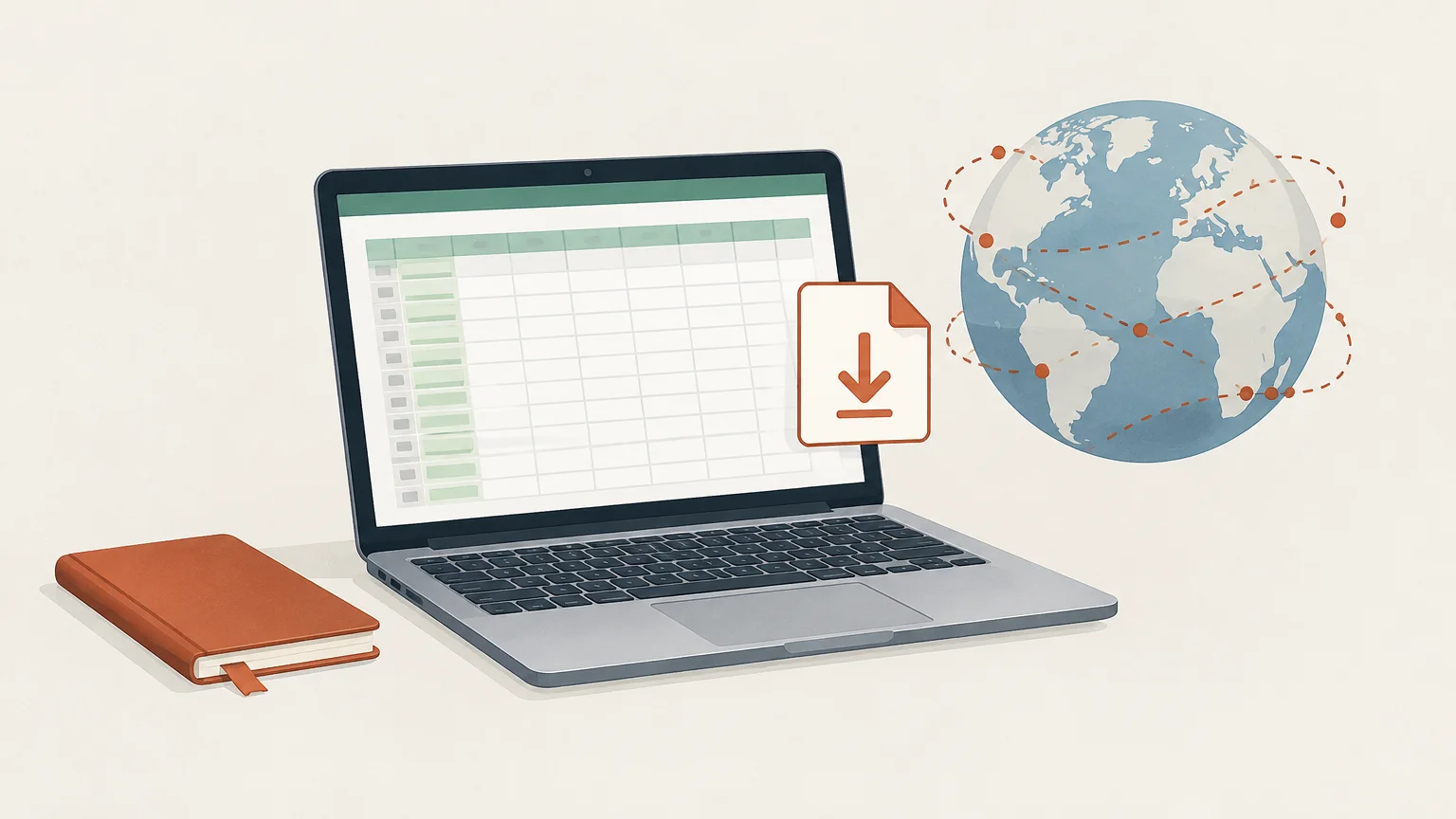
A template priced for an international audience still needs a checkout that works for your business setup. For a standalone spreadsheet, Whop’s published domestic card rate is lower than the standard card rates listed by some alternatives, while a Merchant of Record may better suit sellers who want help with specified indirect tax duties. Our payment gateways for selling digital templates coverage also helps distinguish checkout and file delivery from the separate question of who handles tax.
If you own a US LLC and live abroad, do not assume that your residence alone settles your US tax position. The IRS says that US citizens and US tax residents generally follow the same income tax filing rules whether they live in the United States or abroad, while an LLC’s tax classification also matters. IRS guidance for taxpayers abroad is a useful starting point, not a substitute for advice about your specific entity and residence.
Key takeaways
- Whop lists a standard fee of 2.7% plus $0.30 for successful domestic card transactions. Its published schedule lists additional fees for international cards, currency conversion, and optional services.
- Stripe lists a standard domestic card rate of 2.9% plus $0.30, with additional fees for international cards and currency conversion when applicable.
- Lemon Squeezy and Paddle list a base fee of 5% plus $0.50 per transaction. Both offer Merchant of Record services, but compare their terms and included responsibilities.
- Gumroad lists 10% plus $0.50 for direct or profile sales and 30% for marketplace sales through Discover.
- A Merchant of Record can handle specified sales tax and VAT tasks, but it does not automatically settle your LLC’s income tax or reporting obligations.
How should you compare processors for Excel templates?
- Compare the fee on the actual price you charge, not just the percentage.
- Separate payment processing from Merchant of Record tax handling.
- Check delivery, refunds, disputes, payout terms, and onboarding for your specific business setup.
A fixed transaction charge takes a larger share of a low-priced template than a more expensive bundle. For each candidate, calculate the fee on a single template, a bundle, and any add-on training offer. Then include any international card, currency conversion, subscription, or payout charges that apply to your sales. Our comparison of payment processors for digital products covers the wider set of costs and operating questions worth checking.
The table summarizes the providers’ published standard rates and stated roles. Fees are not directly interchangeable: some services combine processing with tax functions, while others leave more responsibilities with the seller. Provider fee schedules can change, so check the current terms before choosing.
| Provider | Published fee or price status | Tax role | Practical fit |
|---|---|---|---|
| Whop | 2.7% + $0.30 for a successful domestic card transaction, per Whop’s public pricing. Extra charges can apply. | Processing role is not the same as taking on your general sales tax or VAT responsibilities. | Standalone downloads or offers with related content, after checking delivery and tax settings. |
| Lemon Squeezy | 5% + $0.50 per transaction, per its public pricing. Additional fees apply to some transactions. | Merchant of Record for specified tax collection and filing responsibilities. | Digital downloads when included tax handling is worth the higher base fee. |
| Paddle | 5% + $0.50 per checkout transaction, per its public pricing. | Merchant of Record with global tax compliance included in its stated service. | Sellers prioritizing an integrated checkout and tax service. |
| Stripe | 2.9% + $0.30 for a successful domestic card transaction, per its public pricing. International cards and currency conversion can add fees. | Standard Payments leaves tax responsibilities with the seller. Managed Payments is a separate Merchant of Record option. | Custom checkout or payment links when the seller will manage delivery and tax, or assess the separate MoR option. |
| Gumroad | 10% + $0.50 for direct or profile sales, and 30% for Discover marketplace sales, per its public pricing. | Gumroad describes itself as Merchant of Record and says it handles worldwide sales tax collection and remittance. | Direct sales with simple setup, or marketplace discovery when its fee is acceptable. |
| Commas | Non defini pour le moment. A comparable public fee schedule was not established. | Confirm tax calculation, collection, and filing responsibilities in writing. | Consider only after reviewing a written quote and confirming the exact template or bundle workflow. |
Whop
Best for: Sellers who want to assess a lower published domestic card rate for a standalone template, and who are prepared to manage product delivery and their own tax responsibilities.
Whop’s public pricing page lists a standard fee of 2.7% plus $0.30 for successful domestic card transactions. It also lists additional charges for international cards and currency conversion. Fees for options such as billing, tax services, and payout methods are separate, so the base rate alone does not show the full cost of a cross-border sale. Do not treat a single all-in figure as universal when optional services and buyer location change the calculation.
- Pros: The published base card rate is comparatively low among the options here. Whop also presents a marketplace and payment tools, so sellers can evaluate more than a basic external card form.
- Cons: Whop’s seller terms state that sellers remain responsible for products, delivery, support, refunds, and tax outside the specific service enabled. A US LLC owner abroad should verify onboarding, supported payout details, and tax mode for their precise setup.
Lemon Squeezy
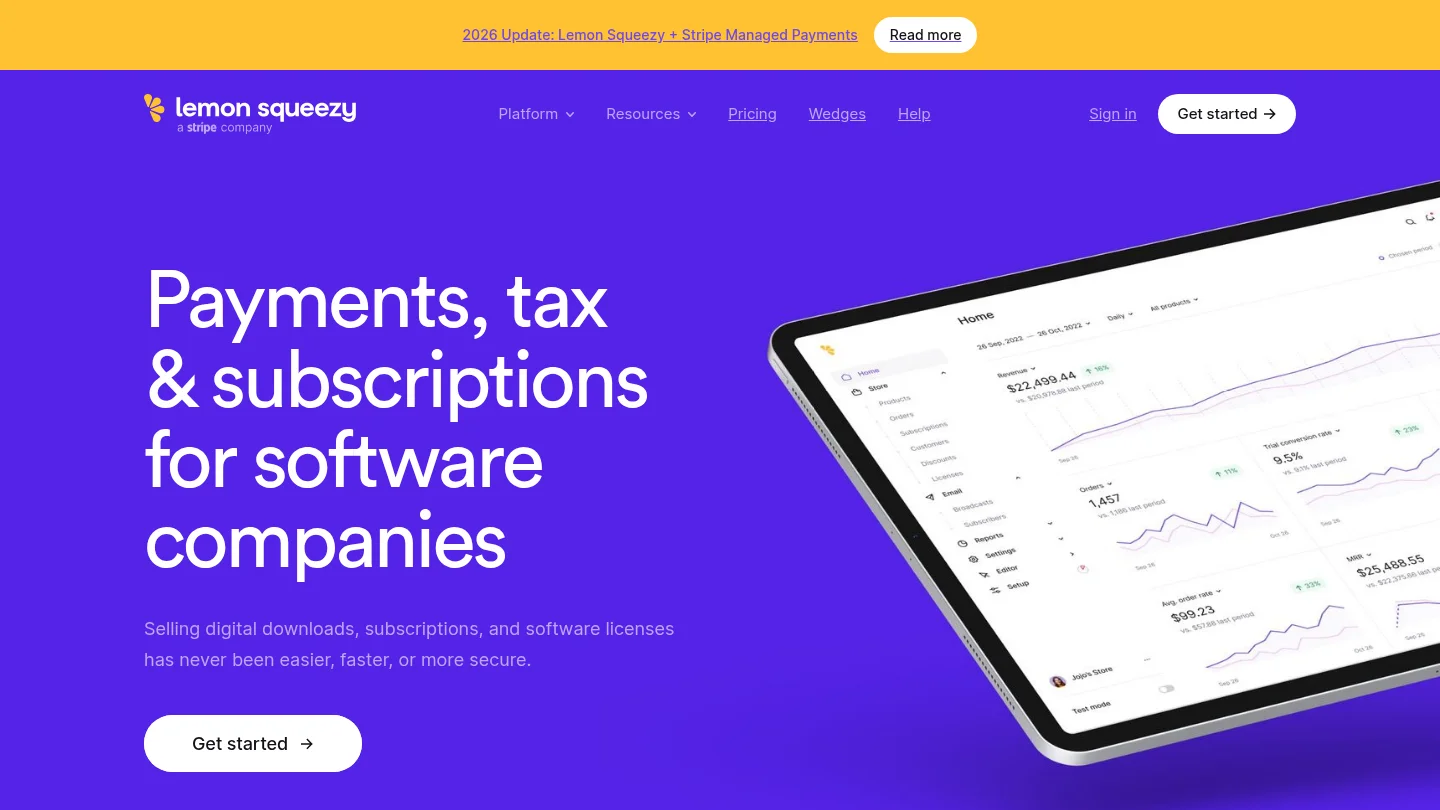
Best for: Digital product sellers who value a stated Merchant of Record arrangement and want to compare that service against the per-sale fee.
Lemon Squeezy lists a base rate of 5% plus $0.50 per transaction. Its fee documentation lists additional charges for some international, PayPal, and subscription transactions, so compare your expected mix rather than relying on the headline rate alone. The company describes itself as Merchant of Record, and its pricing information says tax compliance is included. It also states that payouts are processed twice monthly, with supported payout methods and coverage depending on the account.
- Pros: The platform is designed for digital products and describes tax collection and filing as part of its Merchant of Record service. That can reduce certain cross-border sales tax tasks for an eligible offer.
- Cons: The percentage and fixed fee can be substantial for lower-priced templates, especially when extra transaction charges apply. Confirm that your file type and the location of your business owner fit current onboarding and payout rules.
Paddle
Best for: Digital sellers who prioritize an integrated checkout and Merchant of Record service over the lowest base transaction rate.
Paddle’s published pay-as-you-go price is 5% plus $0.50 per checkout transaction. It describes the package as including payments, checkout, billing, global tax and regulatory compliance, fraud protection, chargebacks, and buyer support. This combination can be useful when the cost and operational work of handling international sales tax are more important than minimizing the processing charge. Check whether your specific Excel template offer fits its product requirements before building around it.
- Pros: Paddle’s stated fee groups payment and several compliance and support functions together, which makes the comparison broader than card processing alone.
- Cons: The standard fee is higher than the listed domestic card rates for Whop and Stripe. Payout timing and eligibility for a US LLC owner living abroad should be confirmed directly rather than assumed from global selling language.
Stripe
Best for: Sellers who want flexible checkout options and can arrange digital delivery and tax compliance themselves.
Stripe’s public US pricing lists 2.9% plus $0.30 per successful domestic card transaction, with additional fees for international cards and currency conversion when required. Payment Links and Checkout provide routes to collect payment without building a custom checkout from scratch. Stripe also lists Managed Payments as a separate Merchant of Record product, priced at an additional 3.5% per successful transaction on top of Payments fees. Treat that as a distinct option, and verify that your product is eligible.
- Pros: Payment Links and Checkout offer flexibility for a seller who already has a site and a separate file delivery method. The published pricing makes it possible to calculate a baseline before adding applicable international costs.
- Cons: Standard Payments does not make the processor your Merchant of Record, so tax work and digital delivery remain yours. The separate Managed Payments charge changes the comparison, and eligibility should be checked before relying on it.
Gumroad
Best for: Creators who prefer a direct digital product storefront or want to test whether marketplace discovery justifies its fee.
Gumroad lists 10% plus $0.50 per direct or profile sale and 30% per sale made through its Discover marketplace. It states that it acts as Merchant of Record and handles worldwide sales tax collection and remittance. Payout method availability depends on country, so a seller living outside the United States should confirm the payout method for their actual residence and LLC before committing.
- Pros: Direct sale and marketplace sale costs are clearly distinguished in its public pricing. Its Merchant of Record position may suit sellers seeking help with worldwide sales tax handling.
- Cons: The direct fee can consume a notable portion of a low-priced file sale, while the marketplace rate is higher still. Marketplace discovery should be weighed against the lower cost of bringing your own audience to a direct checkout.
Commas
Best for: Sellers investigating a template packaged with training, coaching, or another service, provided the platform confirms the needed workflow.
Commas appears in comparisons as an option for sellers building a wider digital offer around a spreadsheet. However, a comparable official fee schedule and sufficient primary documentation for its tax responsibilities, payout terms, and template delivery were not established here. Its public standard price is therefore Non defini pour le moment, not zero. Request written terms for fees, delivery, customer support, refunds, disputes, tax services, international acceptance, and payout eligibility before assessing it against the other options.
- Pros: A combined template and training offer can require more than a payment form, so a platform worth evaluating for bundled services may be relevant.
- Cons: Without a comparable public price and verified terms for this use case, it is not possible to assess the total cost or recommend it over better-documented alternatives.
What should a US LLC owner abroad verify before launch?
- Ask whether the provider onboards a US LLC when its beneficial owner lives in your country of residence.
- Confirm which business and personal identity documents it requires, and which bank or payout account it accepts.
- Check whether the provider is your processor or your Merchant of Record for the exact transaction.
- Run a test purchase, refund, file delivery, and payout before sending paid traffic.
International buyer coverage is not proof that every company structure or owner residence is eligible. A processor can accept buyers in many countries while applying separate onboarding and payout rules to sellers. Record the written answers, especially for account reviews, payout holds, chargebacks, and what happens when a buyer cannot open a workbook.
Tax is another separate decision. The European Commission explains that its One Stop Shop schemes allow eligible sellers established inside or outside the EU to declare certain cross-border supplies through a single member state, subject to the scheme’s rules. A Merchant of Record may take on specific sales tax or VAT obligations for transactions it handles, but read its contract to see what remains yours. For broader cross-border planning, the SBA’s international sales resources also point sellers toward reviewing US and foreign tax considerations.
For a US LLC with a foreign owner, federal reporting can be a separate issue from the payment platform. IRS instructions explain that certain foreign-owned US disregarded entities have specific Form 5472 and pro forma Form 1120 filing requirements when reportable transactions apply. That rule does not mean every LLC owner living abroad is a foreign owner for these purposes, so confirm your classification and filing duties with a qualified tax professional.
Where do ad-intelligence tools fit?
- Ad-spy and offer-validation tools are for researching demand and competitor messaging.
- A payment processor handles payment acceptance, and a delivery setup gives the buyer access to the spreadsheet.
Keep those jobs separate when planning your costs. A promising ad or a validated offer does not establish whether your template will be accepted by a provider, whether tax obligations are covered, or how a buyer receives the file. Choose the payment and delivery workflow after validating the product, then calculate the full cost of acquiring and serving a customer.
Our guide to where to sell digital products can help you compare a standalone checkout with broader digital selling platforms. If you want to compare providers across a wider range of business models, our best payment processors coverage provides additional context.
How this comparison should inform your decision
WhatPayment compares processors using test accounts, official documentation and fine print, fee calculations at different revenue levels, and use-case criteria such as tax responsibility, payouts, and account reviews. We revisit articles quarterly and correct stale data. We are affiliate-funded, and a qualifying action through a disclosed affiliate link may generate a commission. Vendors do not pay for placement or review content before publication. Those practices are useful context, but they do not replace checking current provider terms for your own company and residence.
Verdict
For a simple Excel download, begin with Whop and Stripe if you want to compare processor-style pricing, then include applicable international and currency charges in your calculation. If delegating certain sales tax and VAT duties is more important, compare Lemon Squeezy, Paddle, and Gumroad on their actual Merchant of Record terms and the total fee on your usual template price. For a US LLC owner abroad, the deciding step is confirming seller eligibility, payout access, and tax responsibilities in writing before launch. The best payment processor for selling Excel templates is the one that fits both your product workflow and your cross-border business setup.
Compare digital product selling platforms
Choosing payment infrastructure is only one part of selling a spreadsheet. Your storefront, delivery process, customer support, tax responsibilities, and buyer geography all affect the setup that makes sense. We publish editorial comparisons for digital product sellers, including creators who serve customers across borders.

Our coverage uses test accounts, official documentation, fee comparisons, and use-case analysis, with quarterly reviews and article-level affiliate disclosures. WhatPayment does not process payments or provide checkout services. Read our comparison of platforms for selling digital products to evaluate the selling setup alongside the processor.
Frequently Asked Questions
Which processor has the lowest published base card fee here?
Whop lists the lowest base domestic card rate among the providers compared, at 2.7% plus $0.30. International card charges, currency conversion, and optional features can change the final cost.
Does a Merchant of Record handle every tax obligation for my LLC?
No. A Merchant of Record can take responsibility for specified transaction taxes, such as sales tax or VAT, under its service terms. Your LLC may still have income tax, information reporting, or other obligations based on its classification and your circumstances.
Can I use Stripe to sell a downloadable Excel file?
Stripe can accept payment, but you need a separate method to deliver the file unless you use another service for that function. Confirm the checkout, access, refund, and tax workflow before publishing the product.
Should I choose Gumroad for its marketplace?
Compare the cost of marketplace sales with direct sales and assess whether marketplace discovery is valuable for your specific audience. The provider lists different fees for Discover purchases and sales through your own profile or links.
What should I confirm if I live abroad and own a US LLC?
Ask each provider to confirm seller eligibility for your entity and owner residence, accepted identity documents, supported payout account, and review or hold procedures. Separately check your US and local tax responsibilities with a qualified professional.
Keep reading
Browse all guidesBlog
High Risk Merchant Account for Coaches and Consultants
Blog
Payment Processor Selection for Global Digital Products
Comparison
Whop vs Gumroad (2026): Which Costs Less for Creators?
Comparison
Whop vs Teachable (2026): Honest Cost Breakdown and Verdict
Comparison
Whop vs Circle (2026): Fees and Features Compared
Comparison