What you'll get
Best Payment Processors 2026 for Global Digital Products
Compare best payment processors 2026 for global digital sellers, with fees, tax models, payouts, and account stability explained.

Founder & Editor
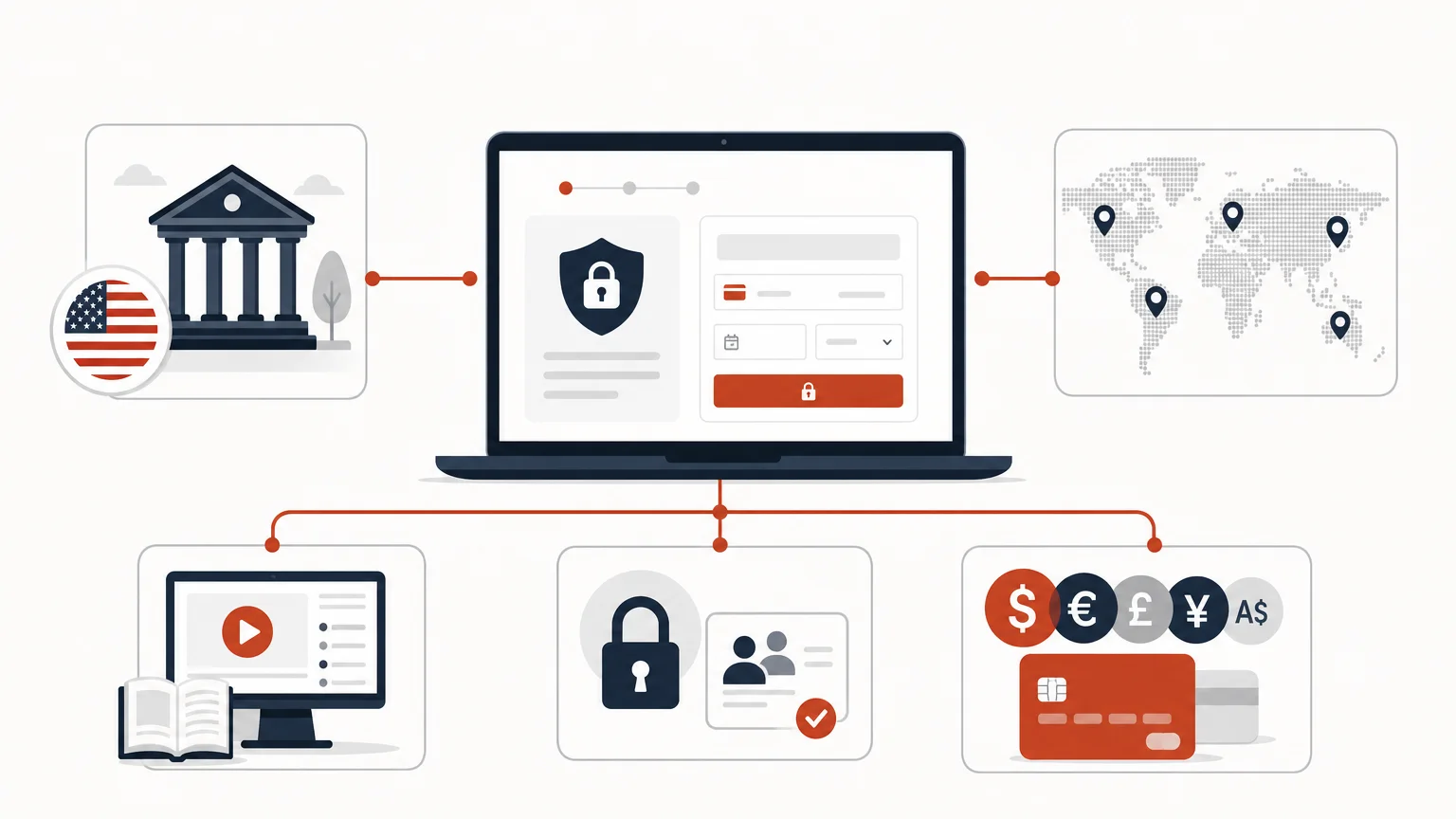
A low processing rate is not enough when your US LLC is managed from abroad and your buyers are spread across several countries. Your best option must also fit your product, tax responsibilities, payout needs, subscription model, and tolerance for account reviews. Our top payment processors research starts with those operational questions rather than headline pricing alone.
Digital sellers also need to understand security responsibilities. PCI DSS provides a baseline of technical and operational requirements for entities that store, process, or transmit payment account data, including merchants and payment service providers. That makes checkout design, hosted payment pages, fraud controls, and data handling part of the processor decision, not secondary technical details. PCI DSS requirements remain a useful reference before launch.
Key takeaways for a US LLC owner abroad
- Whop is the most practical fit when you sell digital products, memberships, courses, or community access and want payments connected to the operating layer.
- Stripe gives technical teams the most control, but the merchant remains responsible for tax compliance unless separate tools and services are used.
- Paddle, Lemon Squeezy, and Fungies use the Merchant of Record model, which can reduce the burden of handling indirect taxes across markets.
- Airwallex is more relevant to multi-currency collection and settlement than to creator storefronts or native community access.
- PayPal can add familiar checkout trust, but it is usually better treated as one payment option rather than the entire payment stack.
- Ad spy tools can help validate an offer before launch, but they do not replace a processor, tax model, payout system, or dispute workflow.
Best payment processors 2026, ranked for global digital sellers
| Rank | Platform | Operating model | Tax responsibility | Digital seller fit |
|---|---|---|---|---|
| 1 | Paddle | Merchant of Record | Platform-led model | Strong for SaaS and recurring digital products |
| 2 | Lemon Squeezy | Merchant of Record | Platform-led model | Strong for software, subscriptions, and downloads |
| 3 | Fungies | Merchant of Record | Platform-led model | Strong for digital goods and indie SaaS |
| 4 | Airwallex | Cross-border payment infrastructure | Merchant remains responsible | Strong for multi-currency operations |
| 5 | Whop | Creator commerce and payment platform | Review the applicable platform terms | Strong for communities, courses, and memberships |
| 6 | Stripe | Direct processor | Merchant remains responsible | Strong for technical teams and custom billing |
| 7 | PayPal | Global payment platform | Merchant remains responsible | Useful as a familiar additional checkout method |
| 8 | Adyen | Enterprise payment infrastructure | Merchant remains responsible | Best for substantial international scale |
1. Paddle
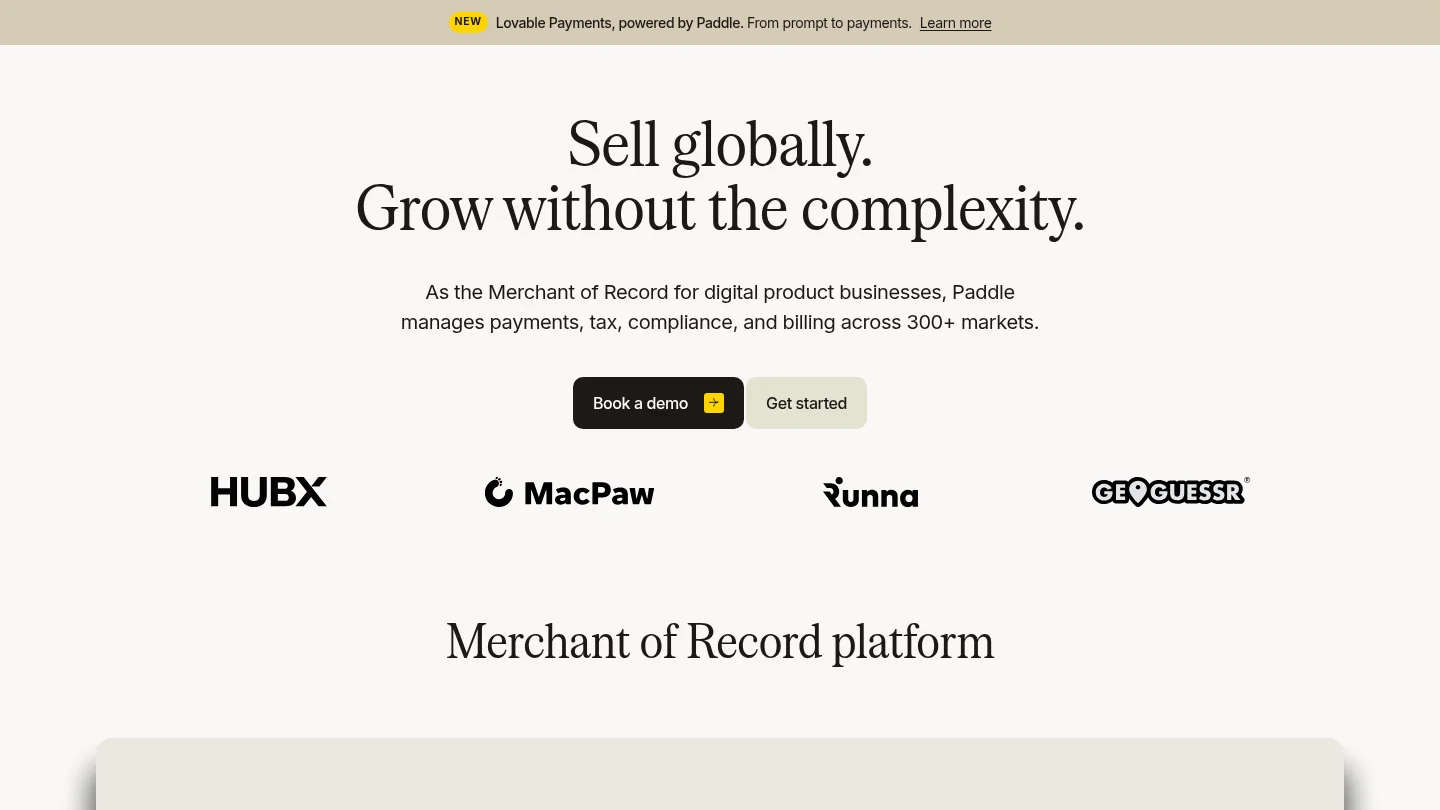
Best for: SaaS companies and digital businesses that want Merchant of Record coverage with subscription billing.
Paddle is strongest when your US LLC sells software or recurring digital access internationally and you want the platform to occupy the legal seller role. That model can reduce the operational burden associated with indirect taxes, localized invoicing, and recurring billing across multiple customer markets.
Its trade-off is control. A Merchant of Record platform can simplify compliance, but it also places the checkout, billing relationship, and parts of the customer experience inside the provider’s system. Paddle’s current fee conditions should be confirmed directly for your business model, because a universal all-in figure is Non defini pour le moment.
Pros
- It is designed around software, subscriptions, and more complex recurring billing.
- The Merchant of Record model can reduce the number of tax and payment tasks handled by the founder.
- It is more naturally suited to SaaS than to a simple one-off download.
Cons
- It can be more infrastructure than a creator needs for a single digital product.
- Checkout and customer ownership may be less flexible than with direct processing.
- Pricing needs to be assessed against payout currency, transaction mix, and account terms.
2. Lemon Squeezy
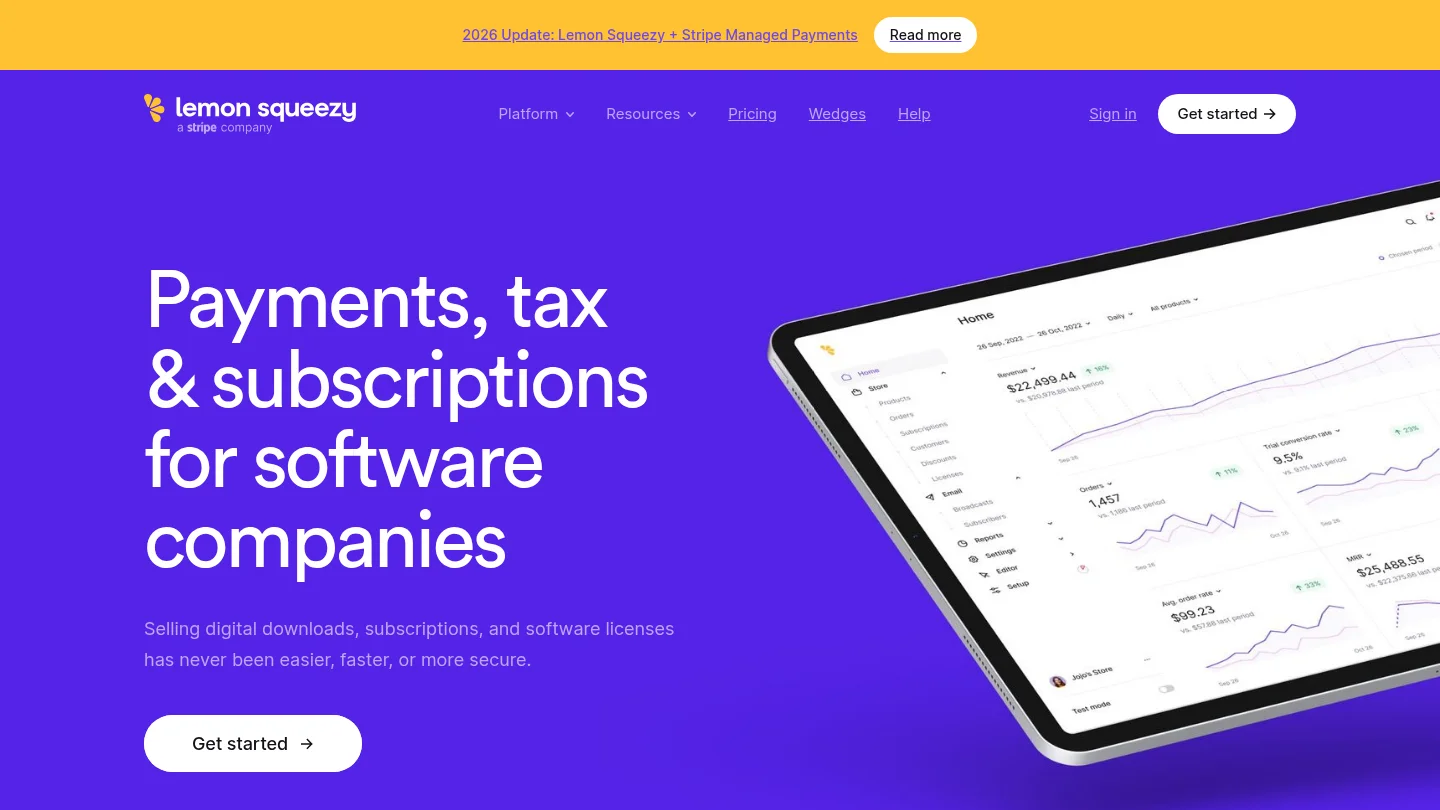
Best for: Software creators, indie SaaS founders, and sellers of digital downloads with recurring plans.
Lemon Squeezy combines checkout, subscriptions, digital delivery, license key management, fraud controls, and tax support in a product built specifically for software and digital goods. It is a strong middle ground for a founder who wants more structure than a basic payment link but less operational complexity than a fully custom billing stack.
The platform’s official product information supports recurring billing, upgrades, cancellations, trials, discount codes, no-code checkout, and tax handling. Its exact fee burden depends on the transaction, payment method, currency, and payout conditions, so the complete current cost is Non defini pour le moment for this comparison.
Pros
- It has a clear digital-first product focus rather than a retail or physical-commerce orientation.
- It supports software licensing, downloads, subscriptions, and payment recovery workflows.
- It can reduce the need to assemble separate tax, checkout, and billing tools.
Cons
- It offers less control than building directly on a processor such as Stripe.
- Its strongest fit is software and digital products, not every creator business model.
3. Fungies
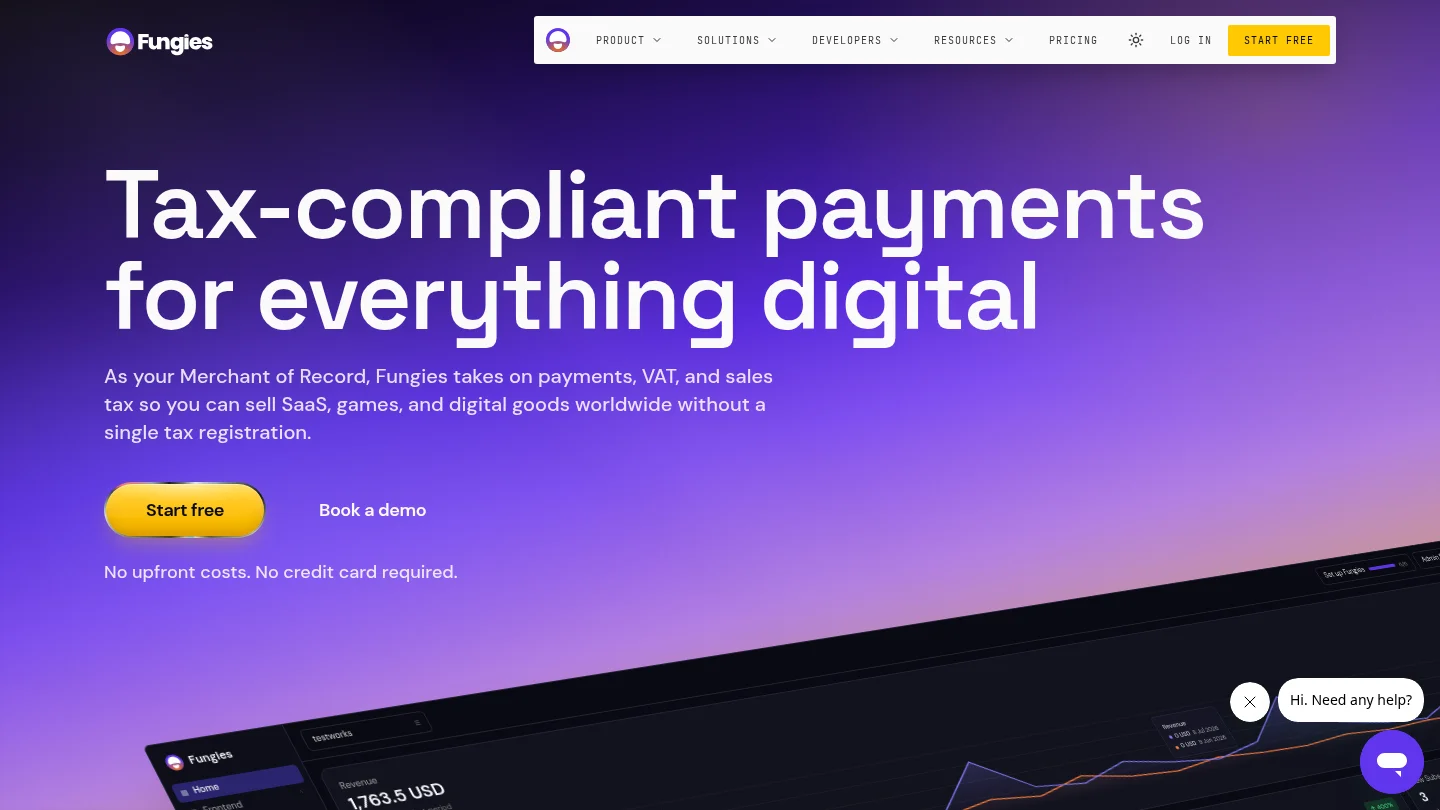
Best for: Digital product creators, indie SaaS founders, and game or software businesses seeking Merchant of Record coverage.
Fungies is one of the more directly relevant options for a seller who wants a digital storefront, subscriptions, downloads, localized payment methods, and tax handling in one system. Its official product information describes a Merchant of Record model, support for digital goods, and a published fee of 5% plus $0.50 per sale. It also presents daily payout settings and multiple checkout formats, although each seller should verify eligibility and payout conditions before relying on them.
The value proposition is straightforward: pay a higher transaction cost than a basic direct processor in exchange for reducing tax and payment infrastructure work. That can be attractive for a solo founder whose time is more constrained than their gross margin.
Pros
- It is purpose-built for digital products, software, subscriptions, and downloadable goods.
- The Merchant of Record model can simplify VAT and sales tax administration.
- The published 5% plus $0.50 fee is easier to model than a fully custom quote.
Cons
- The percentage fee may become expensive as revenue grows.
- It may be less established for businesses requiring advanced enterprise billing workflows.
4. Airwallex
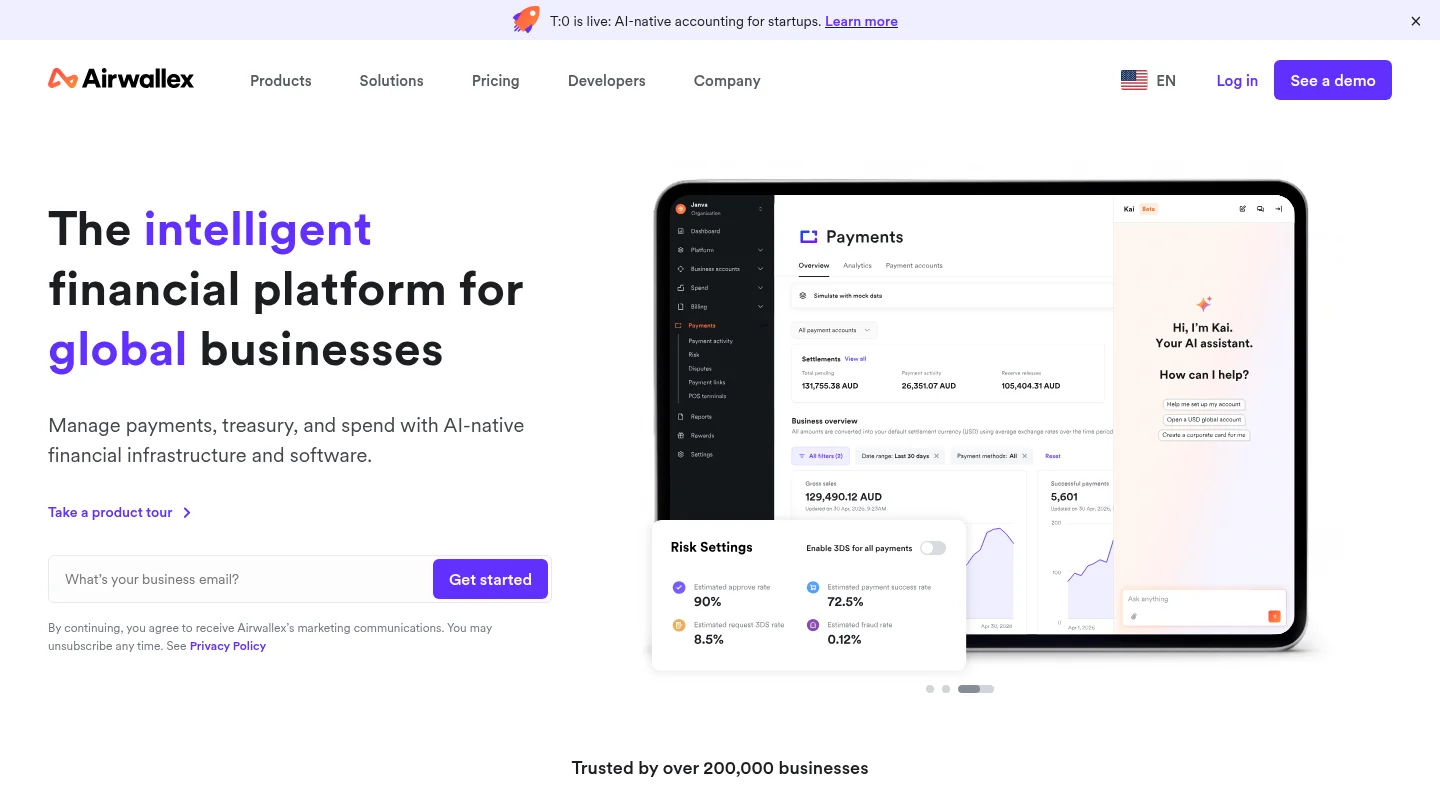
Best for: International businesses that collect, hold, convert, and pay out in multiple currencies.
Airwallex is more useful as a cross-border financial layer than as a creator storefront. Its strengths include multi-currency accounts, international transfers, local payment methods, payment links, invoicing, subscription management, and integrations with accounting systems. For a founder living abroad, the ability to manage collections and payouts across currencies can be more important than a small difference in the domestic card rate.
Airwallex does not replace the Merchant of Record question. A payment infrastructure provider can help you accept and move funds without becoming the legal seller of your digital product. You still need to establish who is responsible for tax, refunds, disputes, and product compliance.
Pros
- It is well aligned with multi-currency collection and international payout operations.
- It can support local payment methods and payment flows beyond standard card checkout.
- It may fit a growing global business better than a creator marketplace.
Cons
- It does not provide the same native creator community layer as Whop.
- Its broader financial infrastructure may be unnecessary for a simple digital download.
- Transaction pricing varies by method, geography, and account configuration.
5. Whop
Best for: Creators selling courses, memberships, digital products, paid communities, and access-based offers.
Whop is the most complete fit for a creator whose payment system also needs to connect with the daily operation of the business. Its positioning covers checkout, digital products, community access, payouts, payment routing, and local payment methods. That matters when the product is not simply a file, but a recurring membership, course environment, or gated community.
For this comparison, the relevant Whop fee is 2.7% plus $0.30 per transaction, roughly 3% effective. Older estimates that place the platform near 6% should not be used for current fee analysis. The practical advantage is not simply the rate, but the relationship between checkout, delivery, and access management.
Pros
- It is closely aligned with creator products, memberships, courses, and communities.
- It can reduce the need to stitch together separate checkout and access systems.
- The 2.7% plus $0.30 base fee is clearer than many older comparisons suggest.
Cons
- It may be less suitable for a software company that needs highly customized billing logic.
- Tax, payout, and dispute conditions still require review for the specific entity and product.
6. Stripe
Best for: Technical teams, SaaS companies, and creators who need custom checkout or billing logic.
Stripe remains the strongest direct processor for developers who want control over payment flows, subscriptions, APIs, webhooks, payment links, and integrations. Its published US standard pricing is 2.9% plus $0.30 for successful domestic card transactions. Its pricing documentation also lists additional charges for international cards and currency conversion, so a global seller should calculate the effective rate rather than relying on the domestic base figure.
The main limitation for a US LLC owner abroad is responsibility. Stripe processes the payment, but it does not automatically make the platform the legal seller of your digital product. Tax registration, filing, and remittance can remain with your business. The official US pricing model is useful as a starting point, but it is not a complete international cost model.
Pros
- It provides substantial control over checkout, subscriptions, payment methods, and integrations.
- It is a strong choice for custom SaaS billing and technical product teams.
- Its pricing starts from a clearly published domestic card rate.
Cons
- The merchant remains responsible for tax obligations unless additional services are used.
- International card fees and currency conversion can materially change the effective cost.
- Advanced flexibility usually requires more technical work and ongoing maintenance.
7. PayPal
Best for: Adding familiar checkout recognition for international buyers.
PayPal remains useful when your audience already expects to see its name at checkout or prefers paying from an existing wallet. It can work as a supplementary payment method for courses, coaching, memberships, and digital products, especially when the alternative is forcing every buyer to enter card details.
It is less compelling as the only payment rail for a global creator business. Fees vary by transaction type, currency, and country, and the merchant remains responsible for understanding tax and payout consequences. PayPal can improve payment choice, but it does not solve the wider question of access delivery, subscription operations, or Merchant of Record status.
Pros
- Many international buyers recognize the checkout experience.
- It can be added as an additional payment option alongside another processor.
- It is accessible to sellers who do not want to build a custom payment flow.
Cons
- Its fee structure is not uniform across payment methods and countries.
- It does not replace a dedicated digital-product delivery or community-access system.
- It is not the strongest answer to the tax and entity issues faced by a global US LLC.
8. Adyen
Best for: Larger digital businesses that need enterprise payment infrastructure across markets.
Adyen is designed for substantial international operations, local payment methods, unified commerce, fraud tooling, and high-volume payment management. Its enterprise orientation can be valuable when a digital business has multiple markets, a finance team, and enough volume to justify formal onboarding and custom commercial terms.
For most solo creators, course sellers, and small membership operators, Adyen is likely to be more infrastructure than necessary. Its pricing is generally based on interchange and provider fees or custom terms, so the applicable total is Non defini pour le moment without an account-specific proposal.
Pros
- It supports sophisticated international payment and risk requirements.
- It is suitable for businesses operating across multiple regions and payment methods.
- It can provide a more structured foundation for enterprise expansion.
Cons
- Its onboarding and implementation requirements can exceed the needs of a small creator business.
- Custom pricing makes early cost comparison more difficult.
- It does not remove the merchant’s need to resolve the legal seller and tax model.
How to choose between a processor and a Merchant of Record
Ask one question before comparing percentages: who is legally selling the product to the customer?
- With direct processing, your business usually remains the seller and must assess tax registration, collection, filing, and remittance obligations.
- With a Merchant of Record, the platform becomes the legal seller for the transaction and generally takes on stated tax-related responsibilities within its model.
- The convenience of an MoR usually comes with a higher transaction cost, less checkout control, or less direct ownership of the customer relationship.
- Direct processing can be cheaper and more flexible, but only if your business can manage tax, refunds, disputes, compliance, and account continuity.
For European customer sales, the official EU One Stop Shop system is a useful reference because it explains how VAT reporting can be centralized in eligible cases. It does not mean every digital seller has the same obligation, and it does not eliminate the need to assess product type, buyer status, and entity structure. Review the EU VAT One Stop Shop guidance before treating a processor’s tax feature as a complete compliance solution.
What changes for courses, memberships, and communities?
A creator selling a downloadable ebook has a different payment problem from a creator selling a recurring course or gated community. One-time products mainly require reliable checkout, delivery, refunds, and fraud controls. Memberships and communities also require recurring billing, failed payment recovery, entitlement changes, cancellations, and access removal.
- Choose Whop when payment and community access need to operate together.
- Choose Lemon Squeezy or Paddle when software-like subscriptions and tax handling are central.
- Choose Stripe when you need to design the billing and access architecture yourself.
- Choose an MoR platform when reducing international tax administration matters more than maximizing the lowest transaction percentage.
If your primary product is a course, compare the payment layer with the delivery and access layer rather than looking only at card fees. Our guide to the best payment processor for online courses addresses that specific decision.
How should infopreneurs use ad-intelligence tools?
Ad spy and offer-validation tools belong earlier in the funnel. They can help an infopreneur evaluate whether a course, coaching offer, template, or membership concept has visible demand before investing in checkout, fulfillment, and paid acquisition.
- Use ad intelligence to study offer angles, creative patterns, landing page positioning, and market language.
- Do not treat advertising activity as proof that an offer is profitable or compliant.
- Validate the payment model separately, including refunds, recurring billing, tax responsibility, and payout stability.
- Choose the processor after clarifying the product format, expected countries, price structure, and access requirements.
This separation prevents a common mistake. A promising offer can still fail if the payment system cannot support the seller’s entity, customer geography, payout currency, or risk profile.
Our selection criteria and disclosure
We compare platforms using effective all-in fee analysis, Merchant of Record status, tax responsibility, payout behavior, account review risk, chargebacks, subscription functions, checkout options, access gating, and international coverage. Our editorial process uses hands-on work with payment volume, chargebacks, account reviews, multi-currency payouts, and Merchant of Record questions, alongside official documentation and fine print.
Our payment processor rankings are revisited quarterly because pricing, payout policies, features, and account rules can change. WhatPayment is affiliate-funded, and a qualifying action after a disclosed affiliate link may generate a commission while the reader pays the same vendor price. Vendors do not pay for placement, and vendor prepublication approval is not used.
Verdict
For most displaced creators with a US LLC and international customers, Whop is the strongest starting point when the business includes memberships, courses, digital products, or community access. Stripe is the better choice for technical control, while Paddle, Lemon Squeezy, and Fungies deserve priority when Merchant of Record coverage is worth the additional transaction cost. Airwallex is valuable for cross-border financial operations, and PayPal is best used as a familiar additional checkout option. The right decision depends on who carries the tax responsibility, how quickly you need payouts, and whether your product needs access management beyond a payment form.
Compare Stripe alternatives for SaaS payment processing
Choosing a processor is harder when your customers live across countries and your entity, residence, and payout account do not all sit in the same place. Our research focuses on effective fees, Merchant of Record responsibility, payout behavior, account reviews, and fit for digital businesses rather than headline rates alone.

Use our Stripe alternatives for SaaS payment processing coverage to compare direct processors and Merchant of Record platforms against your billing model, tax workload, and growth plans. We disclose affiliate relationships at article level and revisit time-sensitive comparisons quarterly.
Frequently Asked Questions
What is the best payment processor for a US LLC owner living abroad?
There is no universal winner because the answer depends on your customer countries, product type, payout currency, and tax model. Whop is a strong fit for creator communities and memberships, while Stripe or an MoR platform may be better for custom SaaS or international tax administration.
Is a Merchant of Record better than Stripe for digital products?
A Merchant of Record can be better when you want the platform to handle stated tax-related seller responsibilities. Stripe can be better when you want lower direct processing costs, more control, and the ability to own the payment relationship, provided you can manage the remaining compliance work.
Are Whop fees really 2.7% plus $0.30?
For this comparison, Whop’s relevant base fee is 2.7% plus $0.30 per transaction, which is roughly 3% effective. Additional conditions can apply depending on payment method, geography, currency, or payout setup, so review the current terms for your account.
Should I use more than one payment processor?
Using more than one processor can improve payment choice and reduce dependence on a single account. It also creates additional reconciliation, refund, tax, customer-support, and subscription-management work, so the second processor should have a clear operational purpose.
Do ad spy tools replace payment processor research?
No. Ad-intelligence tools help evaluate offers and advertising patterns before launch, while payment processors determine how customers pay, how funds are settled, and which party handles specific payment and tax responsibilities.
Keep reading
Browse all guidesBlog
Payment Platform Reviews for Global Digital Product Sellers
Blog
Best Fraud Prevention Tools for High-Risk Digital Merchants
Review
iClosed Review: Is It Worth It for High-Ticket Sales?
Review
WhoScale Review (2026): Pricing and Founder Interview
Review
Whop Review 2026: Is It Legit? Honest Take After 6 Weeks
Review