What you'll get
Payment Platform Reviews for Global Digital Product Sellers
Use payment platform reviews to assess fees, tax responsibility, payouts, risk, and cross-border fit for a digital business owned abroad.

Founder & Editor
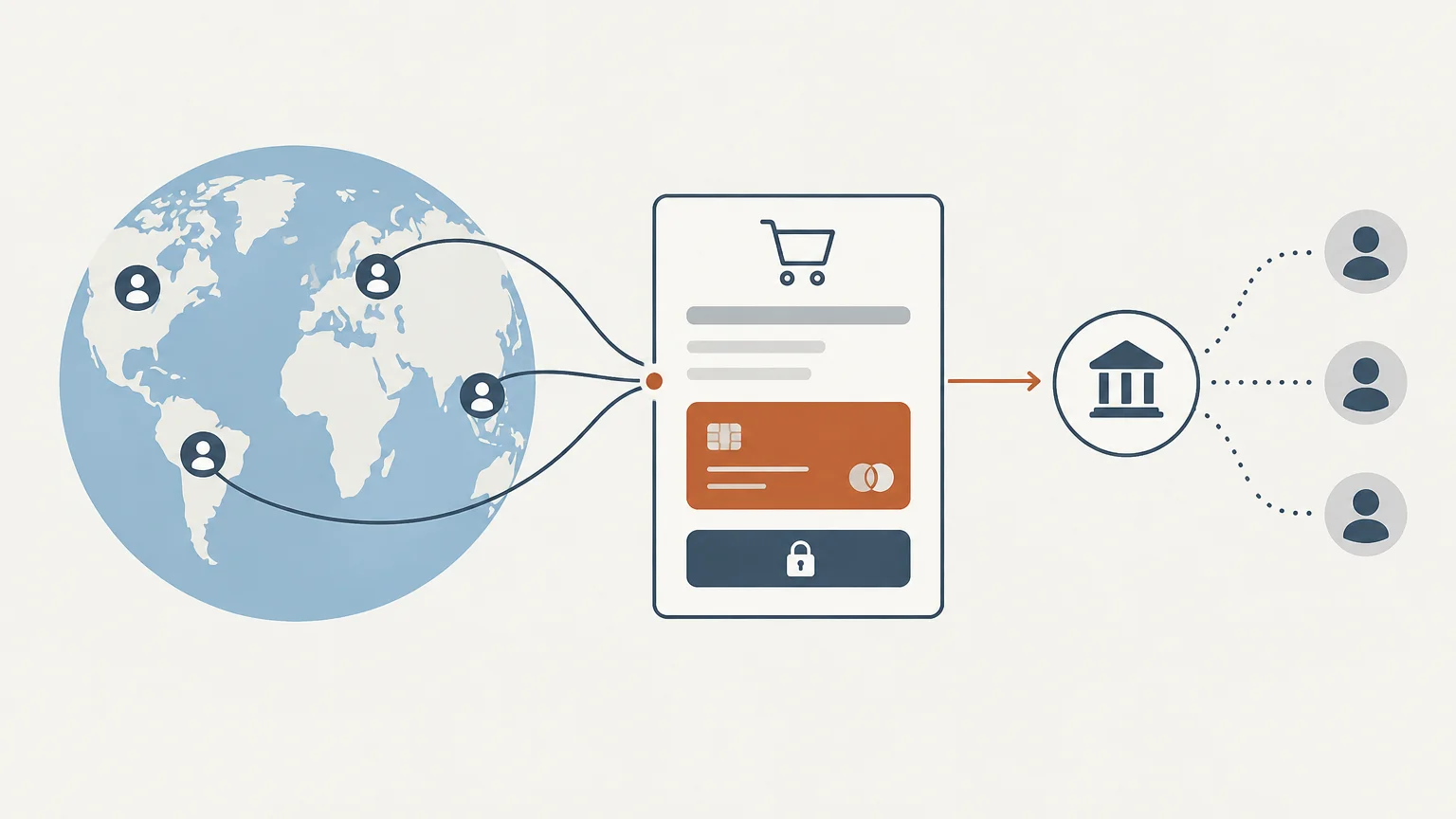
Payment platform reviews matter most when they answer a practical question: can your business accept money from customers across countries and still manage the costs, obligations, and payout risks? Our payment processor rankings are a starting point for comparing platforms by business fit, not just by a headline rating.
A US LLC does not, by itself, settle whether a provider will accept an owner who lives abroad. Review the company’s eligibility rules alongside your residence, business model, settlement account, and customer locations. Then separate payment acceptance from tax responsibility and receiving your funds, because each can involve different terms and costs.
- A payment processor review and an ad-intelligence review answer different business questions.
- Merchant of Record status affects who takes legal responsibility for selling and specified transaction-related tax duties.
- A US LLC does not guarantee approval when the owner lives in another country.
- Total cost can include processing, currency conversion, subscriptions, and payout charges.
- WhatPayment’s reviews disclose affiliate relationships, and vendors do not pay for placement.
What should payment platform reviews actually verify?

- Look for explicit eligibility rules covering the company, owners, and operating locations.
- Check whether the review distinguishes a payment service provider from a Merchant of Record.
- Expect the review to show its evidence, update timing, and commercial disclosures.
A useful review gives enough detail to test whether the platform fits your actual setup. For a creator with a US LLC, that means looking beyond the company’s formation state. The owner’s residence, the business’s activity, customer countries, expected sales, and settlement arrangements may all matter to an application. Approval should not be presented as automatic just because the business is registered in the United States.
Look for clear sourcing and a review date, especially where a claim concerns prices, supported countries, payouts, or account holds. Our editorial approach uses test accounts, official documentation, fine print, and use-case comparisons. We also revisit articles quarterly and correct stale information. Those practices help readers assess the reasoning, although they cannot guarantee that a provider will approve an individual business.
Transparency matters beyond card checkout. A 2026 Federal Reserve note says that in 2025, more than two-thirds of North American peer-to-peer payment services reported both cost and speed information, while business payment services remained around one-quarter. The categories are not identical to creator payment processors, but the contrast is a reason to look for clear business-specific cost and payout disclosures in a review. Read the Federal Reserve analysis for the measured categories and limitations.
Where does the total cost hide?
- Compare the full transaction cost, not only the advertised card rate.
- Check separately for international-card charges, foreign-exchange margins, subscriptions, and payout fees.
- If a fee is not verified, write “Non defini pour le moment,” rather than implying it is zero.
A low headline percentage may not reflect what the business ultimately pays. A review should explain which charges apply to the creator’s card mix, buyer locations, payout currency, and chosen product features. If charges vary by country or payment method, the review should make that distinction rather than presenting one fee as universal.
For example, a creator selling a course in several currencies should ask whether customers pay in local currency, which currency the business receives, and where conversion takes place. If the platform charges separately for subscriptions, payment routing, or withdrawals, add those items to the comparison. WhatPayment’s fee analysis considers relevant processing, currency-conversion, subscription, and payout components across different revenue levels, so readers can compare more than a single transaction rate.
Keep checkout charges distinct from the cost of moving funds across borders. The Bank for International Settlements’ 2026 review describes cross-border payment frictions including cost, speed, and transparency, but those broad payment-rail issues should not be mistaken for a specific processor’s card fee. A review should show which charge applies at checkout and which may apply later when money is converted or transferred. The BIS review of cross-border payments provides broader context, not a quote for your account.
Which operating model matches your business?
- A processor handles payment acceptance, while the seller generally retains important responsibilities.
- A Merchant of Record can take the legal seller role and specified tax-related duties, subject to its terms.
- A broader business platform may bundle payments with other tools, so confirm which entity handles each part.
The label alone does not establish the fit. Check the contract and help documentation for the exact seller of record, tax duties, dispute process, payout rules, and countries in which the provider accepts businesses like yours. Do not assume that tax calculation means tax filing or remittance is included, or that international customer support means an owner’s residence is eligible.
| Platform | Model to check | Cross-border review questions | Fee detail verified here |
|---|---|---|---|
| Stripe | Review it as a payment-processing option, and verify which product and contract apply. | Does the owner’s residence qualify, and how are international cards, conversion, and payouts handled? | Non defini pour le moment. |
| Paddle | Review the Merchant of Record terms for the specific product and seller. | Which tax duties, disputes, countries, and payout conditions are included? | Non defini pour le moment. |
| Whop | Check the payment and business features that apply to the account and product. | Can this LLC and owner apply, and what are the payout, currency, and dispute terms? | Non defini pour le moment. |
These rows are a review checklist, not a ranking or a statement that any provider will accept every internationally based LLC. A platform’s role and terms can vary by product and change over time, so verify the current official contract and pricing before relying on an old comparison. Our best payment processors coverage helps narrow options by use case, while an individual Paddle review can be used to investigate that platform’s specific terms.
The European Union’s 2025 market study examines online payment ecosystems as part of competition research, a useful reminder that checkout, providers, and related services sit within a wider system. A review should explain which part the named platform performs, rather than treating every service as interchangeable. See the EU online payments study for its stated scope.
How does an international review treat cash-flow risk?
- Read the payout schedule and conditions that can delay a transfer.
- Check the contract’s language on account reviews, reserves, holds, and termination.
- Assess dispute handling and what happens to unsettled balances if an account is restricted.
For a creator abroad, predictable access to funds can matter as much as the transaction rate. A review should distinguish the routine payout schedule from exceptional review periods, and it should not describe a stated processing time as a guarantee. Look for the applicable payout currency and method, any transfer charges, and the conditions that allow the platform to delay or retain funds.
Also consider whether a sudden increase in sales, a launch, a change in customer geography, or a rise in disputes could prompt additional checks. Compare the platform’s written terms with its stated support and dispute procedures. If those details are missing, treat the risk as unknown, not as evidence that holds cannot occur. WhatPayment comparisons include payout behavior, account reviews, and holds as separate selection criteria, since they affect a seller’s ability to operate day to day.
Where do ad-intelligence tools belong?
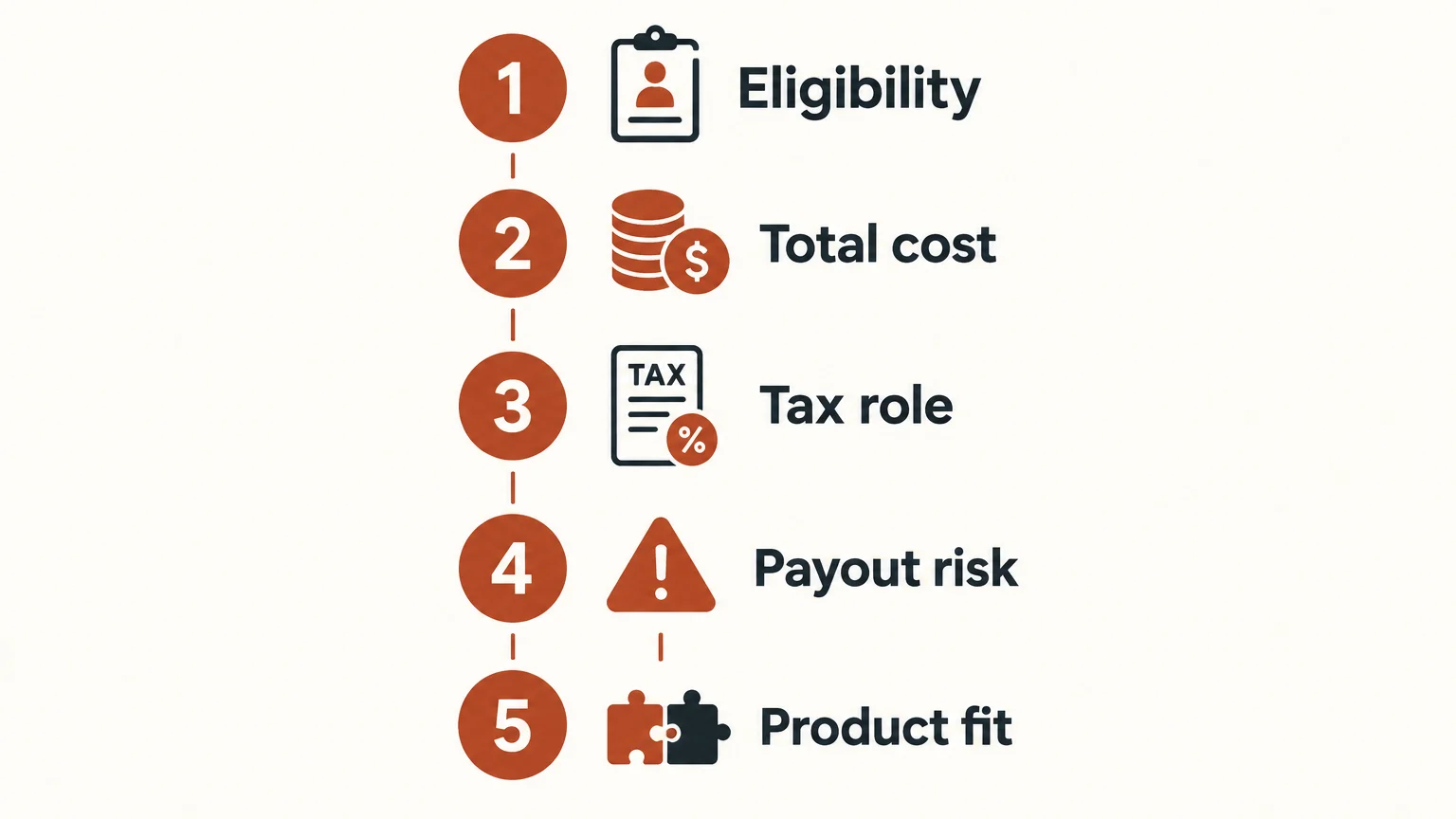
- Use ad-intelligence research to investigate advertising and offers, not to judge payment acceptance.
- Keep tool coverage, data freshness, and subscription cost separate from processor criteria.
- Validate an offer independently before treating advertising activity as proof of demand.
Infopreneurs may also compare ad-intelligence tools such as Minea and Pipiads. These belong in a separate evaluation from payment processors: they can inform advertising and offer research, but they do not answer whether a payment provider accepts your LLC, handles a tax duty, or releases funds on a workable schedule. Do not treat an ad appearing in a research tool as proof that its offer is profitable or compliant.
For each ad-intelligence tool, check the official feature list for the sources and markets it covers, the details shown for an ad or offer, how recently its information is updated, and the plan’s limits. Then use those findings as hypotheses to test with customer research and a small offer validation process. Do not confuse the cost of research software with payment-processing fees, and do not infer a feature or current price from a product name.
How do you judge the review itself?
- Prefer a review that explains its criteria and identifies the basis for factual claims.
- Check when it was last reviewed and whether time-sensitive details are dated.
- Read affiliate disclosures alongside the comparison and recommendation.
Star ratings can summarize customer sentiment, but they do not replace business-specific analysis. Reviews from shoppers may focus on refunds or checkout experiences, while a creator needs details about eligibility, effective cost, tax allocation, payouts, subscriptions, access gating, and disputes. Give more weight to evidence that answers your actual operating questions than to a single average score.
Commercial disclosure is part of that assessment. WhatPayment is affiliate-funded, so a qualifying action after a reader clicks a disclosed vendor link may generate a commission, while the reader pays the same vendor price. Vendors do not pay for placement and do not review articles before publication. That does not remove every perceived commercial interest, so readers should still examine the stated criteria and supporting reasoning.
Verdict: choose evidence that fits your business
The most useful payment platform reviews connect fees, tax responsibilities, eligibility, and cash-flow terms to the seller’s real setup. For a US LLC owner living abroad, no single headline rating can confirm account approval or make an unsuitable payout arrangement workable. Separate ad-intelligence research from payment selection, verify each provider’s current official terms, and treat missing information as unknown until confirmed.
Review the platform against your operating needs
When the decision affects customer checkout, tax responsibilities, and access to revenue, the platform name alone is not enough. WhatPayment’s editorial comparisons examine effective fees, Merchant of Record status, payout behavior, and fit for digital business models. Our stated process includes test accounts, official documentation, fine-print review, and quarterly article checks.

Affiliate relationships are disclosed, vendors do not pay for placement, and vendors do not review articles before publication. For a platform-specific example of how those questions can be applied, read our Whop review and verify current terms against your own company and residence details before deciding.
Frequently Asked Questions
Can a US LLC owner living abroad use a US payment processor?
Possibly, but the LLC alone does not guarantee approval. Eligibility can depend on owner verification, residence, business activity, settlement details, and the provider’s rules.
What is the difference between a processor and a Merchant of Record?
A processor handles payment services, while a Merchant of Record takes the legal seller role and specified transaction-related responsibilities under its terms. Confirm the precise tax, dispute, and customer-facing responsibilities in the provider’s current agreement.
How should I compare payment costs across countries?
Compare processing charges with applicable international-card costs, currency conversion, subscriptions, and payout charges. If a current fee is not verified from an official source, record it as “Non defini pour le moment,” not as zero.
Are ad-intelligence tools payment processors?
No. Ad-intelligence tools support advertising or offer research, while payment providers handle payment-related services under their own terms. Keep their features, costs, and selection criteria separate.
How can I find reviews for different business models?
Start with our payment processor rankings to compare platforms by operational criteria, then read an individual review for the options that fit your product and location. Check the publication date, methodology, and affiliate disclosure before relying on any recommendation.
Keep reading
Browse all guidesBlog
Best Payment Processor for SaaS: 8 Options for Global Sales
Blog
Best Payment Gateways for Notion Templates, Digital Assets
Review
WhoScale Review (2026): Pricing and Founder Interview
Review
Whop Review 2026: Is It Legit? Honest Take After 6 Weeks
Review
Kajabi Review 2026: Honest Pricing, Fees, and Who Overpays
Review