What you'll get
Best Payment Processor for SaaS: 8 Options for Global Sales
Compare the best payment processor for saas options for recurring billing, global sales, tax, payouts, and digital products.

Founder & Editor
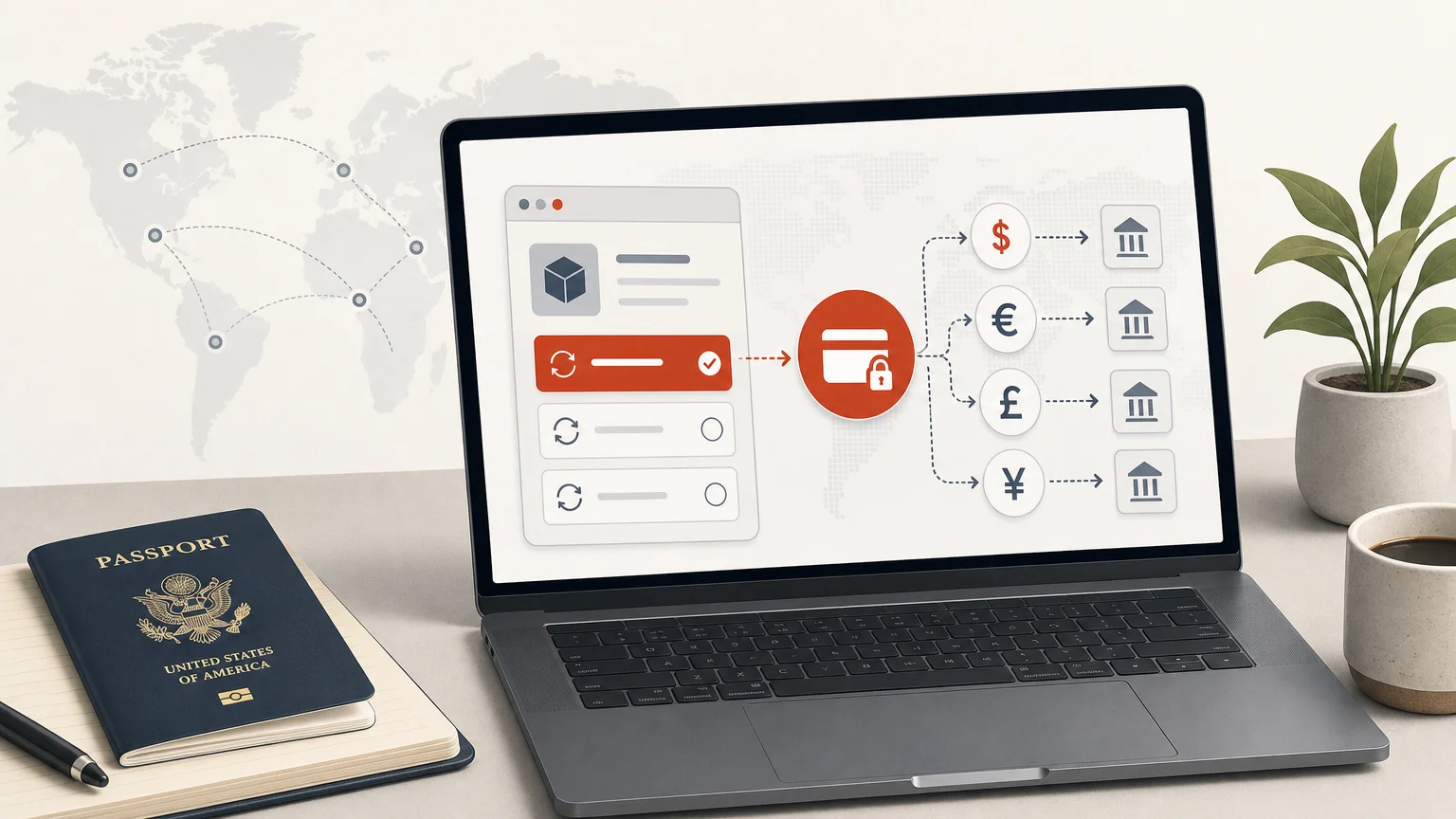
If you search for best payment processor for saas, the practical answer depends on your customers, billing model, and compliance workload. Stripe is the strongest general starting point for a developer led product, while the best payment processor for 2026 may be different for a global digital product company that wants a Merchant of Record.
For a US LLC owner living abroad, the payment account is only one part of the structure. Entity ownership, tax residence, customer location, payout currency, account reviews, and chargebacks all affect the real operating cost. A foreign owned US disregarded entity can have specific reporting obligations when reportable transactions exist, including a pro forma Form 1120 with Form 5472 in relevant cases, so review the structure with a qualified tax professional and consult the IRS Form 5472 instructions.
Key takeaways
- Stripe is the best general fit for developer led, self serve SaaS that needs flexible subscriptions, invoices, and global payment methods.
- Paddle is a Merchant of Record, not simply a conventional processor, which can reduce the tax and compliance work attached to international digital sales.
- Chargebee is a billing and subscription management layer, so it normally works with a separate processor rather than replacing one.
- GoCardless is most relevant when recurring bank debit payments are important, especially for B2B SaaS customers.
- Adyen, , and Stax Connect are more relevant to enterprise, high volume, or embedded payments use cases than to a small self serve SaaS product.
Which payment processor fits your SaaS model?
- Choose a direct processor when you want control over checkout, customer data, billing logic, and payment routing.
- Choose a Merchant of Record when tax administration and international selling create more work than your team wants to own.
- Add a billing layer when your pricing includes usage, seats, tiers, trials, proration, or complex contract changes.
- Add bank debit when your B2B customers prefer account based recurring payments over cards.
This ranking is organized by practical fit, not by the lowest advertised rate. Our evaluation gives weight to effective all in cost, recurring billing, failed payment recovery, tax responsibility, payout reliability, geographic coverage, and the risk of holds or reviews. The table gives the short version before the detailed assessments.
| Rank | Platform | Primary role | Best fit | Main tradeoff |
|---|---|---|---|---|
| 1 | Paddle | Merchant of Record | Global digital SaaS with lean operations | Less low level processor control |
| 2 | Global payment service provider | High growth international SaaS | Pricing is generally customized | |
| 3 | Stax Connect | Embedded payments infrastructure | SaaS platforms processing for their own users | Less relevant to a company selling only its own software |
| 4 | Stripe | Processor and billing stack | Developer led self serve SaaS | More tax and compliance work remains with the business |
| 5 | Chargebee | Subscription billing layer | Complex B2B SaaS pricing | Requires a separate payment processor |
| 6 | GoCardless | Bank debit specialist | Recurring B2B collections | Does not replace card acceptance in every market |
| 7 | Braintree | Processor and payment gateway | Mobile first SaaS and PayPal ecosystem needs | Pricing and regional coverage require close review |
| 8 | Adyen | Enterprise payment platform | Large international SaaS operations | More complex onboarding and implementation |
1. Paddle
Best for: Digital SaaS businesses selling internationally that want a Merchant of Record to manage more of the tax, billing, and compliance workload.
Paddle is structurally different from Stripe. As a Merchant of Record, it becomes the seller for supported transactions and manages payments, subscriptions, localized checkout, sales tax, and regulatory compliance within its model. That can be valuable for a US LLC owner living outside the United States who sells to customers across multiple countries and does not want to build a separate tax and invoicing operation.
The tradeoff is control. A Merchant of Record can simplify operational responsibilities, but it also creates a layer between the software company and the underlying payment rails. Before choosing it, check supported business categories, payout rules, refunds, chargebacks, customer ownership, invoice treatment, and the exact responsibilities that remain with your company. Paddle pricing is Non defini pour le moment in this comparison because the available evidence does not establish a current official rate for every relevant scenario.
Pros:
- Reduces the operational burden associated with international digital sales.
- Built around subscriptions, renewals, trials, and software checkout.
- Useful for lean teams that value simplicity over processor level control.
Cons:
- Less suitable when you need complete control over acquiring, payment routing, or customer billing architecture.
- Eligibility and payout conditions must be checked for your exact entity, residence, product, and customer mix.
2.
Best for: High growth digital SaaS companies that prioritize international acceptance, recurring payments, fraud tools, and payment performance.
provides online, in app, and recurring payment capabilities with local payment methods, reporting, authentication, and fraud tools. Its materials describe processing in more than 150 currencies and local acquiring coverage across more than 50 countries. For a growing SaaS company entering new markets, that type of coverage can reduce the need to assemble several regional providers.
The main limitation is commercial transparency for smaller companies. Pricing is tailored to the business profile, risk category, payment methods, and volume. That can be beneficial for a larger merchant that negotiates a suitable structure, but it makes early cost comparison harder than a published pay as you go rate.
Pros:
- Designed for international digital businesses and larger payment volumes.
- Strong combination of local payment methods, fraud controls, and reporting.
- Suitable for teams focused on authorization performance and geographic expansion.
Cons:
- Custom pricing makes it harder for a small SaaS company to estimate cost before contacting sales.
- Implementation and risk approval may take more planning than a simple processor integration.
3. Stax Connect
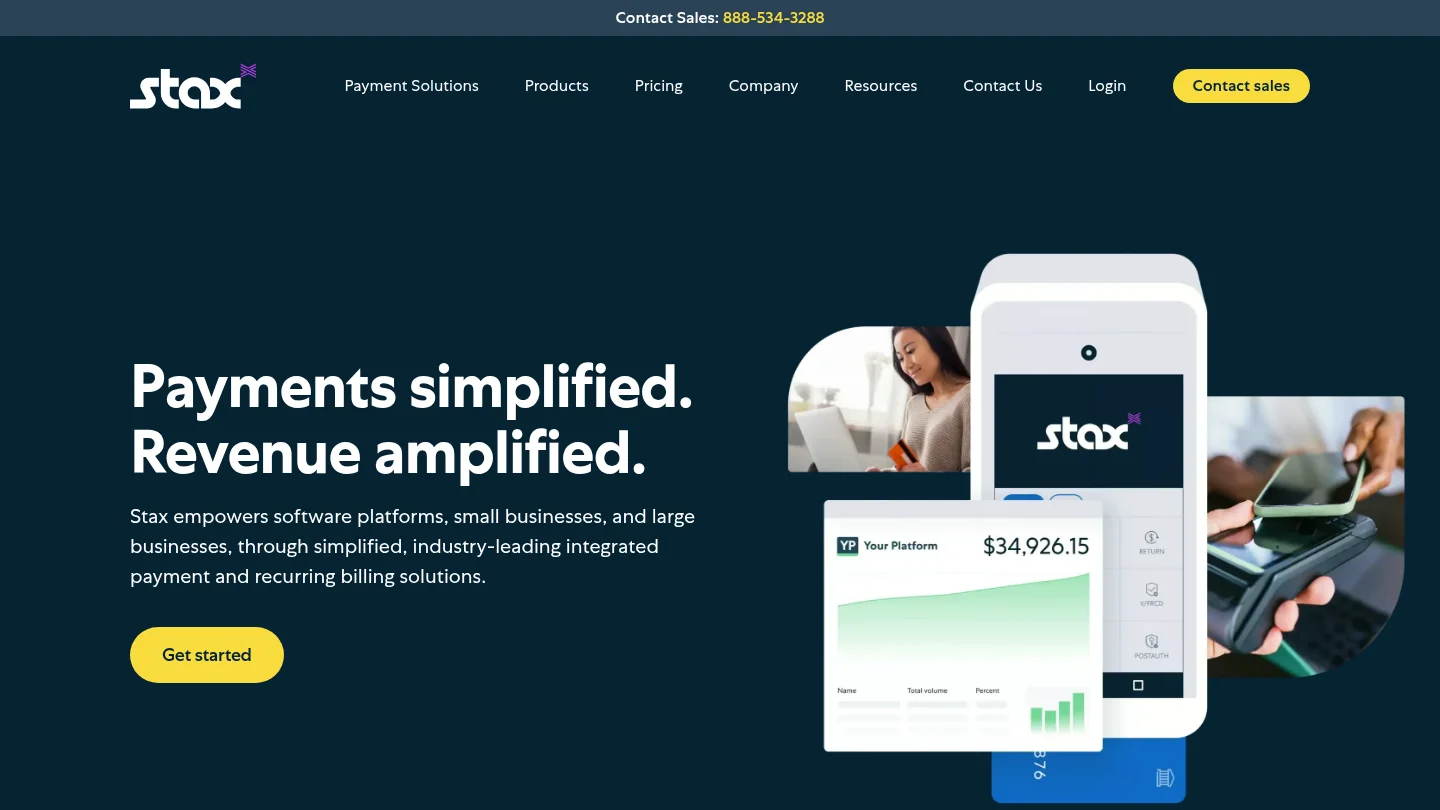
Best for: SaaS platforms and ISVs that want to embed payments for their own software users and potentially create a payment revenue stream.
Stax Connect is more relevant to a vertical SaaS platform that processes payments for merchants than to a software company selling only its own subscription. Its embedded model can support cards, ACH, recurring billing, payment links, invoicing, onboarding, reporting, and platform level payment workflows.
That distinction is important for the displaced creator persona. If you run a project management tool, marketplace, booking platform, or business management system where your users collect money from their customers, embedded payments may be central to the product. If you simply sell access to your own software, a direct processor or Merchant of Record is usually easier to evaluate.
Pros:
- Designed for software platforms that want payments inside their product.
- Relevant to merchant onboarding, platform reporting, and payment monetization.
- Can support a broader payment experience than a basic checkout integration.
Cons:
- Usually excessive for a SaaS company that only needs to collect its own subscriptions.
- Embedded payments add compliance, onboarding, support, and operational responsibilities.
4. Stripe
Best for: Developer led, self serve SaaS businesses that need flexible subscriptions, invoices, trials, usage based billing, and international payment methods.
Stripe is the strongest general starting point because it combines payment acceptance, recurring billing, invoices, customer portals, fraud tools, and developer APIs in one broad ecosystem. Its SaaS tooling supports fixed, per seat, tiered, and usage based pricing, as well as upgrades, downgrades, and proration. Stripe publishes a standard US card rate of 2.9% plus $0.30 for domestic cards, with additional charges for international cards and currency conversion. The actual cost depends on the payment method and extra products enabled.
Stripe is especially suitable when your engineering team wants control over the checkout and product experience. Its official materials describe support for 195 countries, 135 plus currencies, and more than 100 payment methods, although availability depends on the business, customer location, and payment method.
Pros:
- Strong API and documentation for custom SaaS billing flows.
- Good support for trials, subscriptions, invoices, usage billing, and plan changes.
- Broad international payment coverage and a large integration ecosystem.
Cons:
- The business remains responsible for choosing and managing much of its tax and compliance structure.
- Costs can rise when international cards, currency conversion, billing tools, tax tools, or fraud products are added.
- Account reviews, reserves, or payout holds remain possible risks for any direct processor.
5. Chargebee
Best for: Scaling B2B SaaS companies with complex plans, usage charges, contracts, invoices, and subscription changes.
Chargebee is not a payment processor in the same sense as Stripe or Braintree. It is a subscription billing and revenue management layer that connects to payment gateways and processors. That distinction matters because it can solve the hardest part of SaaS billing without forcing you to replace the payment rails underneath.
Chargebee becomes more relevant when a product has multiple plans, seat changes, add ons, annual commitments, metered usage, coupons, scheduled upgrades, or complicated invoice requirements. It can also help finance and revenue teams manage reporting, reconciliation, and subscription lifecycle events without placing every billing change inside application code. Its limitation is architectural: you still need a processor, payment method coverage, and a separate approach to tax and payout responsibility.
Pros:
- Strong subscription lifecycle management for complex SaaS pricing.
- Useful for separating billing logic from payment acceptance.
- Relevant to finance and revenue teams that need structured reporting and reconciliation.
Cons:
- It adds another system rather than replacing your processor.
- Implementation and administration may be excessive for a simple one plan SaaS product.
6. GoCardless
Best for: B2B SaaS businesses that want recurring bank debit collections in addition to, or instead of, card payments.
GoCardless is a direct debit and bank payment specialist. It is particularly relevant when customers pay recurring invoices, annual contracts, or larger B2B amounts and prefer bank based payment methods. The platform materials describe collection across more than 30 countries and multiple bank debit schemes, but country, currency, mandate, and payout availability still need to be checked for your exact customer base.
For an international SaaS company, GoCardless is usually best viewed as part of a payment stack rather than the only processor. Cards and wallets remain important for self serve customers, while bank debit can improve payment choice for business accounts. Review failure recovery, mandate management, settlement timing, refunds, disputes, and integration with your billing layer before committing.
Pros:
- Designed for recurring account based collections.
- Strong fit for B2B invoices and subscription payments.
- Can complement a card processor where customers prefer bank debit.
Cons:
- It does not provide the same card and wallet coverage as a general purpose processor.
- Direct debit timing and mandate rules vary by country and payment scheme.
7. Braintree
Best for: Mobile first SaaS businesses and digital products that want card, wallet, PayPal, and recurring payment support within the PayPal ecosystem.
Braintree offers hosted and integrated payment experiences, recurring billing, tokenized payment details, and support for several digital wallets. That makes it a credible option for software products with mobile applications or customers who prefer PayPal based checkout. It can also reduce the need to build every payment method separately.
The important comparison point is not only the headline card rate. Review international card charges, currency conversion, regional eligibility, payment method availability, dispute handling, and support quality. Braintree can be technically suitable for SaaS, but a product with complex usage billing or advanced revenue operations may still need a dedicated billing layer above it.
Pros:
- Useful combination of cards, wallets, PayPal ecosystem access, and recurring billing.
- Relevant SDK and integration options for mobile and web products.
- Suitable for businesses that do not need a Merchant of Record model.
Cons:
- Regional payment availability must be checked carefully.
- Complex SaaS billing may require additional subscription management software.
8. Adyen
Best for: Larger SaaS companies that need global acquiring, many local payment methods, advanced risk controls, and consolidated reporting.
Adyen is aimed at more complex payment operations than a small self serve startup usually needs. Its published materials describe support for 150 plus currencies and more than 200 local payment methods, alongside online, in app, recurring, risk, and reporting capabilities. That breadth can matter when payment performance across several regions is more important than quick setup.
Adyen uses payment method and business specific pricing rather than a simple universal public rate for every merchant. The platform can be a strong fit for an established company with technical and finance resources, but onboarding, integration, risk review, and commercial discussions may require more preparation than a startup expects.
Pros:
- Broad international coverage for enterprise payment operations.
- Strong fit for online, in app, and multi region payment flows.
- Useful risk, reporting, and local payment capabilities at scale.
Cons:
- More complex than necessary for an early stage self serve SaaS product.
- Pricing and onboarding require a business specific review.
What changes when the owner lives outside the United States?
- Confirm that the processor accepts your US LLC, country of residence, product category, and payout destination together.
- Keep entity information, beneficial ownership details, tax forms, website disclosures, and customer support information consistent.
- Separate payment currency from payout currency so foreign exchange costs are visible.
- Plan for account reviews and keep invoices, contracts, refund records, and proof of delivery available.
A US LLC can improve access to certain payment platforms, but it does not eliminate compliance checks or tax responsibilities. Your residence, management location, customers, contractors, and banking arrangements can still matter. A processor may also ask why the company is incorporated in the United States while the operator lives elsewhere.
Payment infrastructure should therefore be selected together with accounting and tax advice. A Merchant of Record may reduce some sales tax administration for supported transactions, but it does not automatically resolve your company income tax, entity reporting, banking, or personal residence obligations.
Processor, billing layer, Merchant of Record, or creator platform?
- A processor moves payment transactions and usually leaves the business responsible for the legal sale and tax workflow.
- A billing layer manages plans, invoices, usage, proration, retries, and subscription changes above one or more processors.
- A Merchant of Record takes the seller role within its supported model and manages more payment, tax, and compliance work.
- A creator commerce platform may simplify digital product sales but is not automatically the right infrastructure for a standalone SaaS application.
Whop belongs in the last category for many creator led businesses. Its fee is 2.7% plus $0.30, roughly 3% effective, and any older figure suggesting around 6% is obsolete. That may be relevant for memberships, communities, courses, or other digital products, but it should not be treated as a direct substitute for a customizable SaaS billing stack without checking the product and customer experience you need.
Ad spy and offer validation tools can also help an infopreneur decide which product or offer to launch. They do not replace recurring billing, tax handling, dispute management, payment security, or payout infrastructure. Use them to validate demand before selecting payment rails, not as a payment processor alternative.
How to compare the real cost
- Start with the customer mix, including domestic cards, international cards, wallets, bank debit, and invoices.
- Add fixed fees, currency conversion, cross border charges, billing software, tax tools, payouts, refunds, and dispute costs.
- Model monthly, annual, usage based, and one time purchases separately.
- Estimate the operational cost of reconciliation, failed payment recovery, tax administration, and support.
Headline rates are useful only as a starting point. Stripe publishes a standard domestic card rate, but the effective cost can change when customers use international cards or require currency conversion. Paddle may charge more than a basic processor in exchange for Merchant of Record services, while Chargebee adds a billing layer that may be justified when it reduces engineering and finance work.
Our fee comparisons use different revenue levels and include processing, surcharges, currency conversion, subscriptions, payouts, and other relevant components where the source data is available. You can review our broader best payment processors coverage, then compare the result with your own transaction mix rather than relying on a generic ranking.
What to verify before switching
- Test a new subscription, failed renewal, retry, cancellation, refund, upgrade, downgrade, and invoice payment.
- Confirm how stored payment details, tokens, customer records, and active subscriptions can be migrated.
- Ask how the platform handles reserves, account reviews, chargebacks, prohibited categories, and payout delays.
- Review whether tax calculation, registration, collection, filing, and remittance belong to you or another party.
Tokenization can reduce the amount of payment card data handled by your own systems, but it does not remove the need for appropriate security controls. The PCI Security Standards Council explains that tokenization may reduce the systems in scope, while the merchant still needs to validate the security of the implementation. Read the PCI DSS standard overview before assuming that hosted checkout removes every compliance responsibility.
Our editorial comparisons consider hands on testing, test accounts, public documentation, fine print, creator feedback, effective fee analysis, and use case fit. We disclose affiliate relationships at article level, vendors do not pay for placement, and vendor prepublication approval is not used. Information about fees, features, payouts, and reviews is revisited quarterly because payment platforms change.
For a wider methodology view, our payment processor rankings explain how cost, Merchant of Record status, payout behavior, account risk, and business model fit affect a recommendation.
Verdict: choose the payment structure before the provider
For most developer led self serve SaaS, Stripe is the best starting point because it combines flexible recurring billing, APIs, invoices, and international payment support. For a US LLC owner living abroad who wants less responsibility for international tax administration, Paddle deserves closer attention as a Merchant of Record. Chargebee is the better addition when billing complexity is the problem, GoCardless is useful when B2B bank debit matters, and Adyen or become more relevant as payment operations reach enterprise scale. The best payment processor for SaaS is therefore the one that matches your legal role, customer countries, billing logic, payout needs, and tolerance for operational responsibility.
Compare Stripe alternatives for SaaS
If your current processor creates concerns around account reviews, international payouts, tax administration, or subscription billing, the next step is to compare the structure of the alternatives, not only their advertised rates.

We publish use case focused comparisons of processors, billing platforms, and Merchant of Record services for international digital businesses. Review our Stripe alternatives for SaaS coverage to narrow the shortlist around your customer mix, payment model, and operational priorities.
Frequently Asked Questions
Is Stripe the best payment processor for SaaS?
Stripe is the strongest general starting point for many developer led SaaS companies because it combines payment acceptance, subscriptions, invoices, and flexible APIs. It is not automatically the best choice if your priority is Merchant of Record coverage, bank debit collection, or enterprise acquiring.
Is Paddle a processor or a Merchant of Record?
Paddle is primarily evaluated as a Merchant of Record for digital products and SaaS. That means its value includes more than payment acceptance, because it can take on supported seller, tax, billing, and compliance responsibilities within its model.
Do I need Chargebee if I use Stripe?
Not necessarily. Stripe can handle many SaaS subscription flows directly, while Chargebee becomes more useful when your business needs complex catalogs, usage billing, contract terms, proration, revenue workflows, or a billing layer that can connect to more than one processor.
Can a US LLC owner living abroad use these payment platforms?
Possibly, but eligibility depends on the LLC structure, beneficial owners, residence, business activity, customer countries, payout account, and verification documents. A US registration does not guarantee approval or remove tax and reporting obligations.
What should I compare besides the transaction fee?
Compare recurring billing, failed payment recovery, tax responsibility, currency conversion, payout timing, chargebacks, account reviews, reporting, integrations, and customer support. The lowest headline rate can become more expensive when you add billing software, tax tools, manual reconciliation, and lost revenue from failed renewals.
Keep reading
Browse all guidesBlog
Top 10 Payment Processors for Digital Products in 2026
Blog
The Night Stripe Froze My $35,000 MRR Business
Alternatives
Best Stripe Alternatives for SaaS in 2026: 6 Platforms Ranked
Alternatives
Best Kajabi Alternatives in 2026: The Only Unbiased Ranking
Alternatives
Best Stan Store Alternatives in 2026 (Fee Math Included)
Alternatives