What you'll get
Best BNPL for Membership Sites in 2026: 8 Options Compared
Compare the best bnpl for membership sites 2026, including one time financing, recurring billing, fees, coverage, and access control.

Founder & Editor
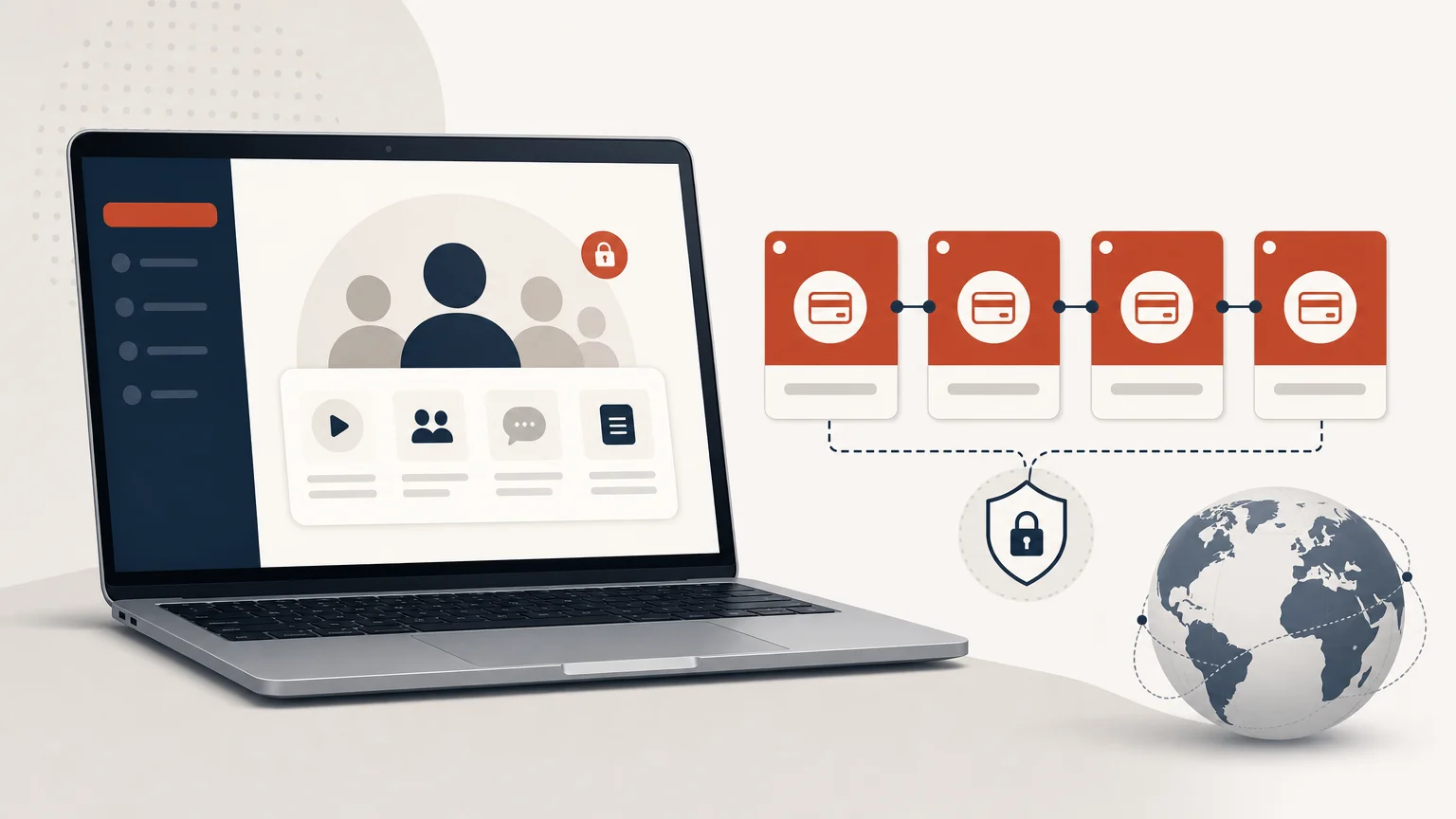
Can a buyer want your membership and still hesitate because the full price is due immediately? For a high ticket access offer, best BNPL options for high-ticket offers can reduce the upfront barrier, but only when the financing route, access delivery, fees, and refund responsibilities fit your business.
The important distinction is that BNPL usually finances a specific purchase, while a membership subscription creates repeated charges over time. The Federal Reserve overview describes BNPL as deferred payment financing, commonly structured around a small number of scheduled payments. For a US LLC owner living abroad, buyer country, seller eligibility, currency, tax responsibility, and community access must all be checked separately.
Key takeaways for membership operators
- Whop is the most practical option when one time financing and membership access need to sit in the same selling environment.
- Commas is more suitable for high ticket digital offers where Merchant of Record treatment and financing breadth matter.
- Stripe supports recurring billing infrastructure, but BNPL should be treated as a separate one time financing method unless the specific provider confirms otherwise.
- Klarna, Affirm, Afterpay, PayPal, and Sezzle are financing providers, not automatic solutions for recurring membership renewals.
- Whop's base payment fee is 2.7% plus $0.30, roughly 3% effective. Older comparisons quoting around 6% for Whop are obsolete.
- A US LLC and a non US residence do not guarantee approval. The provider may assess the seller, the buyer, the offer, and the transaction country separately.
BNPL for membership sites means two different products
- One time financed access means the customer buys lifetime, annual, or otherwise fixed term access and pays the financing provider in installments.
- Recurring membership billing means the customer is charged monthly, quarterly, or annually until cancellation.
- Installment plans can improve affordability for a large upfront offer, but they do not automatically create a successful renewal mechanism.
- Access control must respond to payment events, refunds, failed payments, cancellations, and financing decisions.
This distinction changes the ranking. A membership operator selling a premium annual pass may benefit from BNPL, while a low priced monthly community may be better served by ordinary recurring billing and local payment methods. Do not add financing simply because it is available. First confirm that the financed price, provider approval rate, payout schedule, and access rules still produce acceptable net revenue.
For international sellers, the legal and operational questions are equally important. The Congressional Research Service analysis treats BNPL as a form of point of sale financing, which means the customer relationship can involve the merchant, the payment processor, and the financing provider. Your terms should state who handles refunds, disputes, repayment questions, and access removal.
Best BNPL options for membership sites in 2026
| Rank | Option | Best use | Recurring membership billing | Fee and responsibility notes |
|---|---|---|---|---|
| 1 | Commas | High ticket digital offers and financed access | Subscriptions are supported, but BNPL eligibility requires confirmation | Fee: Non defini pour le moment. Commas acts as contracting merchant under its terms. |
| 2 | Sezzle | Eligible US and Canadian one time purchases | Recurring BNPL eligibility is not established | Merchant fee: Non defini pour le moment. Service, late, and rescheduling fees may apply. |
| 3 | Whop | One time paid community or membership access | Recurring products exist, but BNPL is one time only | Base processing is 2.7% plus $0.30. Financing terms vary by provider. |
| 4 | Stripe | Custom checkout with separate recurring billing | Recurring billing is supported separately from BNPL | BNPL fee: Non defini pour le moment. Provider and account eligibility apply. |
| 5 | Klarna | Flexible financing for eligible one time offers | Recurring BNPL eligibility is not established | Merchant fee: Non defini pour le moment. Lender terms and buyer approval apply. |
| 6 | Affirm | Higher ticket access offers requiring longer terms | Recurring BNPL eligibility is not established | Merchant fee: Non defini pour le moment. Interest may apply to longer customer plans. |
| 7 | PayPal | Membership sellers already using PayPal checkout | Recurring BNPL eligibility is not established | Merchant fee: Non defini pour le moment. Pay Later approval is transaction specific. |
| 8 | Afterpay | Short term installment payments for eligible buyers | Recurring BNPL eligibility is not established | Merchant fee: Non defini pour le moment. Customer eligibility applies to each purchase. |
1. Commas
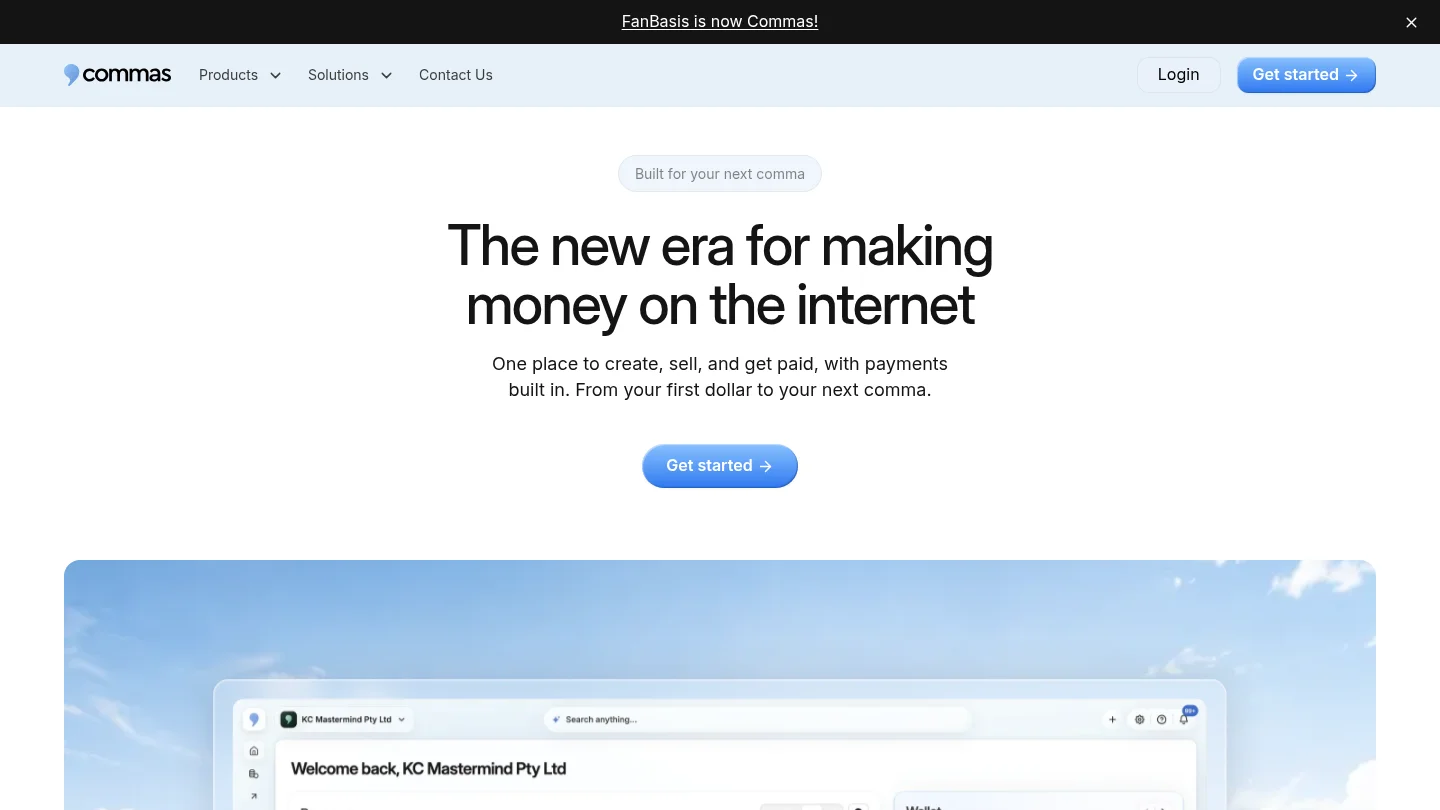
Best for: High ticket courses, coaching, memberships, and other digital offers where financing breadth and Merchant of Record treatment are important.
Commas is relevant when the membership is sold as a substantial upfront offer rather than a small monthly subscription. Its platform terms describe support for digital products, subscriptions, memberships, community access, and optional integrations for BNPL and payment acceptance. The terms also describe Commas as the sole provider and contracting merchant for transactions on the platform.
That structure may simplify the relationship between the buyer and the seller, particularly around billing and indirect taxes. However, the terms also preserve important seller responsibilities, including offer quality, legal compliance, and certain tax obligations. They allow payment holds, reserves, or restrictions during reviews, potentially for 180 days or longer when required by partners, networks, or regulators.
Pros:
- It is designed for digital offers that can include memberships and community access.
- Its contracting merchant model may simplify buyer billing, refunds, and indirect tax handling.
- It is better aligned with high ticket financing than a basic pay in 4 button.
Cons:
- Merchant and financing fees are Non defini pour le moment and should be confirmed before modeling margin.
- Long payment reviews or reserves can create meaningful cash flow pressure for a cross border seller.
2. Sezzle
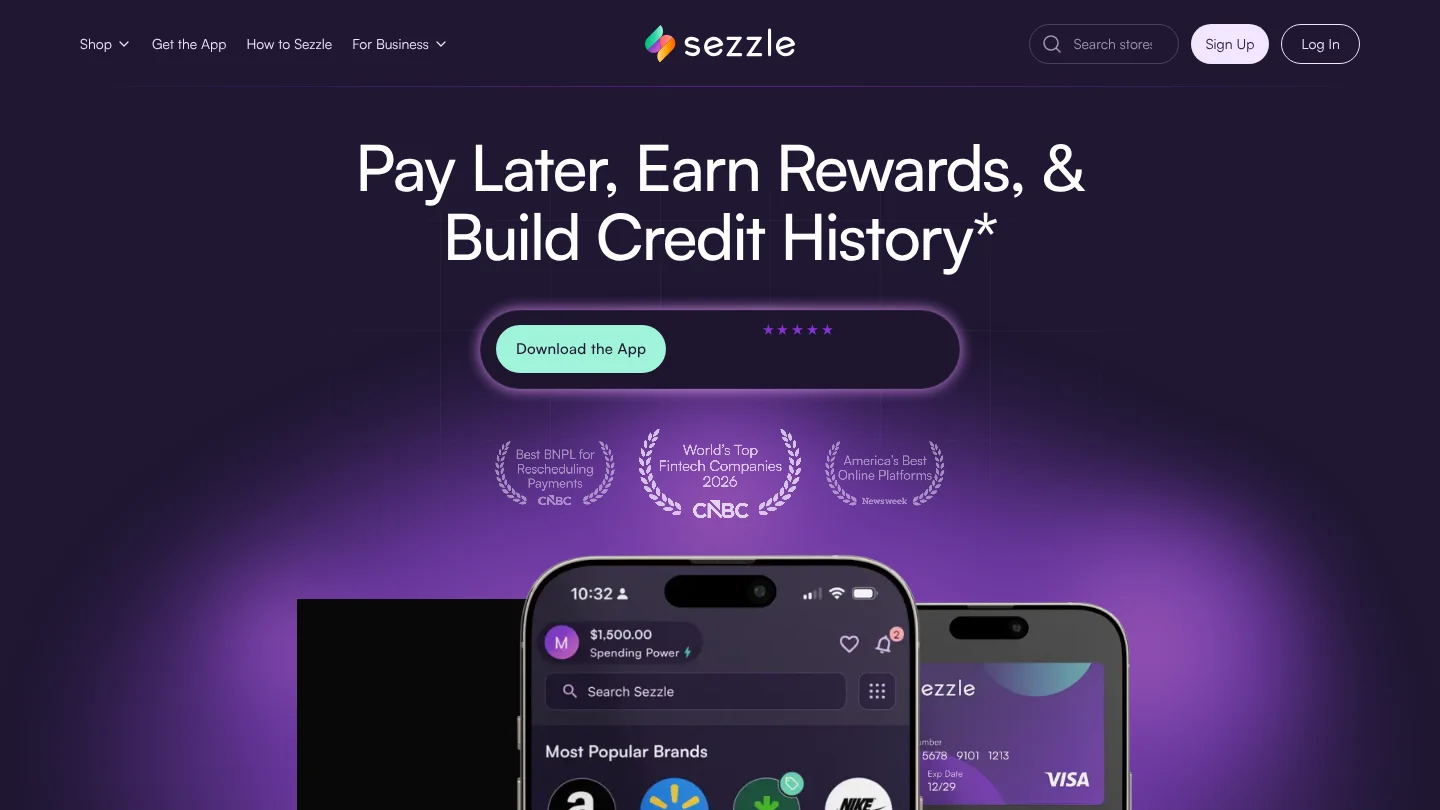
Best for: Eligible one time purchases from customers in the United States and Canada.
Sezzle offers short installment plans and longer monthly financing for eligible customers. It can be useful when your audience is concentrated in North America, but it is less compelling as a single global solution for a US LLC with buyers spread across many countries.
Service fees, late fees, failed payment fees, and rescheduling rules can vary. Confirm how settlement timing works in the route you choose, especially if financing transactions are settled on a different schedule from ordinary card payments.
Pros:
- It offers several installment structures for eligible customers.
- It covers the United States and Canada in the relevant comparison.
- Its rescheduling features may help customers manage temporary payment problems.
Cons:
- Merchant pricing is Non defini pour le moment.
- Customer fees and rescheduling conditions can make the product more complex.
- International coverage is narrower than the needs of a genuinely global audience.
3. Whop
Best for: Membership operators who want to sell one time financed access while keeping checkout and community access closely connected.
Whop is the most direct fit for a paid community or membership operator because its product model supports access delivery alongside payment collection. Its BNPL options apply to one time payments, not recurring memberships, so it works best for lifetime access, annual access sold as a single purchase, or a fixed term program.
Whop's base payment fee is 2.7% plus $0.30, which is roughly 3% effective for typical transactions. Financing partners may introduce separate terms, so calculate the full cost of the specific payment method instead of relying on old comparison pages.
Pros:
- It connects one time checkout with membership and community access workflows.
- It supports multiple financing routes, which can improve geographic and buyer fit.
- Its base processing fee is materially clearer than outdated comparisons that quote around 6%.
Cons:
- BNPL does not automatically finance recurring membership renewals.
- Each financing provider can impose different approval, currency, and customer eligibility rules.
4. Stripe
Best for: Operators who already use a custom checkout and need recurring billing, payment links, or a flexible API based payment stack.
Stripe is a strong infrastructure choice when the membership business needs separate control over subscriptions, invoices, customer records, and payment events. BNPL methods can be added through the payment stack for eligible one time purchases, but the existence of Stripe Billing does not mean that every BNPL provider will finance recurring renewals.
This route gives the operator more control, but it also creates more implementation work. Community access, entitlement changes, failed payment handling, and cancellation logic may need to be connected through separate systems. The operator remains responsible for making sure the payment event and the membership entitlement stay synchronized.
Pros:
- It supports recurring billing infrastructure independently from BNPL.
- It suits custom checkout flows and businesses that need detailed payment data.
- It can reduce the need to build a separate direct integration with every financing provider.
Cons:
- BNPL pricing is Non defini pour le moment in this comparison and must be confirmed for the selected method.
- Access gating and membership operations may require additional integrations.
5. Klarna
Best for: Membership businesses offering eligible higher priced one time access to buyers in markets where Klarna is familiar.
Klarna offers several payment structures, including short installment plans, deferred payment, and longer pay over time options. That flexibility can suit a premium annual membership or fixed term program, but the buyer and purchase must qualify. A seller should not assume that a direct Klarna relationship automatically makes a recurring membership eligible for financing.
Klarna can be useful for international demand, but country coverage is not the same as universal approval. The customer market, transaction currency, offer category, and seller account all matter.
Pros:
- It provides more than one payment structure for eligible buyers.
- It has strong recognition in several international markets.
- Longer plans may fit higher priced access better than a short four payment schedule.
Cons:
- Merchant pricing is Non defini pour le moment and may depend on the integration route.
- Late fees or interest may apply to customers under certain plans.
- Recurring membership financing is not established by the available evidence.
6. Affirm
Best for: Higher ticket memberships, masterminds, or fixed term programs where buyers need more time than a standard short installment plan provides.
Affirm is oriented toward pay over time financing and can support longer customer repayment periods than a simple four payment product. That makes it more relevant to a premium access offer than to a low priced monthly community. Longer customer plans can carry interest, and approval depends on the customer, purchase amount, merchant, and plan.
Affirm is best treated as a financing layer for a specific purchase. It should not be presented to customers as a substitute for ordinary recurring subscription billing unless the exact product terms say otherwise.
Pros:
- It can support longer financing for high ticket digital offers.
- It presents repayment terms before the customer completes the purchase.
- It may be a better fit than pay in 4 products for premium fixed term access.
Cons:
- Merchant pricing is Non defini pour le moment in the available comparison.
- Some customer plans may include interest or require a down payment.
- Recurring membership eligibility is not established.
7. PayPal
Best for: Membership sellers whose audience already expects to pay through PayPal.
PayPal Pay Later can be convenient when PayPal is already part of the checkout experience. Its consumer products include short installment payments and longer monthly plans in eligible markets. The value is less about specialized membership functionality and more about reducing friction for buyers who already trust the wallet.
PayPal does not remove the need to define how access, refunds, cancellations, and disputes work. For recurring memberships, verify whether the selected Pay Later product applies to the initial purchase only or to future renewals.
Pros:
- It uses a familiar payment account and checkout flow.
- It supports both short and longer payment structures in eligible markets.
- It can be practical for sellers who already reconcile PayPal transactions.
Cons:
- Merchant pricing is Non defini pour le moment for this comparison.
- Each transaction remains subject to customer and purchase approval.
- Recurring financing for membership renewals is not established.
8. Afterpay
Best for: Lower and mid priced one time membership purchases where a short installment structure is enough.
Afterpay is built around a simple pay in 4 experience, with longer plans available in certain markets and circumstances. This can make the offer easy to explain at checkout, but it is less suitable when the buyer needs a long financing period or when the seller wants to finance recurring renewals.
Afterpay assesses customer purchases individually. A buyer who was approved previously may not receive the same approval or spending capacity on a later transaction.
Pros:
- Its short installment structure is easy for customers to understand.
- It is available across several major markets, subject to local conditions.
- It can reduce the psychological impact of a moderate upfront price.
Cons:
- Merchant pricing is Non defini pour le moment.
- Longer financing may involve interest or additional customer conditions.
- Recurring membership eligibility is not established.
What to verify before enabling BNPL
- Offer eligibility: Ask for written confirmation that your membership, coaching, community, or digital access offer is eligible. A platform that supports digital products does not automatically approve every category.
- One time or recurring treatment: Confirm whether financing applies to lifetime access, annual access, fixed term access, or only a single transaction. Do not assume that a recurring plan can be financed through the same method.
- Total effective cost: Compare processing, financing, currency conversion, payout, refund, and dispute costs. Our editorial comparisons use effective fee analysis at different revenue levels rather than relying only on headline rates.
- Tax and Merchant of Record responsibility: Establish who is the legal seller, who issues the receipt, who handles indirect tax, and who responds to customer disputes.
- Access control: Decide what happens when the buyer is declined, refunded, late, canceled, or charged back. Access should not remain active by accident after the financial relationship ends.
- International coverage: Separate your seller location from your buyer locations. A US LLC owned by someone living abroad may need to pass identity, entity, banking, and compliance checks before any buyer can use financing.
- Cash flow: Verify when funds settle, whether reserves can apply, and whether the provider can delay payouts during account reviews.
WhatPayment focuses on these operational differences because membership businesses often fail at the boundary between checkout and access. We use hands on platform testing, test accounts, public documentation, fine print, creator feedback, and fee calculations across revenue levels. We do not process payments or provide community gating ourselves, so the comparison remains focused on selecting third party infrastructure for a specific business model.
Before adding BNPL, validate the underlying offer as well. Financing can reduce payment friction, but it cannot fix weak positioning, unclear access terms, or low demand. If you also use ad intelligence or offer validation tools, treat them as a separate decision from payment infrastructure.
Verdict: choose financing for the offer, not the word membership
For most paid community operators, Whop is the clearest starting point when the goal is to finance a one time membership purchase and deliver access in the same environment. Commas is more suitable for high ticket digital offers where contracting merchant treatment and financing breadth matter. Stripe is the better infrastructure route when recurring billing, custom checkout, and developer control are more important than native access delivery.
The central rule is simple: BNPL finances a purchase, while a recurring membership bills a relationship. Model the full effective cost, confirm buyer country coverage, obtain written offer approval, and define refunds, disputes, payouts, tax, and access removal before enabling the payment method.
Compare the best membership platforms
Choosing BNPL is only one part of running a membership business. You also need to compare access control, recurring billing, payout reliability, Merchant of Record coverage, community integrations, and the risks of holds or account reviews.

Our editorial research compares membership and payment platforms by effective fees, subscription capabilities, access gating, tax responsibility, international coverage, and operational fit. Use our guide to best membership platforms to narrow the shortlist before you commit to a checkout or community stack.
Frequently Asked Questions
Can BNPL finance recurring membership renewals?
Usually, you should not assume that it can. Most BNPL routes are designed around a specific purchase, while recurring membership renewals use subscription billing and must be confirmed separately with the processor and financing provider.
Is Whop suitable for a membership business with international buyers?
Whop can be relevant when you need membership access and one time financing in the same environment. However, available financing methods depend on buyer country, currency, eligibility, and the specific provider, so international coverage must be checked market by market.
Does a US LLC owner living abroad automatically qualify for BNPL?
No. Seller eligibility can depend on the entity, owner, residence, payout account, offer category, and compliance review. Buyer approval is a separate question and can vary by country and transaction.
Who handles refunds when a customer uses BNPL?
The answer depends on the contract and checkout route. Some providers manage customer repayment and refund adjustments, while the seller may still need to issue or fund the underlying refund and manage access removal.
Do I need a separate community access integration?
Sometimes. Platforms that combine checkout with membership access can reduce the integration burden, while processor first setups may require separate logic for granting, pausing, and revoking access after payment events.
Keep reading
Browse all guidesBlog
Best Payment Processor for Coaching Businesses Over 100k per Month
Blog
Best Payment Processor in 2026 for Global Digital Businesses
Guide
Stripe Banned My Account: 48-Hour Migration Playbook
Guide
Stripe Holding My Funds: What to Do Right Now
Guide
PayPal Account Frozen: 2026 Recovery Playbook for Creators
Guide