What you'll get
Choosing a Subscription Payment Processor for Global Sales
Compare a subscription payment processor for global digital products by billing, entity eligibility, tax responsibility, payouts, currency costs, and recovery.

Founder & Editor

If you live outside the United States but sell through a US LLC, will a processor approve the arrangement as it actually operates? A subscription payment processor must handle repeat charges, but the choice also affects how your business receives funds, manages renewals, and supports customers across borders. Our overview of payment processors for SaaS businesses is a useful starting point if your digital product is software or another recurring online service.
Payment habits also differ by market. Visa’s 2026 analysis measured online and in-app payments at 58% of US domestic payment volume in 2026, up from 48% in 2019. For a cross-border subscription business, this makes the customer’s checkout and the merchant’s settlement route separate decisions to evaluate.
- A payment processor handles payment transactions, while subscription billing manages recurring schedules and changes to plans.
- A Merchant of Record can take on seller responsibilities, but the exact duties depend on its agreement with your business.
- Your LLC’s formation country does not answer whether a provider accepts an owner who lives abroad.
- Compare transaction fees alongside billing charges, foreign exchange, payouts, refunds, and dispute costs.
- Ad intelligence can inform offer research, but it does not confirm a processor will approve your business.
What does a subscription payment processor actually do?
- A payment processor helps route and handle payment transactions.
- A billing system schedules renewals and keeps subscription details organized.
- A Merchant of Record takes a different role from a processor, with responsibilities defined by its contract.
The phrase “subscription payment processor” often describes several connected jobs. A customer agrees to recurring charges, a billing system sets the amount and timing, and a payment provider attempts each charge using the agreed payment method. A failed renewal then creates a separate task: notifying the customer, retrying when appropriate, or updating the payment details.
For a course, paid community, or digital download membership, ask whether the provider supports the billing changes your offer needs. These might include trials, plan changes, cancellations, usage-based charges, or proration when someone upgrades mid-cycle. A card processor that can accept a payment does not automatically provide every subscription-management feature.
Also distinguish a payment-service-provider arrangement from a Merchant of Record arrangement. With a conventional processor setup, the LLC generally remains the seller and handles its own seller responsibilities. A Merchant of Record may take on defined seller and tax-related duties for transactions it processes. Read the agreement to confirm which party handles tax collection and remittance, refunds, and disputes rather than relying on a label alone.
Which payment model fits a global digital subscription?
- Direct processing gives the business a payment relationship and may be paired with a separate billing system.
- A Merchant of Record bundles payments with seller responsibilities defined in its contract.
- A creator-commerce platform may combine checkout with digital-product or membership tools, so verify the recurring-billing details.
| Model and example | Where billing fits | What to verify for a US LLC owner abroad |
|---|---|---|
| Direct processor with subscription billing, such as Stripe Billing. | Payment acceptance and recurring billing may be provided within one provider’s products. | Eligibility for this exact profile is Non defini pour le moment, so request written confirmation of the LLC, owner residence, and payout account. |
| Merchant of Record, such as Paddle. | Payments, recurring billing, and defined tax responsibilities are combined under the provider’s model. | Eligibility for this exact profile is Non defini pour le moment, so confirm supported business details, payout terms, and the duties retained by your LLC. |
| Creator-commerce platform, such as Whop. | Checkout and creator-focused selling tools may be grouped with subscription or access workflows. | Eligibility for this exact profile is Non defini pour le moment, so confirm recurring-payment rules, payout destination, and account review terms. |
These models are not interchangeable. A direct processor can suit a business that wants control over checkout and billing logic, while a Merchant of Record can reduce some seller-side administrative work. A creator platform may bring checkout and product access closer together, but the offer still needs to fit its billing and account terms. For a focused comparison of two models, see Stripe vs. Paddle for subscription payments.
Do not assume that a US LLC makes the owner’s place of residence irrelevant. Before applying, send the provider the LLC’s formation details, tax identification information, the owner’s country of residence, the business’s operating address, and the intended payout account. Ask whether that exact combination is eligible and whether the provider needs additional verification documents.
How should a US LLC owner abroad check payments and payouts?

- Confirm the approved business entity and the owner’s actual country of residence.
- Confirm which bank accounts and payout destinations the provider supports for that profile.
- Separate the currency customers see from the currency your business receives.
Make the provider explain the whole payment path, not only the checkout. Ask which currencies customers can use, which payment methods support recurring charges, which currency your settlement arrives in, and where funds can be paid out. A provider may accept a customer’s local currency without paying the merchant in that currency, and conversion can affect the amount the LLC ultimately receives.
Review account checks and reserve terms before a launch or major campaign. Ask what documents the provider may request, how it contacts the account owner during a review, and what its agreement says about delayed or withheld payouts. These are practical questions for any merchant. They matter especially when the owner is not in the same country as the company’s formation or bank account.
The Federal Reserve’s July 2026 release of national payment data covers US noncash payment volumes from 2015 through 2024. That aggregate dataset offers context on US payment activity, but it does not establish that a particular provider accepts an overseas owner, supports your customer mix, or will pay your LLC through a specific route. Confirm those operational details directly in the provider’s current terms.
What does the full cost of a subscription processor include?
- Compare the processing charge with any separate subscription-billing cost.
- Include international payment, currency conversion, payout, refund, and dispute charges where applicable.
- Record each provider’s current documented amount, or mark it Non defini pour le moment until verified.
Do not compare providers using a single headline rate. Calculate the cost of a typical renewal and a typical international renewal, then include charges that apply outside the transaction itself. Those can include a billing add-on, currency conversion, payout fees, refunds, chargebacks, or monthly platform charges. The applicable fee depends on the provider’s current official pricing and the payment route, so obtain the relevant schedule before making a cost comparison.
Use the same example for every option. Set out the customer’s charge, the payment currency, the settlement currency, and the payout destination. Then subtract every documented fee and record who handles tax-related duties. If an amount is unavailable, write “Non defini pour le moment” rather than treating missing information as a zero charge.
Price also needs to be weighed against the operating model. A Merchant of Record’s charge may cover services that a direct processor setup requires you to arrange separately. A lower processing rate is not a like-for-like saving if billing tools, tax administration, or payout conversion are outside that rate. Our top payment processors coverage compares providers across effective cost, model, payout behavior, and business fit rather than relying on a headline figure alone.
WhatPayment is an editorial publication, not a processor or Merchant of Record. Our platform research uses test accounts, public and official documentation, fee calculations at different revenue levels, and quarterly article reviews. We disclose affiliate relationships; a qualifying reader action may generate a commission, while vendors do not pay for placement and do not review articles before publication.
How do billing recovery and offer research fit together?
- Test the customer’s renewal, cancellation, and payment-update experience before launch.
- Check whether failed-payment notices, retries, and plan changes suit the subscription.
- Use ad intelligence to study offers separately from payment approval and billing performance.
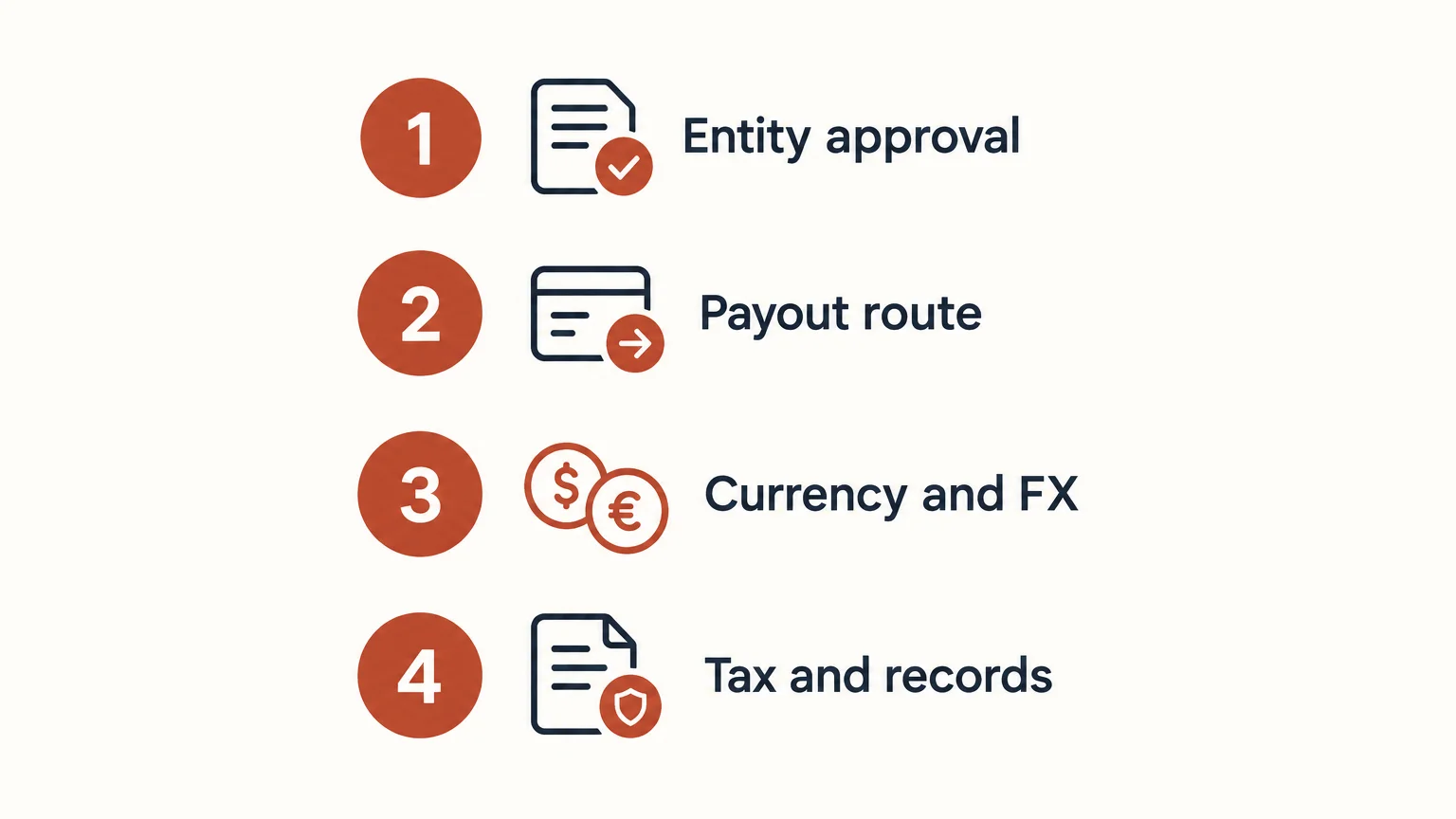
Recurring billing needs more than a successful first charge. Test what happens when a customer changes plans, updates a card, cancels, or receives a failed-payment notice. Check whether the system retries failed charges and whether those retries can be configured. If access to a course or community depends on a successful renewal, verify how billing status connects to the customer’s access.
Customer visibility matters too. Mastercard’s 2026 article, drawing on its report with FT Strategies, said 77% of consumers globally wanted to see and manage their subscriptions in their banking app. That finding does not determine which processor to choose, but it supports a practical check: make billing dates, renewal amounts, and cancellation options easy for subscribers to find.
Ad intelligence tools answer a different question: which offers, creative angles, or messages are visible in advertising? They can inform an infopreneur’s research before building a course, membership, or digital product. They do not prove an offer will convert, identify a processor’s underwriting decision, or replace a payment test. Keep the workstreams separate: use ad research to investigate demand, and use a test checkout and provider confirmation to evaluate payment readiness.
For a Merchant of Record option in a software or subscription workflow, our Paddle review is one editorial resource to consult. Compare its documented scope with the responsibilities your LLC wants to retain, and verify current terms before changing a live subscription setup.
Verdict: choose the model that fits your legal setup
The right subscription payment processor is the one that supports your actual LLC and owner profile, handles the recurring billing your offer needs, and provides a payout route you can operate from abroad. Compare the complete fee stack and tax responsibilities, then test renewals, failed payments, and cancellations before moving customers onto the system. Treat ad intelligence as offer research, not evidence of payment approval.
Compare payment options with evidence
Choosing a provider from a headline rate alone leaves important questions unanswered. Our free editorial research compares payment models, effective fees, Merchant of Record responsibilities, payout behavior, and subscription capabilities for digital businesses.

We use test accounts and official documentation, revisit articles quarterly, and do not accept vendor-paid placement or prepublication vendor review. Affiliate links may generate a commission after a qualifying action, while the reader pays the same vendor price. Explore our Stripe alternatives for SaaS subscriptions when comparing infrastructure for a software or recurring digital offer.
Frequently Asked Questions
What is the difference between a processor and subscription billing software?
A processor handles payment transactions, while subscription billing software manages recurring schedules and subscription changes. Some providers combine both, but confirm which features are included in the specific plan.
Does living outside the United States affect a US LLC’s eligibility?
It can affect provider onboarding or payout requirements, so do not assume that LLC formation alone establishes eligibility. Ask the provider to confirm your LLC, residence, operating address, and payout account together.
Is a Merchant of Record the same as a payment processor?
No. A processor handles payment transactions, while a Merchant of Record may also take on seller responsibilities defined in its agreement, including certain tax-related duties. Read the contract to identify what remains with your LLC.
Can ad intelligence tools tell me which processor to use?
No. Ad intelligence supports research into visible advertisements and offer positioning, while provider eligibility and payment performance require separate checks. Test the payment workflow and confirm the provider’s terms for your business profile.
How can I compare providers when pricing or eligibility is unclear?
Use current official pricing and onboarding terms, and mark any unconfirmed amount or requirement as Non defini pour le moment. WhatPayment’s editorial comparisons examine effective fees, business fit, payout behavior, and processor versus Merchant of Record responsibilities.
Keep reading
Browse all guidesBlog
Payment Processor Rankings 2026 for Digital Creators Abroad
Blog
Best BNPL for Membership Sites in 2026: 8 Options Compared
Review
Payhip Review 2026: When It Beats the Giants
Review
Sellfy Review 2026: Niche, But Genuinely Defensible
Review
ThriveCart Review 2026: Is the Lifetime Deal Worth It?
Review