What you'll get
Payment Processors for Global Digital Product Sellers
Compare this payment processors list for digital products, cross-border payouts, tax responsibility, and ad research as a US LLC owner abroad.

Founder & Editor
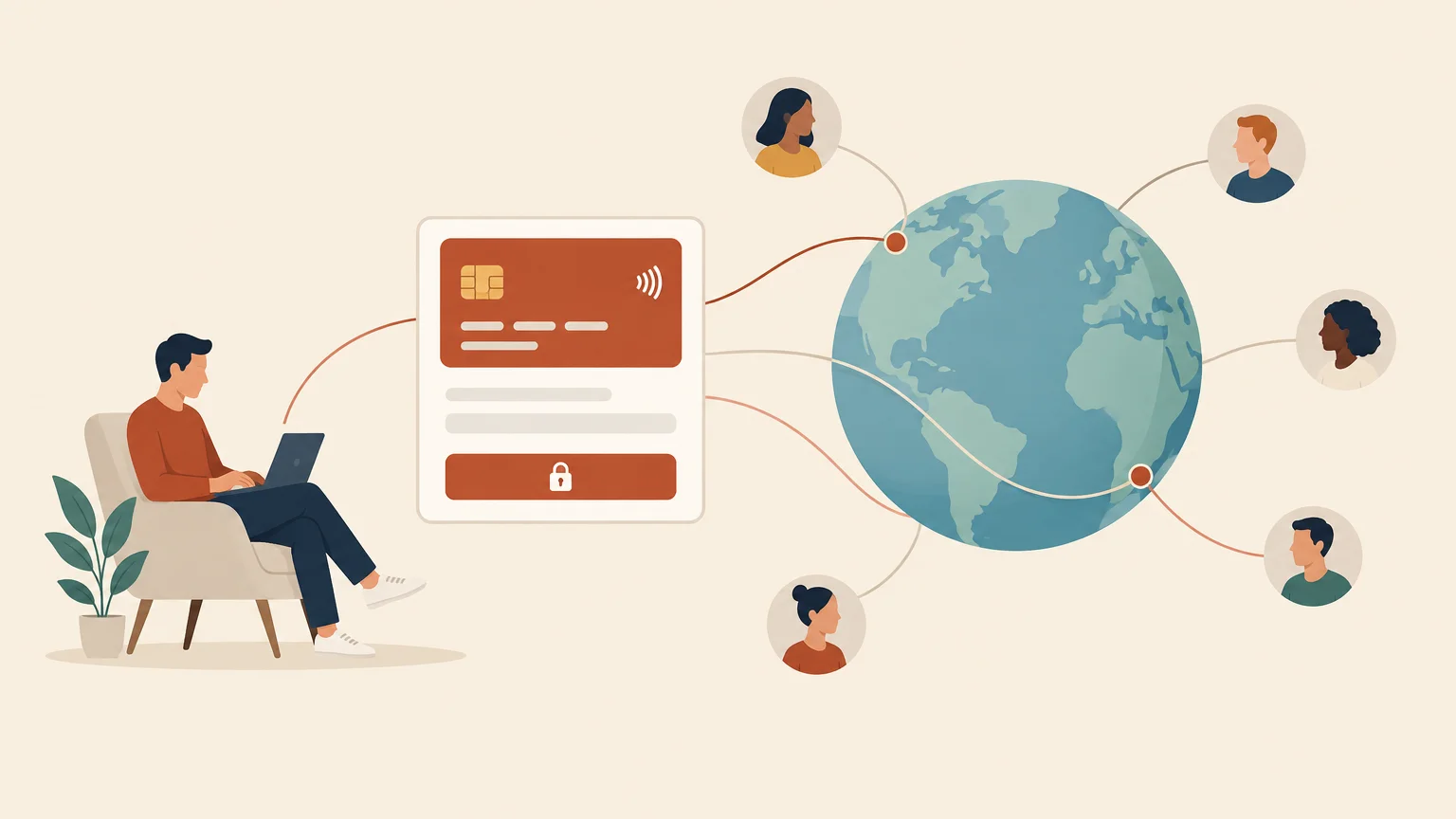
A processor account can pass initial review and still be a poor fit once the owner lives abroad and customers pay from several countries. The practical test is whether your business can qualify, collect in the currencies your buyers use, and withdraw funds where you bank. Our best payment processors coverage compares providers through those operating questions, not just the advertised card rate.
For a payment processor for digital products, separate the company’s country from the owner’s residence and the customer’s location. A US LLC does not by itself settle a provider’s identity, address, banking, or eligibility checks. A Merchant of Record can take on certain transaction tax duties, but it does not replace every obligation tied to the LLC. The IRS explains specific filing requirements for some foreign-owned US disregarded entities in its Form 5472 instructions, so treat payment setup and tax advice as separate decisions.
Quick takeaways for a US LLC owner abroad
Confirm whether the provider accepts your LLC and owner’s country of residence before transferring customers or changing checkout.
Distinguish a payment service provider from a Merchant of Record, because they do not assign the same transaction tax responsibilities.
Compare the complete cost, including international card additions, currency conversion, subscription tools, and payout charges.
Check how funds reach your actual bank account, not only the countries where customers can pay.
Use ad intelligence to study creative and offer positioning, not as proof that a product will sell.
Choose the payment model before comparing names
A direct processor gives you payment acceptance tools, while your business generally remains responsible for its seller and tax obligations.
A Merchant of Record handles the customer transaction as the legal seller for the responsibilities defined in its terms.
A creator platform may bundle checkout, product delivery, or access tools, but it is not necessarily a standalone processor.
Start by deciding how much payment and compliance work you want to keep in your own stack. A direct processor may suit a company that needs control over checkout and already manages billing, taxes, and support. A Merchant of Record can reduce the operational work around transaction taxes, but its fee and selling model deserve comparison against that added scope.
Use our top 10 payment processors overview for a broader provider scan, then check the payment processor rankings against your actual business model. Neither a global customer base nor a US company registration alone proves that a particular provider will onboard an owner living overseas.
Payment options for digital products
The table separates direct processors, platforms, Merchant of Record services, and bank debit collection.
Listed rates describe specific transaction types, not a guaranteed all-in cost for every international sale.
Confirm eligibility and payout terms directly before moving subscriptions or customer payments.
| Provider | Role and fit | Published fee information | Key check for an owner abroad |
|---|---|---|---|
| Paddle | Merchant of Record for software and digital products. | Its pricing page lists 5% + $0.50 per checkout transaction. | Confirm product eligibility, payout currency, and the precise scope of its service. |
| Gumroad | Creator platform for digital sales, with Merchant of Record tax handling. | Its seller signup page lists 10% + $0.50 for direct sales. | Compare direct sales with discovery sales and confirm withdrawal options. |
| GoCardless | Bank debit collection, especially relevant to recurring payments. | Non defini pour le moment. | Check whether the buyer’s bank method and your payout country are supported. |
| Stripe | Direct processor for online payments, subscriptions, and custom checkout. | Its US pricing page lists 2.9% + $0.30 for standard domestic online card payments. | Confirm business address, owner verification, supported country, and payout account. |
| PayPal | Processor and wallet option for online payments and invoices. | Its US merchant fee schedule lists 2.99% + $0.49 for standard domestic card payments. International commercial transactions add 1.50%. | Check account country, withdrawal route, and currency conversion costs. |
| Whop | Digital selling platform with payments and business tools. | Its published pricing lists 2.7% + $0.30 for domestic card transactions, with additional international card and currency conversion fees. | Check payout availability and whether its tax collection mode applies to your sales. |
These are published examples for specific transaction types, not the final rate on every sale. Check the provider’s current official pricing and terms for your account, card mix, customer countries, and payout currency before comparing costs.
Paddle
Best for: Software and digital product businesses seeking a Merchant of Record model.
Paddle’s official pricing lists 5% + $0.50 per checkout transaction and describes the price as covering payments, billing, and tax compliance. As Merchant of Record, Paddle states that it handles specified sales tax and VAT responsibilities. This shifts parts of transaction operations away from the seller, so compare the bundled cost with your current processing, tax administration, billing, and support expenses.
Pros
The Merchant of Record model combines checkout and defined transaction tax duties.
It is aimed at software and digital sales rather than physical retail checkout.
Cons
The percentage plus fixed checkout charge can be significant for low-priced orders.
Product eligibility and the exact scope of tax handling must be confirmed before migration.
Gumroad
Best for: Creators who want a platform for selling downloads, memberships, or other digital products.
Gumroad’s seller signup page lists a 10% + $0.50 fee for direct sales. Gumroad has described its Merchant of Record role as covering sales tax collection and remittance, but that does not replace separate obligations tied to your company. Compare the economics of direct sales with marketplace discovery sales, and check the current terms for your product and payout route.
Pros
The platform is oriented toward creator products and can reduce the need to assemble a separate digital storefront.
Its Merchant of Record model can handle defined transaction tax duties.
Cons
The direct sale percentage and fixed fee can take a substantial share of a low-priced transaction.
Marketplace discovery sales use a different fee basis, so do not model them as direct sales.
GoCardless
Best for: A subscription or service business that wants to collect bank debits as an additional payment method.
GoCardless focuses on collecting bank payments, including recurring debits. That can complement card acceptance for memberships, coaching, or invoices where customers prefer payment from a bank account. It is not a universal card checkout replacement: availability depends on supported bank schemes and countries, and bank debit timing differs from instant card authorization.
Pros
Bank debit collection can provide an alternative to card payments for recurring billing.
It can sit alongside a card processor rather than requiring every customer to use one payment rail.
Cons
It does not serve every customer or country as a card wallet would.
Confirm the current fee schedule and collection timing for your exact markets.
Stripe
Best for: A digital business that wants to manage checkout and recurring payments through a direct processor.
Stripe’s US pricing page lists a standard domestic online card rate of 2.9% + $0.30. Its global availability information distinguishes where a business can open an account from where it can sell, so a US LLC owner should review business location and identity requirements rather than assume that customer reach establishes account eligibility. Stripe does not act as your Merchant of Record.
Pros
It suits businesses that need direct payment acceptance and configurable checkout.
Its subscription and developer tools can support a software or membership business.
Cons
Your business retains its own seller and tax responsibilities.
Owner residence, business location, and payout account need to match the provider’s current onboarding requirements.
PayPal
Best for: Sellers who want to offer a familiar wallet alongside card checkout or payment requests.
PayPal combines a customer wallet with business payment services. Its US merchant fee schedule lists a standard domestic card rate of 2.99% + $0.49, with an additional 1.50% for international commercial transactions. Other transaction types have different rates, so compare the exact checkout method you plan to use. PayPal is not a Merchant of Record for all of your business’s tax obligations.
Pros
A wallet option can give customers another way to pay without relying only on card entry.
Payment requests and invoicing can suit services, coaching, and digital offers.
Cons
International charges and currency conversion can raise the total cost beyond a domestic card rate.
Account and withdrawal rules need checking for the owner’s location and receiving bank.
Whop
Best for: Creators considering a combined digital storefront, payment, and product access platform.
Whop is a selling platform rather than a conventional standalone processor. Its official pricing lists 2.7% + $0.30 for a successful domestic card transaction, often summarized as roughly 3%; the fixed amount means the effective percentage changes with the order value. International cards and currency conversion add costs. Whop’s terms also make the tax role conditional: check whether its collection and remittance mode applies instead of assuming every sale receives full tax handling.
Pros
A bundled platform can be useful when the offer includes a digital product, membership, or community access.
The published domestic card price gives sellers a clear starting point for fee calculations.
Cons
International surcharges and currency conversion should be included in the cost model.
A platform’s Merchant of Record wording does not automatically cover every tax responsibility in every mode.
Use ad intelligence to research offers, not payments
Ad spy tools help find live or archived creative examples and competitor messaging.
They do not process transactions, confirm profitability, or prove that an offer will convert.
Compare tool coverage with the platforms where your actual audience sees ads.
For an infopreneur, ad research can reveal how competitors frame a course, coaching offer, template, or membership. It is a separate decision from choosing a payment processor. Meta’s Ad Library is a public starting point for searching ads on Meta platforms; treat the information shown there as creative and advertiser research, not a merchant’s sales ledger.
Calculate the full cross-border cost
Start with your average transaction value and payment method mix.
Add international card charges, currency conversion, subscriptions, and payout costs where they apply.
Compare direct processing with any Merchant of Record fee only after including the work it takes over.
A percentage rate alone can mislead, especially on low ticket products. A fixed transaction charge takes a larger share of a small sale than a high-priced sale. For each provider, model at least your average order, your most common subscription price, and the countries where customers pay. Include refunds and disputes in the operating plan, even when a public rate card does not include every possible charge.
Also separate customer currency from payout currency. A buyer paying in one currency and an LLC receiving funds in another can introduce conversion costs or settlement steps. Ask the provider which bank accounts and payout methods are available for your owner’s residence and business structure, then confirm the timing and any conversion rate used. If an answer is not public or account specific, record it as Non defini pour le moment and request written confirmation before switching.
For further online selling comparisons, our best ecommerce payment processors coverage offers adjacent context, while this article remains focused on digital products rather than physical or retail sales.
Minea
Best for: Creators who want to search ad examples across more than one social platform.
Minea describes its ad research product as covering platforms including Facebook, TikTok, Pinterest, and Instagram. That breadth can help a creator compare hooks, visuals, and offer framing across networks. Its own positioning is strongly oriented toward ecommerce product research, so infopreneurs should judge it on whether the indexed examples match their audience and digital offer, rather than assuming a product trend predicts course or subscription demand.
Pros
Multi-platform ad discovery can support creative research beyond a single social network.
Search and filtering help organize examples for later review.
Cons
Its ecommerce orientation makes direct transfer to coaching, SaaS, or paid communities uncertain.
Ad visibility is not proof of spend, sales, margin, or profitability.
PiPiADS
Best for: Infopreneurs who want an ad research tool positioned around TikTok and Facebook creative.
PiPiADS describes itself as an ad spy and ad library tool for TikTok and Facebook. That makes it relevant for studying video hooks, creative formats, and competitors’ advertising examples. Before paying for any ad intelligence subscription, test whether its searchable records surface relevant digital products and whether its filters answer the questions you actually need answered. Treat its outputs as leads for research, not evidence that an offer has validated demand.
Pros
Its stated platform focus may suit creators researching TikTok and Facebook ads.
Ad examples can support creative and messaging analysis.
Cons
Do not infer revenue or conversion from an ad appearing in a searchable library.
Coverage depth and current plan costs should be checked before selecting a paid plan.
When your own marketing makes objective performance claims, the FTC’s advertising substantiation guidance is a useful reminder to support claims with appropriate evidence. Competitor ads can suggest angles to investigate, but they cannot validate your own product claims.
Verify eligibility and tax responsibilities before migrating
Describe the LLC, owner residence, product, billing model, and payout bank accurately in the application.
Ask what documentation verifies the beneficial owner and business operating address.
Read the agreement to determine which taxes the provider handles and which remain with the LLC.
Do not treat successful onboarding as a permanent guarantee that funds will never be reviewed or delayed. Keep clear product descriptions, customer support details, refund terms, and delivery records available, then understand the provider’s process for account reviews and disputes. For the tax side, a foreign-owned US disregarded entity can have Form 5472 and pro forma Form 1120 filing requirements in certain circumstances. A Merchant of Record can address defined transaction taxes, but it does not make every LLC filing or owner obligation disappear.
Before moving an existing audience, confirm the provider’s policies against your actual digital offer. Ask about recurring payments, refund handling, chargebacks, payout countries, conversion, and whether any course, membership, software, or coaching category is restricted. Written answers are more useful than assumptions based on a platform’s broad global marketing.
Verdict: match the provider to the whole transaction
The most useful payment processor options for digital products depend on whether you need direct control, wallet checkout, a creator platform, or a Merchant of Record. Compare eligibility for the owner living abroad, total international cost, payout route, and tax scope before judging headline rates. Keep ad intelligence in its own category: it can help generate research questions, but only customer and business evidence can validate an offer. Confirm account-specific terms before switching payment flows.
Compare Stripe alternatives for SaaS businesses
Choosing a payment setup from overseas involves more than finding a provider with international customers. You need to understand all-in fees, payout conditions, Merchant of Record responsibilities, and the support your billing model requires.

We publish independent payment infrastructure research for digital sellers, including hands-on platform testing, test accounts, official documentation review, and fee comparisons designed around different business models. Our articles are revisited quarterly, and stale information is corrected. WhatPayment is an editorial publication, not a processor or implementation service. We may earn affiliate commissions after qualifying actions, at no added cost to readers; vendors do not pay for placement or review articles before publication. Explore our Stripe alternatives for SaaS businesses when comparing direct processing with other billing models.
Frequently Asked Questions
Can I use a US payment processor if I live abroad?
Possibly, but forming a US LLC alone does not establish eligibility. Confirm the provider’s owner verification, business location, supported country, and payout requirements before applying.
Does a Merchant of Record handle all my taxes?
A Merchant of Record may take on specified transaction tax responsibilities under its agreement. That does not automatically replace the LLC’s own accounting, reporting, or owner tax obligations.
Is Whop a traditional payment processor?
Whop is a digital selling platform with payment capabilities, rather than only a standalone processor. Check its fee schedule and the exact tax mode that applies to your transactions.
Can an ad spy tool validate my course or membership?
No, an ad library can show creative examples and competitor messaging, but it does not establish sales, profit, or demand for your offer. Validate your own offer using customer evidence and measured results.
What should I compare beyond the card processing rate?
Include international card additions, currency conversion, fixed fees, subscription costs, payout charges, and the route and timing of funds. Also compare account eligibility, chargeback procedures, and which party handles transaction taxes.
Keep reading
Browse all guidesBlog
Top 10 Payment Processors for Digital Products in 2026
Blog
The Night Stripe Froze My $35,000 MRR Business
Guide
Grow a Paid Whop Community Using Cold Outreach (2026)
Guide
The Whop Operator Stack 2026: Tools for a Six-Figure Business
Guide
Stripe Radar False Positives: Fix Blocked Legit Payments (2026)
Guide