What you'll get
Best ecommerce payment processors for digital creators abroad
Compare best ecommerce payment processors for digital products, global payouts, tax responsibility, subscriptions, and creator friendly checkout.

Founder & Editor
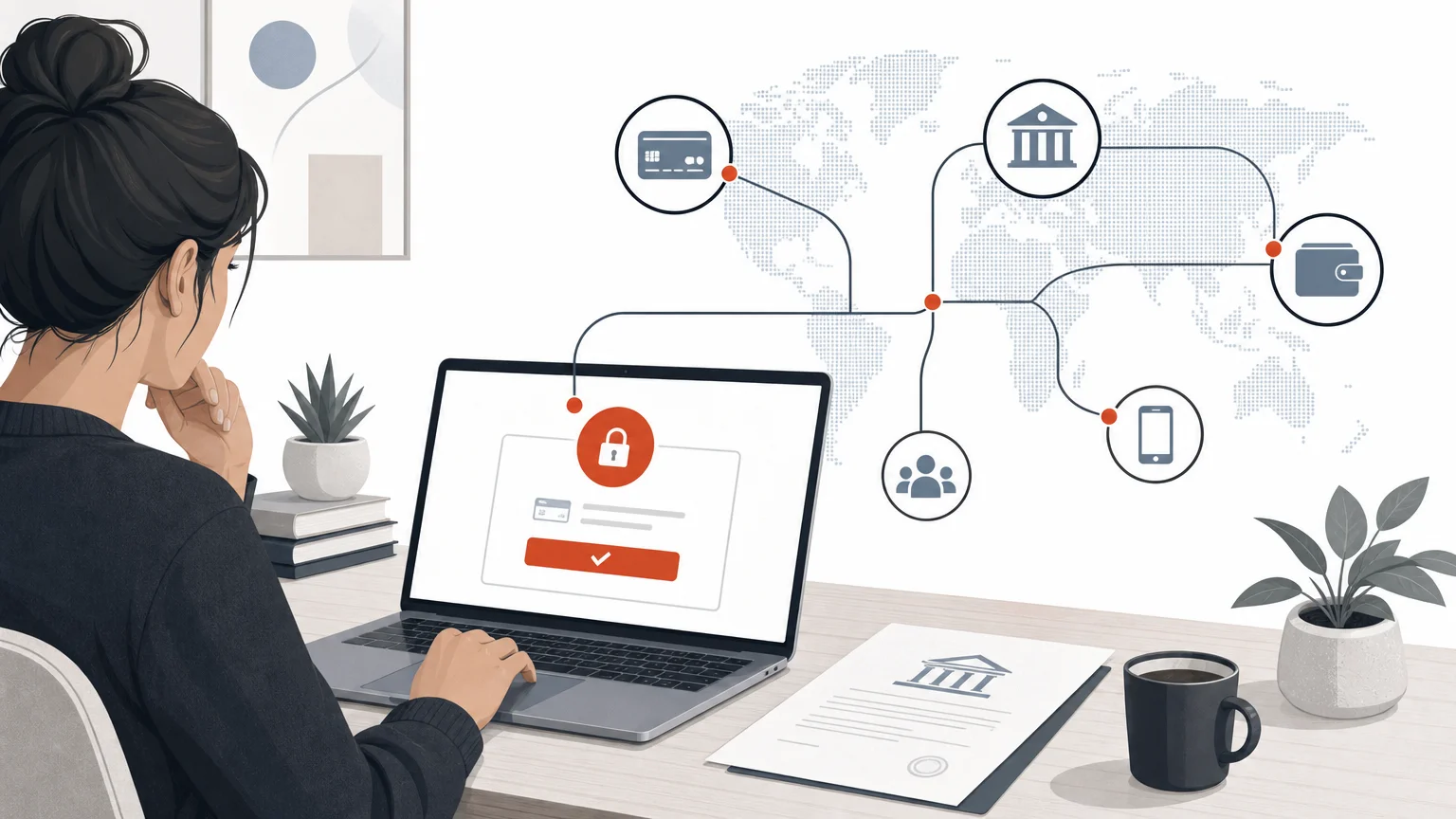
A processor can approve a sale in seconds and still create a serious cash flow problem later. For a creator with a US LLC, foreign residence, and customers across several countries, the best ecommerce payment processors must be judged by more than the card rate. Our broader comparison of best payment processors is useful for the wider market, but digital sellers need a closer look at tax responsibility, payout reliability, account reviews, and access to paid content.
A US LLC does not automatically remove indirect tax responsibilities. A non EU business selling digital services to EU consumers may need to examine the non Union One Stop Shop scheme and the destination of the customer, not only the location of the company. The EU OSS guidance is a useful starting point, but the correct treatment still depends on the product, buyer status, and selling model.
Key takeaways
- Whop is the clearest first option for creators who want digital product checkout, memberships, communities, and a published rate of 2.7% plus $0.30 for domestic card transactions.
- Stripe offers deeper developer control, recurring billing, reporting, and custom integrations, but it leaves the seller responsible for tax and account risk.
- Merchant of Record platforms can reduce indirect tax administration because the platform becomes the legal seller for defined transactions.
- International card fees, currency conversion, payout timing, refunds, and reserves can matter more than the headline domestic rate.
- Ad intelligence tools such as Minea and PiPiADS belong before processor selection because they help validate demand, offers, and competitor positioning.
- A second payment rail can reduce single processor dependence, but it does not remove the need for consistent compliance and accurate customer disclosures.
How to choose when customers and founders live in different countries
- Start with the legal seller question, then compare fees, payouts, checkout, and integrations.
- Separate payment acceptance from tax calculation, tax filing, and Merchant of Record responsibility.
- Model international cards and currency conversion instead of comparing domestic card rates alone.
The most important distinction is whether you remain the seller of record. With a direct processor, your LLC normally sells to the customer, receives the settlement, manages refunds, and carries the relevant tax and chargeback responsibilities. With a Merchant of Record, the platform may become the legal seller for the transaction and assume defined tax and dispute obligations. That convenience usually comes with a higher commercial cost and less control over the checkout relationship.
For a foreign owned US LLC, documentation also matters. The IRS explains that a foreign owned US disregarded entity may need to file a pro forma Form 1120 with Form 5472 when reportable transactions occur. The IRS Form 5472 instructions should be reviewed with a qualified tax professional before relying on a general setup guide.
Use our guide to the best payment processor for 2026 when you need a broader market view. For this audience, however, the decisive criteria are usually effective all in fee, Merchant of Record status, payout reliability, account review risk, subscription recovery, and whether the platform can deliver digital products or gate a paid community.
Payment processors for digital products, ranked
The ranking below is designed for creators, course operators, membership businesses, and SaaS founders. It excludes physical retail and ordinary point of sale systems. Any fee or operating detail not established in the available evidence is marked Non defini pour le moment rather than treated as free or unavailable.
| Rank | Processor | Best fit | Tax model | International use | Fee information |
|---|---|---|---|---|---|
| 1 | Whop | Digital products, courses, communities, memberships | Verify the exact product and jurisdiction | International cards and currency conversion supported | 2.7% + $0.30 domestic cards, plus applicable international and conversion fees |
| 2 | Stripe | Custom SaaS, subscriptions, developer led businesses | Seller remains responsible | Broad currency and payment method coverage | Non defini pour le moment |
| 3 | Paddle | SaaS and software sellers seeking Merchant of Record coverage | Merchant of Record model | International digital sales | Non defini pour le moment |
| 4 | Lemon Squeezy | SaaS and digital products with managed tax operations | Merchant of Record model | Multi currency digital sales | Non defini pour le moment |
| 5 | Gumroad | Creators prioritizing simple digital product distribution | Current responsibility, Non defini pour le moment | Current coverage, Non defini pour le moment | Non defini pour le moment |
| 6 | Adyen | Large platforms and enterprise digital businesses | Seller remains responsible | Global acquiring and local payment methods | Non defini pour le moment |
| 7 | Airwallex | International businesses combining payments and treasury | Seller remains responsible | Multi currency accounts and local methods | Non defini pour le moment |
| 8 | Fungies | Digital goods and SaaS sellers wanting Merchant of Record coverage | Merchant of Record model | Global digital checkout | Current commission, Non defini pour le moment |
1. Whop
Best for: Creators selling courses, coaching programs, ebooks, templates, memberships, signal groups, and paid communities.
Whop is the strongest overall fit when payment acceptance and daily digital business operations need to sit close together. The platform is relevant to sellers who want checkout, payment links, digital delivery, recurring payments, and community access in one environment. Its current standard domestic card fee is 2.7% plus $0.30, with an additional 1.5% for international cards and 1% for currency conversion when applicable. There is no monthly fee in the standard model.
The trade off is that you must still verify the precise tax, payout, and legal seller treatment for the product you plan to sell. Do not assume that a creator focused platform gives every LLC the same underwriting outcome or removes every compliance obligation.
Pros:
- Strong fit for digital products, memberships, and communities.
- Published card pricing is easy to model before launch.
- Native access and operational features can reduce the need for several disconnected tools.
Cons:
- International and currency charges can raise the effective cost.
- Merchant of Record treatment should be confirmed for the exact transaction model.
2. Stripe
Best for: Developers, SaaS companies, subscription businesses, and creators who need control over the payment flow.
Stripe remains the most flexible option in this selection for a custom application or a sophisticated subscription product. Its infrastructure supports APIs, hosted payment links, recurring billing, reporting, and a broad range of currencies and payment methods. That makes it a strong choice when your product needs custom checkout logic, usage based billing, trials, or integration with a wider software stack.
The limitation for a creator living abroad is operational exposure. Stripe is a processor, not a universal tax solution or a substitute for a second payment rail. You remain responsible for understanding your customer locations, refunds, disputes, and the relationship between your LLC, bank account, website, and business activity.
Pros:
- Excellent developer control and integration depth.
- Strong fit for subscriptions, SaaS, and custom billing.
- Useful reporting for payment performance and disputes.
Cons:
- More setup and operating complexity than a creator focused platform.
- Tax responsibility remains with the seller unless separate tools or a different model are used.
3. Paddle
Best for: SaaS and software companies that value Merchant of Record coverage over maximum control.
Paddle belongs near the top of any comparison for software founders who want a managed selling structure. Its relevance comes from the Merchant of Record model, which can simplify parts of indirect tax administration, customer billing, and digital software commerce. This can be especially attractive when customers are spread across countries and the founder does not want to build a separate tax and billing stack.
The trade off is reduced control compared with a direct processor. Current pricing, payout timing, supported business models, and account review terms are Non defini pour le moment in the available evidence, so a founder should request the commercial terms that apply to the actual product and expected volume.
Pros:
- Relevant Merchant of Record structure for SaaS and software.
- Can reduce the number of tax and billing tasks handled directly by the LLC.
Cons:
- Less direct control than a processor only setup.
- Current commercial terms require confirmation before a margin comparison.
4. Lemon Squeezy
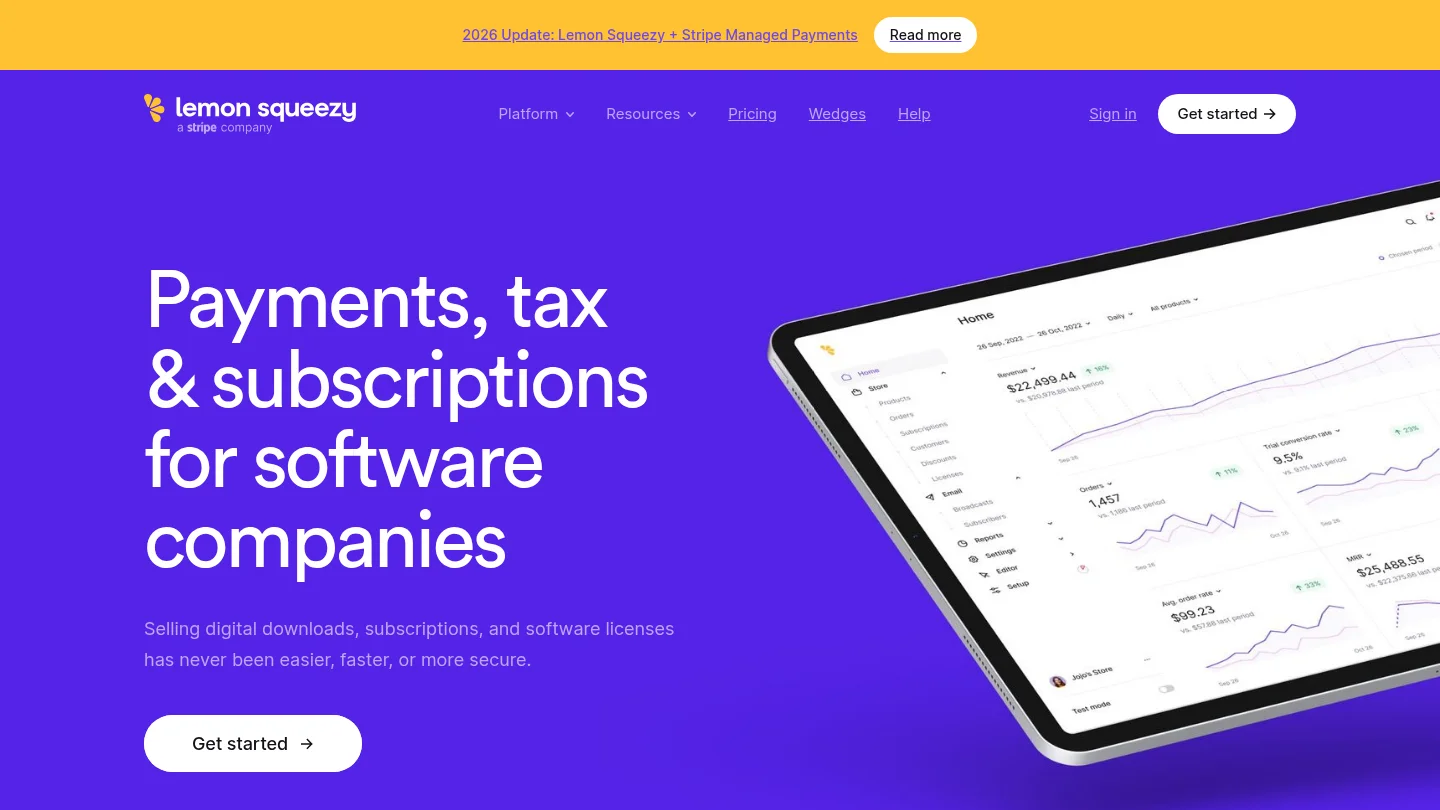
Best for: SaaS founders and digital product sellers who want payments, subscriptions, fraud controls, and tax operations in one platform.
Lemon Squeezy is positioned around digital products and SaaS rather than physical commerce. Its all in one structure is useful when the founder needs recurring billing, multi currency sales, fraud prevention, and managed tax responsibilities without assembling several services. That makes it a practical candidate for software, memberships, and downloadable products.
Its main limitation is the same one found with most managed platforms. A Merchant of Record model can simplify compliance while limiting some control over customer relationships, checkout behavior, and payment architecture. Current pricing and payout details are Non defini pour le moment, so the platform should be assessed against your average order value and refund profile.
Pros:
- Focused on SaaS and digital product operations.
- Useful combination of subscriptions, tax support, and fraud prevention.
Cons:
- Less suitable when you need a deeply customized payment stack.
- Current fees and payout terms require direct confirmation.
5. Gumroad
Best for: Independent creators who value simple product publishing and delivery.
Gumroad is a familiar option for writers, designers, educators, and other creators who want to sell digital products without building a full payment stack. It can be appropriate for a small catalog where speed and simplicity matter more than advanced subscription logic, custom checkout, or detailed financial operations.
For a US LLC owner abroad, the important questions are not only how quickly a product can be published. Confirm the current seller of record arrangement, payout countries, tax treatment, refund process, and account review policy before making it the only revenue rail. Current figures for fees and international coverage are Non defini pour le moment in the available evidence.
Pros:
- Simple starting point for digital product distribution.
- Less technical setup than a custom processor integration.
Cons:
- May provide less control for sophisticated subscriptions or SaaS.
- Current fee and payout terms need confirmation.
6. Adyen
Best for: Larger digital businesses, marketplaces, and platforms with enterprise payment requirements.
Adyen is better suited to an established operation than to a solo creator testing a first course. Its strengths include global acquiring, local payment methods, unified payment data, and enterprise risk management. The platform is relevant when authorization performance, multi region operations, and a centralized payment architecture justify a more involved implementation.
The limitation is proportionality. A small creator may not need enterprise onboarding, custom commercial terms, or complex integration. Adyen can be a strong infrastructure choice for a scaled SaaS or marketplace, but it is not the simplest answer for a creator who mainly needs a storefront, payment link, and paid community access.
Pros:
- Strong international infrastructure for larger businesses.
- Broad local payment method and acquiring capabilities.
Cons:
- More implementation complexity than most creator platforms.
- Current pricing and onboarding requirements are Non defini pour le moment.
7. Airwallex
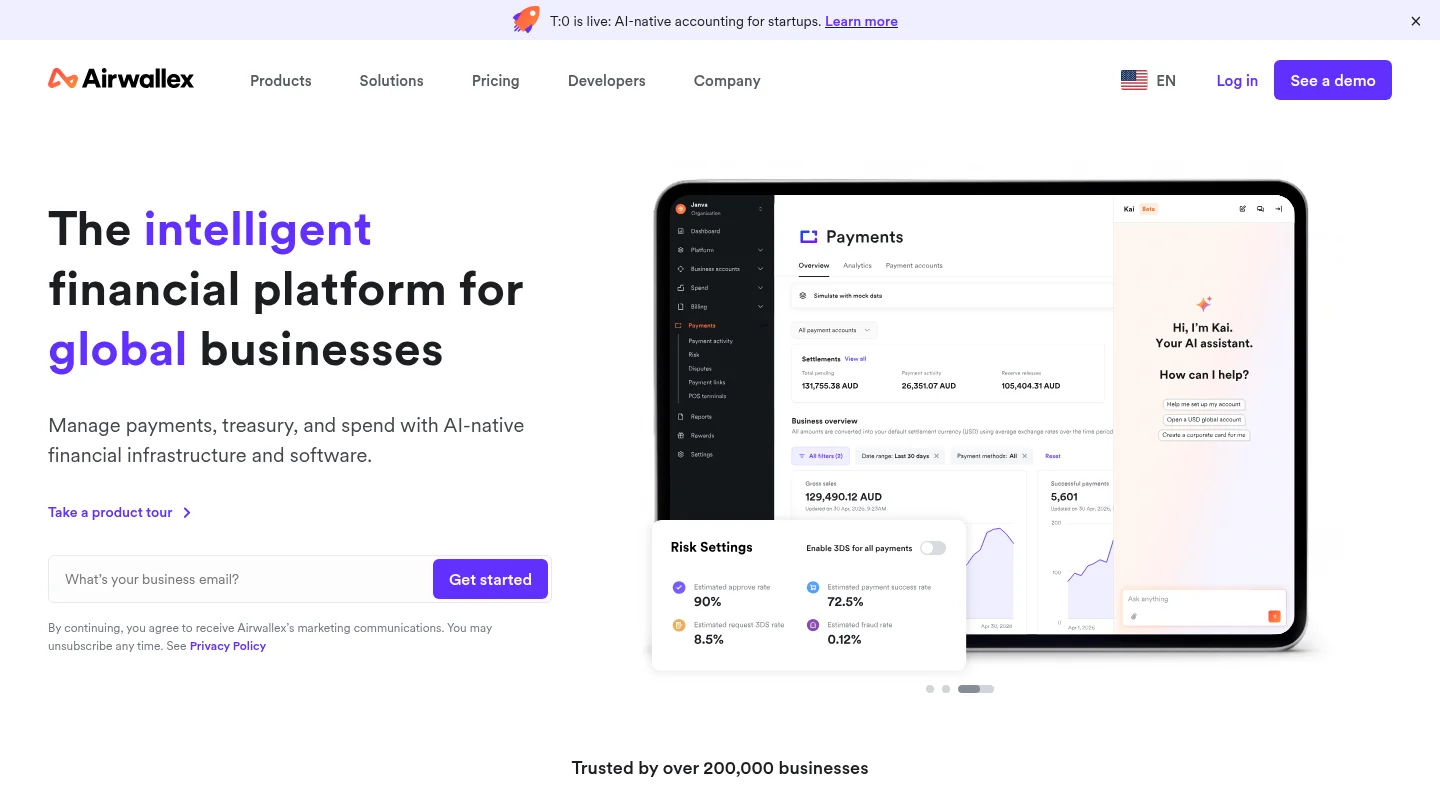
Best for: International businesses that need payment acceptance, multi currency accounts, foreign exchange, and global payouts.
Airwallex is relevant when the payment problem is also a treasury problem. Its platform combines online payment acceptance with multi currency business accounts, payment links, subscription tools, local payment methods, and international transfers. For a US LLC owner living abroad, that broader financial layer may help separate customer collections, currency balances, operating expenses, and payouts.
Airwallex is not a Merchant of Record by default, so using it does not automatically transfer tax responsibility away from the LLC. It is also broader than the needs of a creator who only requires digital delivery and community gating. The right comparison is therefore not simply Airwallex versus Whop, but payment infrastructure versus an integrated creator selling environment.
Pros:
- Strong fit for international collections and multi currency operations.
- Useful when payment acceptance and treasury need to be managed together.
Cons:
- Does not automatically solve Merchant of Record obligations.
- May be broader than necessary for a simple digital product business.
8. Fungies
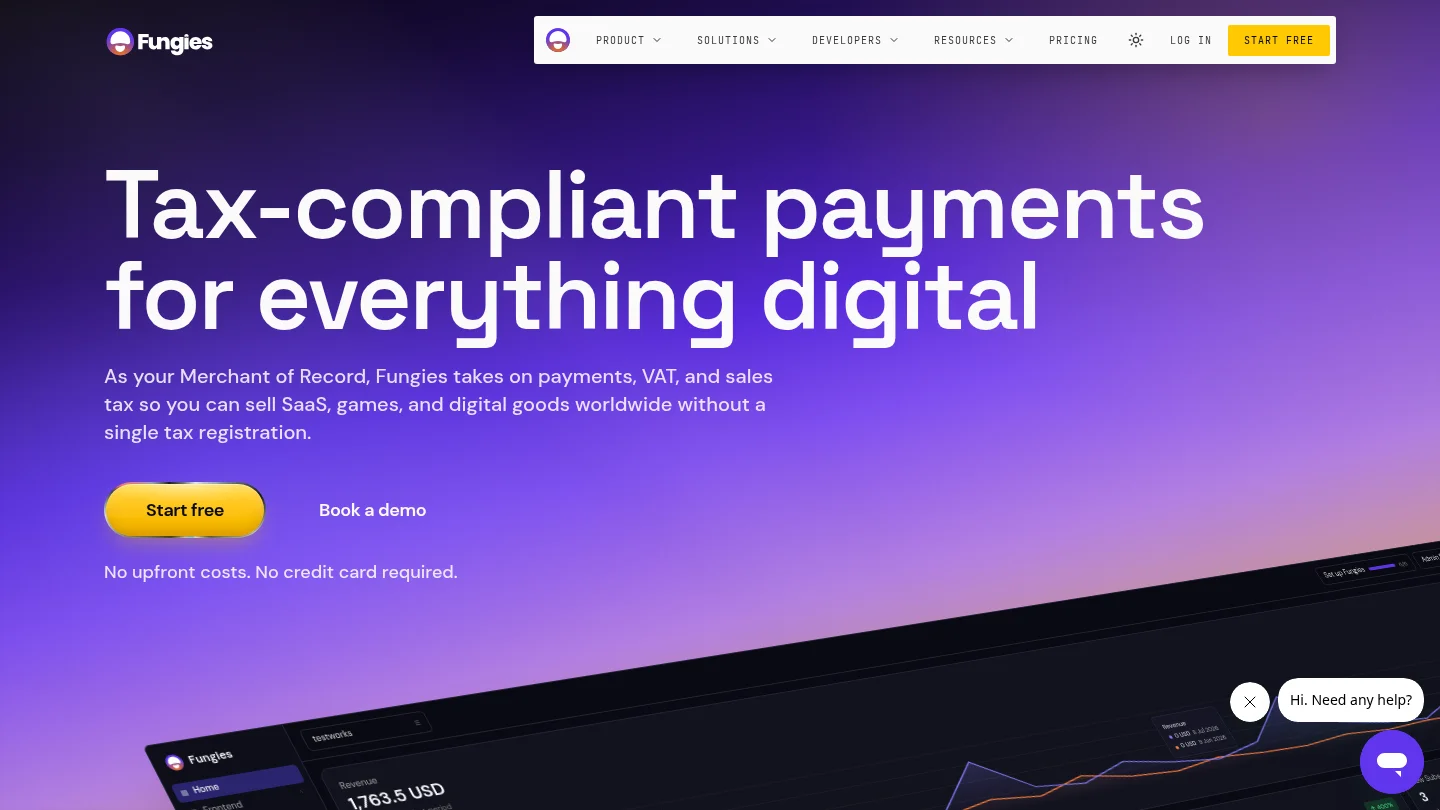
Best for: Digital goods and SaaS sellers who want a Merchant of Record structure with hosted or embedded checkout.
Fungies is one of the more directly relevant options for software, subscriptions, downloadable products, and other digital goods. Its published positioning emphasizes Merchant of Record coverage, tax handling, multiple payment methods, digital delivery, and recurring or usage based products. That combination can be valuable for a founder who wants to sell globally without personally building every tax and payment workflow.
The trade off is margin and platform dependence. A Merchant of Record can take on defined responsibilities, but the seller gives up some control and pays for that convenience through the platform’s commission. The current commission, payout conditions, and eligibility for your exact product are Non defini pour le moment here and should be checked before launch.
Pros:
- Clear focus on digital goods and SaaS.
- Merchant of Record positioning is relevant to international B2C sales.
- Hosted and embedded checkout options can reduce implementation work.
Cons:
- Merchant of Record pricing can reduce net margin.
- Current commercial terms require confirmation for a fair comparison.
What security and account risk should creators check?
- Use hosted checkout or tokenized payment fields where appropriate.
- Review dispute, refund, and payout reserve rules before a launch.
- Keep a second approved rail without moving volume in a way that breaches provider terms.
Payment security is not only the processor’s responsibility. The PCI Security Standards Council describes PCI DSS as a baseline of technical and operational requirements for entities that store, process, or transmit payment data. The PCI DSS baseline is therefore relevant even when a provider hosts the checkout.
Launch spikes deserve special attention. A creator may sell little for several weeks and then collect a large amount during a course launch. That pattern can trigger verification, payout delays, reserves, or requests for business documentation. Before launching, document the offer, refund terms, customer support process, expected volume, traffic sources, and delivery method. Readers working in sensitive or elevated risk categories can also review our guide to high-risk payment processors, but no platform should be treated as immune to underwriting decisions.
Where ad intelligence fits for infopreneurs
- Use ad spy tools to observe messaging, creative angles, landing page patterns, and offer positioning.
- Use offer validation before committing to a processor, subscription stack, or large launch budget.
- Compare the expected order value and refund exposure with the processor’s actual fee structure.
Ad intelligence is upstream from payment infrastructure. Tools such as Minea and PiPiADS may be relevant when an infopreneur wants to study existing ads or validate whether an offer has visible market activity, but their current pricing, data coverage, and feature limits are Non defini pour le moment in the available evidence.
The practical sequence is simple. First validate the offer and customer demand. Then choose the seller of record model. After that, test checkout, refunds, recurring billing, payout timing, and access delivery with a small transaction. This avoids building a complex payment system around an offer that has not yet demonstrated demand.
Verdict
For most displaced creators with a US LLC and customers across countries, Whop is the best starting point because it aligns payment acceptance with digital products, memberships, and communities while keeping its domestic card rate clear. Stripe is the better technical choice for custom SaaS and advanced billing. Paddle, Lemon Squeezy, and Fungies are more appropriate when Merchant of Record coverage is worth the loss of some control. The right decision should be based on effective cost, tax responsibility, payout resilience, and business model fit, not a headline rate alone.
Compare Your Payment Stack Before the Next Launch
Choosing a processor after a payout hold or failed launch is expensive. A structured comparison can clarify whether you need a direct processor, a Merchant of Record, a second payment rail, or a different checkout model.

We publish hands on comparisons, fee analysis, decision trees, and operator guides for creators, SaaS founders, course sellers, and international online businesses. Read our review of the Whop payment platform before deciding whether its creator focused model fits your product, customers, and risk tolerance.
Frequently Asked Questions
Does a US LLC remove VAT obligations for digital products?
No. A US LLC can help with contracting, banking, and processor onboarding, but it does not automatically remove VAT or sales tax responsibilities created by customer location and product type. Confirm the treatment of your digital product with a qualified tax professional.
Should a creator choose a Merchant of Record or a direct processor?
A Merchant of Record may reduce tax and dispute administration because the platform becomes the legal seller for defined transactions. A direct processor usually gives you more control and may preserve more margin, but the LLC keeps more operational responsibility.
Is the lowest processing rate always the best option?
No. International card fees, currency conversion, subscription billing charges, refunds, disputes, payout delays, and reserves can change the effective cost. Compare the complete payment flow at your expected order value and customer mix.
Can one processor support courses, subscriptions, and communities?
Some platforms support all three, but the depth of support varies. Check recurring billing, failed payment recovery, digital delivery, native access gating, refunds, and whether the platform integrates with the community or course environment you already use.
Do ad spy tools replace a payment processor?
No. Ad intelligence tools help study demand, creative patterns, and offer positioning before a sale occurs. They do not replace checkout, payment acceptance, tax handling, payouts, refunds, or dispute management.
Keep reading
Browse all guidesBlog
Best Payment Processor for Coaching Businesses Selling Globally
Blog
Best Payment Processor for SaaS: 8 Options for Global Sales
Alternatives
7 Teachable Alternatives Without the 7.5% Per-Sale Fee (2026)
Alternatives
Best Lemon Squeezy Alternatives in 2026 After Stripe Bought It
Guide
Form a US LLC Without an SSN (2026): Whop Does It for $400
Guide