What you'll get
Best Payment Processor for Coaching Businesses Selling Globally
Compare the best payment processor for coaching businesses selling globally, with fee, tax, payout and US LLC eligibility tradeoffs.

Founder & Editor

Choosing the best payment processor for coaching businesses is not just a checkout decision when a US LLC owner lives abroad. The mismatch between company formation, owner residence, buyer country, settlement currency and tax responsibility can determine whether a headline rate is useful. For launches above $100,000 per month, our guide to payment processors for high-volume coaching businesses explains why fee math and payout risk deserve separate attention.
A live coaching session, a self-paced course and a recurring membership can have different billing and platform needs. An LLC does not settle the owner’s tax or reporting duties: the IRS instructions for Form 5472 address reporting requirements that can apply to certain foreign-owned US disregarded entities. The right processor also depends on your actual residence and payout options, not only where you formed the LLC.
Key takeaways
- Whop’s official pricing lists a domestic card rate of 2.7% + $0.30, with additional charges for international cards and currency conversion.
- Stripe’s official US pricing lists 2.9% + $0.30 for domestic cards, plus additional charges for international cards and currency conversion.
- Paddle lists 5% + $0.50 per checkout transaction and positions its service as an all-in-one option that includes tax compliance.
- Lemon Squeezy lists a base fee of 5% + $0.50, with extra charges that can apply to international and subscription payments.
- Gumroad charges differently for direct sales and marketplace discovery, so its displayed base fee is not the whole cost of every sale.
What should an owner abroad compare first?
A US LLC does not, by itself, confirm that a provider will approve an account owned by someone living overseas. For the specific profile of a US LLC owner resident abroad, public evidence reviewed here leaves provider approval status Non defini pour le moment. Before changing systems, confirm how the provider evaluates your owner residence, company documents, bank account country, customer locations and product description.
- Compare total fees: Include international card and currency conversion charges, fixed transaction fees, any platform charges and possible payout costs.
- Understand tax responsibility: A payment service provider and a Merchant of Record do not take on the same obligations. A Merchant of Record may handle specified transaction taxes, while your income tax and other obligations remain a separate matter.
- Check the offer type: Confirm whether the platform accepts the actual product, such as live coaching, course access, a membership or a downloadable program.
- Confirm payout mechanics: Check whether payouts can reach your bank or payment account, in your country and preferred settlement currency, and how often funds become available.
- Plan for disputes: Clear descriptions, delivery records, accepted refund terms and documented client consent can help you manage disputes and payment reviews.
Comparison of payment processors for coaching businesses
| Rank | Provider | Published pricing | Tax and offer fit | International checks |
|---|---|---|---|---|
| 1 | Paddle | Official pricing: 5% + $0.50 per checkout transaction. | Merchant of Record model for digital products and tax compliance. | Customer market coverage does not establish seller eligibility. |
| 2 | Lemon Squeezy | Official pricing: 5% + $0.50 base, with some additional transaction fees. | Merchant of Record model for digital products and subscriptions. | Check supported payout country, method and schedule. |
| 3 | Gumroad | Official help lists 10% + $0.50 for direct sales, plus card processing; marketplace discovery sales have a separate fee. | Simple digital product sales and Merchant of Record tax handling. | Payout methods vary by country. |
| 4 | Whop | Official pricing: 2.7% + $0.30 for domestic cards, with additional international card and conversion fees. | Digital products, courses and community offers; tax modes are conditional. | Confirm seller eligibility, payout destination and currency costs. |
| 5 | Stripe | Official pricing: 2.9% + $0.30 for domestic cards, with additional international card and conversion fees. | Direct processing, with Managed Payments available for eligible digital sales. | Confirm onboarding eligibility for the owner’s residence and LLC. |
1. Paddle
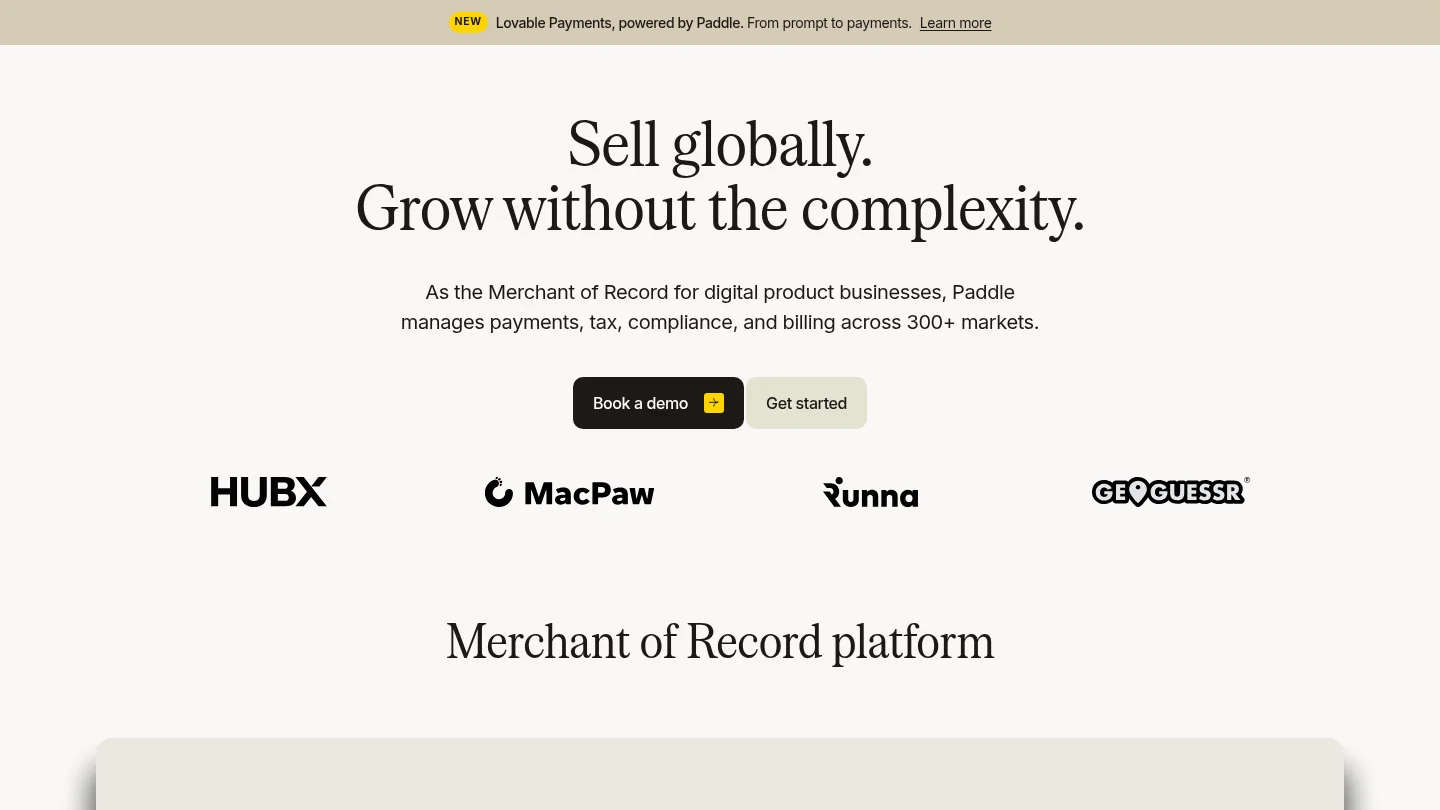
Best for: Coaches selling a packaged digital course or other digital product who value outsourced transaction tax handling.
Paddle’s official pricing lists 5% + $0.50 per checkout transaction and describes the price as covering payments, billing and tax compliance, without a monthly fee. Its developer documentation says it supports sales in more than 200 markets and handles specified tax calculation, collection and remittance as Merchant of Record. That describes buyer-market reach, not automatic approval for every seller or coaching offer.
This may suit a self-paced course or downloadable program better than a business built around one-to-one live sessions. Confirm that Paddle accepts your precise offer, sales process and company structure before you build your checkout around it. For other course-focused options, see our comparison of payment processor options for online courses.
Pros
- The Merchant of Record approach can reduce the seller’s workload for specified indirect tax responsibilities on covered transactions.
- One published checkout fee is easier to compare with a direct processor plus separately managed tax and billing tools.
Cons
- Its public materials emphasize digital products and software, so do not assume that every live coaching service qualifies.
- Market coverage for buyers is not proof that a US LLC owned by a nonresident will meet seller onboarding and payout requirements.
2. Lemon Squeezy
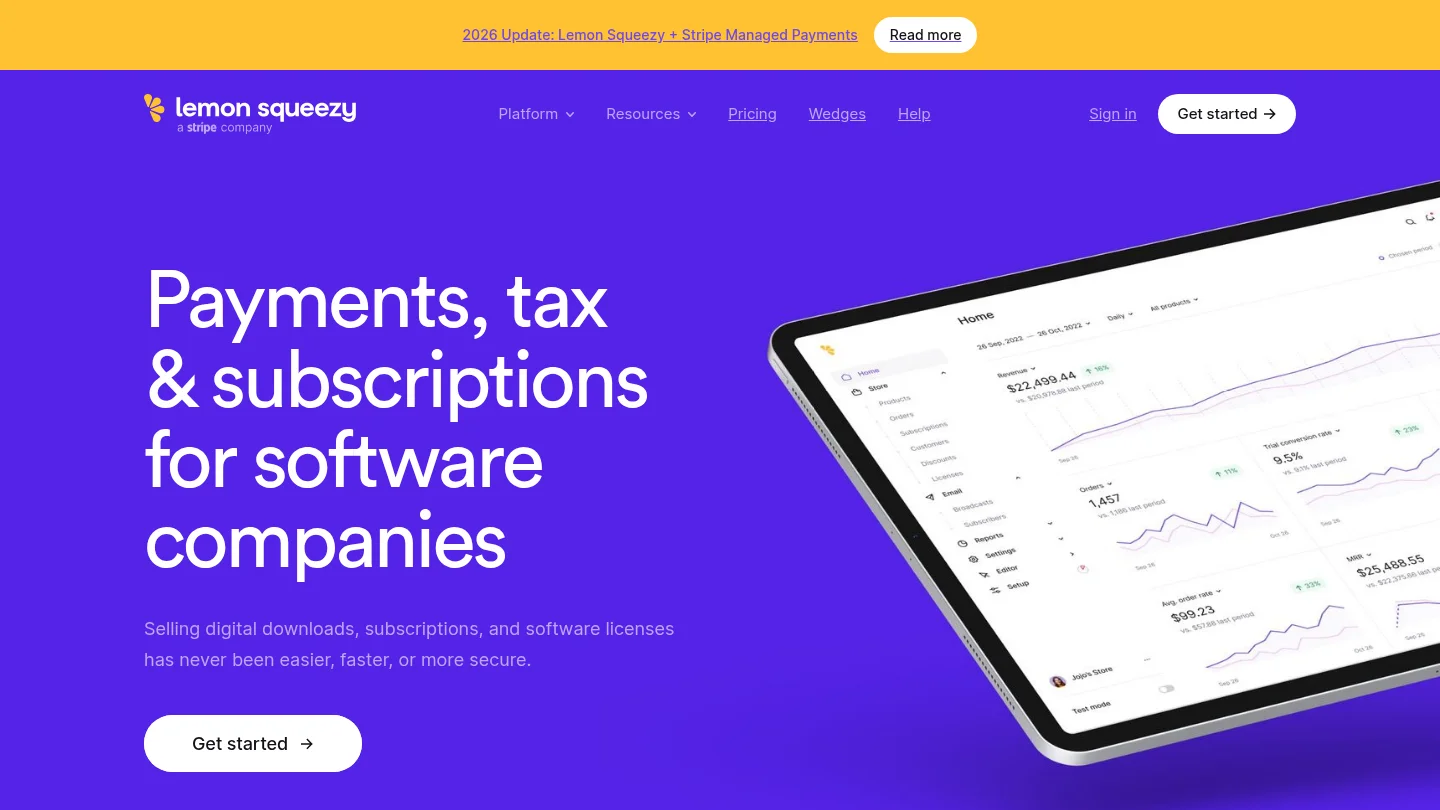
Best for: Coaches selling self-serve digital products or subscriptions who want a Merchant of Record rather than a basic card processor.
Lemon Squeezy’s official fee documentation lists a base platform fee of 5% + $0.50, with an additional 1.5% for international transactions and 0.5% for subscription payments where applicable. It acts as Merchant of Record for its sales, while its payout documentation says payout availability depends on supported bank or PayPal countries.
Cash-flow timing matters for an owner living abroad. Lemon Squeezy says payouts are created twice monthly, sales are held for 13 days before becoming available, and bank payments may then take 1 to 5 days to arrive. The payout documentation also lists a minimum payout threshold, so check the current rules and confirm that your preferred destination is supported before launching.
Pros
- The Merchant of Record structure can simplify covered sales tax and VAT collection and remittance.
- Its published payout schedule makes it possible to plan around availability delays rather than assuming card charges immediately reach your bank.
Cons
- The international and subscription surcharges can make the base price an incomplete estimate for a global membership.
- Twice-monthly payout creation and the hold period may be less convenient when you depend on frequent access to sales revenue.
3. Gumroad
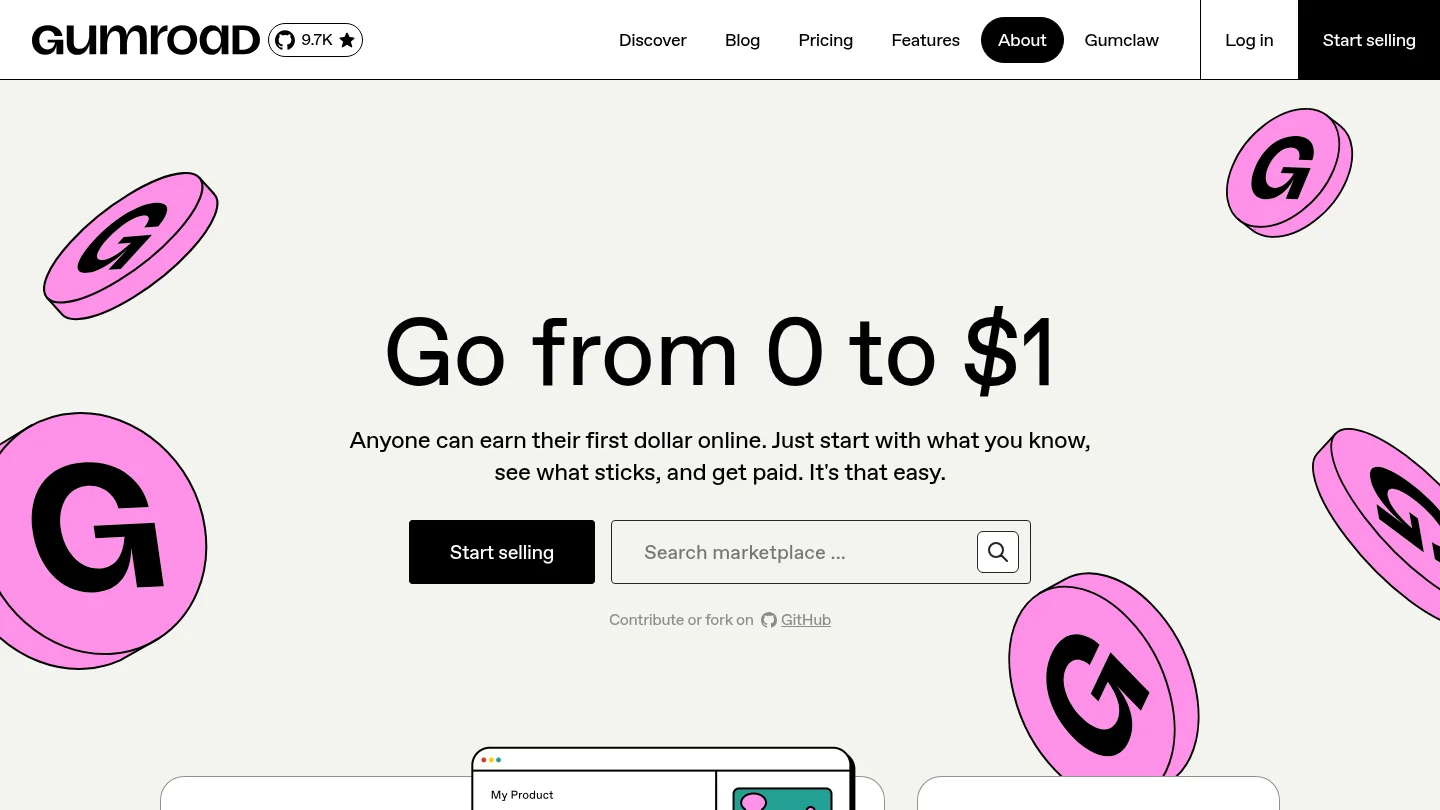
Best for: Coaches who want a simple storefront to test a digital download, course or membership without building a custom checkout.
Gumroad’s official help page lists a 10% + $0.50 fee for direct sales and says this does not include credit card processing fees. Its pricing information lists a separate 30% fee for sales attributed to its discovery marketplace, including processing. Gumroad says it became Merchant of Record on January 1, 2025, and payout methods vary by seller country.
The tradeoff is convenience versus cost control. Gumroad can make a small digital offer easy to sell, but the direct-sale fee plus card processing deserves careful review for high-ticket coaching or recurring programs. A marketplace discovery sale also has a different pricing basis from a customer who buys through your own link.
Pros
- A hosted storefront can be a straightforward way to test interest in a digital offer.
- Its Merchant of Record role covers specified sales tax responsibilities on sales through the platform.
Cons
- Direct sales carry a substantial platform fee in addition to card processing, which can reduce net revenue as offer value grows.
- Marketplace discovery sales have a separate fee, and payout availability varies by country.
4. Whop
Best for: Coaches who sell digital programs, courses or paid communities and want checkout and member access in one digital business platform.
Whop is a strong starting point when the offer combines a paid program with ongoing digital access. Its product documentation describes tools for courses and community features alongside storefront and payment functions. For a mastermind or group program, consider whether the platform’s access and billing setup matches the way clients join, renew or leave. Our guide to payment processing for high-ticket mastermind groups covers that related decision.
Whop’s official pricing lists 2.7% + $0.30 for successful domestic card transactions, an additional 1.5% for international cards and 1% for currency conversion. That domestic base is roughly 3% on a $100 charge, not the outdated “around 6%” shorthand. Review the current official pricing for the exact transaction route you expect to use.
Pros
- Its digital product and community orientation can reduce the need to stitch together separate access tools for a coaching offer.
- The published domestic fee is straightforward to model before adding international card and currency charges.
Cons
- Whop’s Seller Terms describe tax collection and remittance as conditional modes, with an additional fee for those modes. The seller remains responsible for other tax obligations.
- The domestic rate is not the full cost for a worldwide customer base, so calculate the international card and currency charges against your buyer mix.
5. Stripe
Best for: Coaches who need a direct payment processor, custom checkout or recurring billing that connects to an existing software stack.
Stripe can fit a coaching company that already uses compatible billing, course or customer management tools and wants control over its payment workflow. Its official US pricing lists 2.9% + $0.30 for domestic cards, with an additional 1.5% for international cards and 1% when currency conversion is required. Stripe’s standard processing does not itself make the coach a Merchant of Record.
Stripe also offers Managed Payments for digital goods. Its official product information states that this option adds 3.5% per successful transaction to standard processing fees and makes Stripe the Merchant of Record for supported transactions. This can shift specified indirect tax responsibilities, but it changes the cost calculation and does not settle your personal or business income tax position.
Pros
- Direct processing can suit businesses with an established tech stack and a need for checkout or billing flexibility.
- Managed Payments gives eligible digital goods sellers a separate Merchant of Record option rather than requiring every sale to use the same model.
Cons
- Standard processing leaves more operational responsibility with the seller than a full Merchant of Record arrangement.
- Using Managed Payments changes the fee stack, so compare its additional charge with other tax-handling options before switching.
Where do ad intelligence tools fit?
Ad intelligence tools are research aids, not payment processors. They can help an infopreneur examine competitor creative and offer positioning, but an ad’s presence does not prove that the offer sells, converts profitably or fits your coaching model. Meta’s Ad Library lets users search ads by keyword or advertiser, which can serve as one public research starting point.
Use competitor research to form hypotheses, then test the offer with real customer conversations and measured sales. Keep claims about earnings, transformation and typical client outcomes factual and supported: the FTC’s advertising guidance says advertising claims must be truthful, nondeceptive and evidence-based. Payment setup cannot repair an offer whose marketing creates avoidable disputes.
How to make the final choice
A coach selling courses and a coach delivering mostly live sessions may need different infrastructure, even when both sell through the same LLC. Before migrating, list your offer types, customer countries, recurring billing needs, payout destination and any tax responsibilities you want to outsource. The European Commission’s overview of the VAT One Stop Shop explains a mechanism for reporting eligible cross-border EU sales; it does not make every product, seller or tax obligation identical.
- If community access and a digital product workflow matter most, compare Whop with the systems you already use.
- If tax handling for packaged digital products is the priority, check Paddle, Lemon Squeezy and Gumroad’s eligibility rules and total fees.
- If you need direct control and custom integrations, assess Stripe, including whether standard processing or Managed Payments fits each product.
- If you sell high-ticket programs, compare card fees, installment options and potential buy now, pay later costs before advertising a payment plan. Our guide to payment processors for high-ticket coaching covers that separate decision.
WhatPayment is an affiliate-funded editorial publication. A qualifying action after a reader clicks a disclosed affiliate link may generate a commission, while the reader pays the same vendor price. Vendors do not pay for rankings or review articles before publication. Our general editorial method includes test accounts, official documentation, fee comparisons and quarterly article reviews, but that does not mean every provider detail in this article has been independently tested.
Verdict
For a digital coaching business built around courses, memberships or community access, Whop is a practical first platform to assess, especially if its product setup matches your delivery model. Its published domestic price is not its worldwide all-in cost, and its tax modes are not equivalent to assuming every sale is handled under a full Merchant of Record arrangement. Stripe remains a flexible direct-processing option, while Paddle and Lemon Squeezy may fit packaged digital products when their tax model, fees and seller eligibility work for you. For a US LLC owner living abroad, confirm approval and payout details before migrating clients or launching an offer.
The most useful payment processor for an international coaching business is the one that fits the actual offer, owner residence, customer mix and tax responsibilities, not simply the lowest headline rate.
Compare Payment Infrastructure for Your Coaching Business
Choosing a processor from abroad can involve more than comparing card rates. The company behind this article publishes independent editorial research for online businesses, including coaches, course creators and membership operators. Its comparisons examine effective fees, Merchant of Record status, tax responsibility, payout behavior and fit for specific business models.

Our free-access indexes, guides and comparisons use public documentation, test accounts and fee analysis to help readers narrow their options. Explore our research on payment processing for your coaching business, and review the article-level affiliate disclosure when considering a provider.
Frequently Asked Questions
Does a US LLC guarantee approval if I live abroad?
No. A US company does not automatically establish that a payment provider accepts an owner resident in another country. Confirm the owner, business and payout requirements directly before changing your payment setup.
Is Whop a Merchant of Record for every tax obligation?
No. Whop’s Seller Terms describe specific tax modes for certain transaction taxes, rather than removing every seller responsibility. The seller’s income tax and other obligations remain separate considerations.
Should I choose Stripe or a Merchant of Record?
Direct processing may suit a business that wants more control over its own checkout and tax workflow. A Merchant of Record may fit a digital product seller who prefers the provider to handle specified transaction tax duties, in exchange for its pricing and operating model.
Can a Merchant of Record handle my personal taxes?
A Merchant of Record may take responsibility for specified sales tax, VAT or GST duties on covered transactions. It does not determine the owner’s personal tax residency, income tax or reporting obligations.
Can ad spy tools tell me whether a coaching offer will sell?
No. Ad research can show examples of competitor messaging or visible ads, but it cannot establish your offer’s conversion rate, customer demand or profitability. Validate those assumptions with direct customer research and your own sales data.
Keep reading
Browse all guidesBlog
Best ecommerce payment processors for digital creators abroad
Blog
Best Payment Processors 2026 for Global Digital Products
Review
Sellfy Review 2026: Niche, But Genuinely Defensible
Review
ThriveCart Review 2026: Is the Lifetime Deal Worth It?
Review
GoHighLevel Review 2026: Honest Pricing, Fees, and Fit
Review