What you'll get
Best Payment Gateways for AI and LLM SaaS Applications
Compare the best payment gateways for artificial intelligence and llm saas apps by billing fit, global tax handling, and payment costs.

Founder & Editor
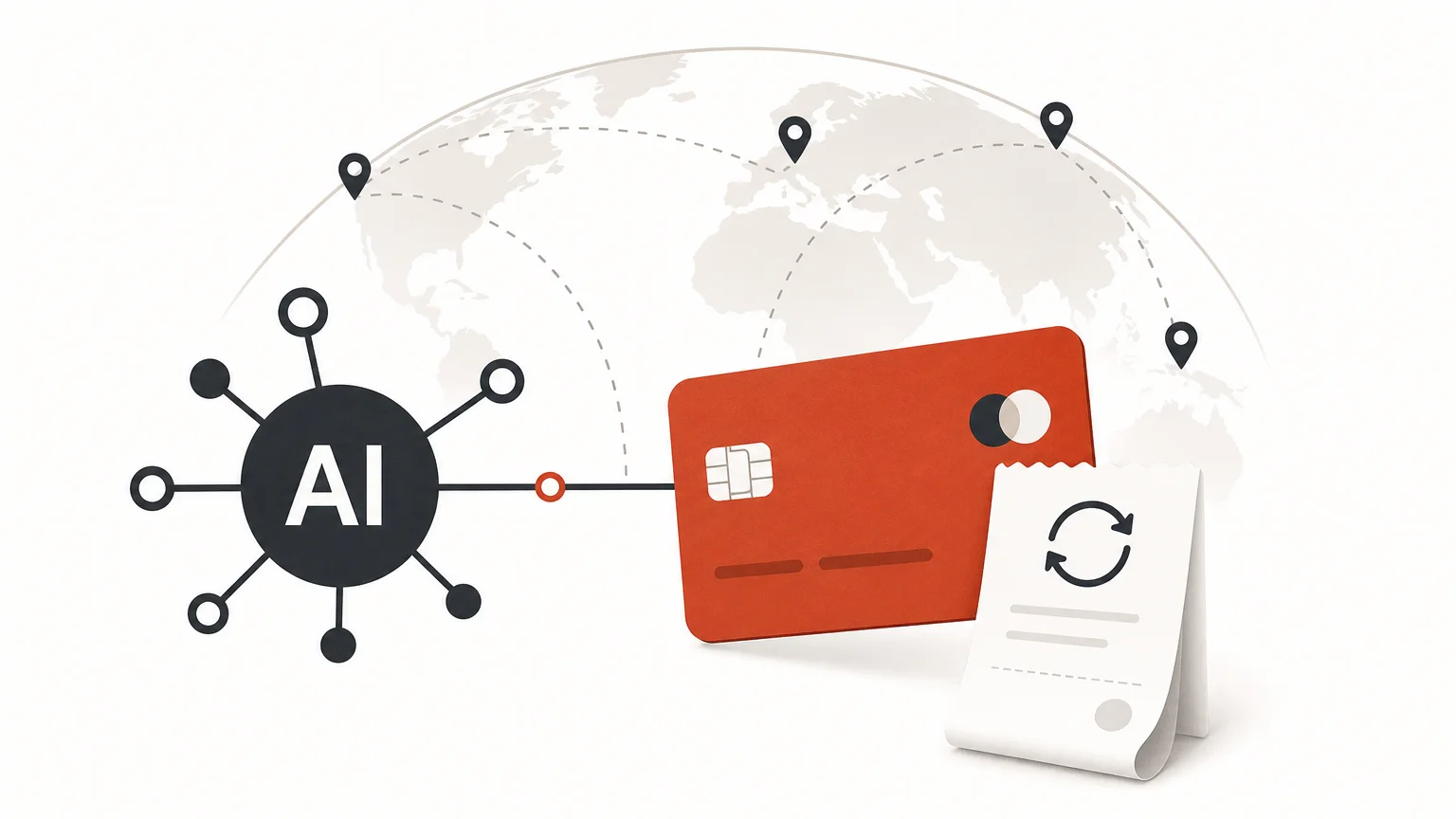
For a US LLC owner living abroad, the payment decision is more than choosing a familiar checkout. Your processor must fit where your business is registered, where you live, where customers pay from, and whether your AI product bills by subscription, credits, or usage. Our overview of payment processors for SaaS businesses offers wider context, but the right choice here depends on who meters usage and who takes responsibility for selling internationally.
AI products often need to connect variable model costs to customer billing without making invoices unpredictable. A 2025 SaaS benchmark report discusses a shift toward usage and outcome-based pricing alongside subscriptions, so founders should test whether a provider supports their intended billing model rather than choosing on checkout alone. High Alpha’s SaaS benchmark report provides broader market context, but your customer mix and product economics should guide your decision.
- Paddle is a Merchant of Record option for software sellers, with payments, billing, and tax compliance in one offering.
- Stripe Billing supports recurring and usage-based billing, with its Meters API and a separate payment processing layer.
- Whop’s official pricing lists a domestic card base fee of 2.7% + $0.30; international card and currency conversion charges can add to the total.
- PayPal’s published US fees distinguish domestic card charges from PayPal Checkout and add a separate percentage for international commercial transactions.
- Ad-intelligence tools help evaluate offers and advertising, but they do not replace billing, checkout, or payment processing.
Which payment gateways fit AI and LLM SaaS?
- Choose a Merchant of Record when reducing sales tax, VAT, and GST administration is more important than minimizing transaction fees.
- Choose a processor with metered billing when your product charges for tokens, API calls, credits, or other tracked usage.
- For a US LLC managed from abroad, check business eligibility, identity requirements, payout options, and the countries where you sell before migrating.
The options below serve different roles. Paddle and Verifone can bundle digital commerce services with international tax support, while Stripe is a flexible processing and billing stack. Whop is oriented toward digital products and paid access, and PayPal can be an additional checkout choice. These are not interchangeable: a payment gateway can collect money, but it may not calculate usage, manage complex subscription changes, or take on your indirect tax obligations.
Pricing in the table reflects the stated official pricing scope. Processing and billing charges can be separate, and cross-border fees, currency conversion, payment method, and negotiated terms can change the effective amount. Treat each figure as a starting point for a complete cost comparison, not as an all-in estimate for your business.
| Rank | Provider | Billing fit | Seller and tax role | Published price |
| 1 | Paddle | Subscriptions and digital software sales | Merchant of Record, with tax compliance included in the offer | 5% + $0.50 per checkout transaction |
| 2 | Stripe Billing | Subscriptions and metered usage | Payment processor, seller retains tax responsibilities | Billing: 0.7% of billing volume on pay as you go, plus payment processing |
| 3 | Whop | Digital products and recurring access, verify app metering needs | Confirm contract and tax responsibilities for your specific product | Domestic card base: 2.7% + $0.30 |
| 4 | PayPal | Checkout and standard commercial payments | Payment provider, seller retains tax responsibilities | US standard card rate: 2.99% + $0.49 |
| 5 | Verifone 2Checkout | Subscription plans and digital goods commerce | Offers Merchant of Record services; confirm the plan’s exact scope | 2Subscribe: 4.5% + $0.45 per successful sale |
What should an overseas US LLC check before choosing?
- Confirm that the account can be opened with your company structure and current country of residence.
- Compare payout destination, settlement currency, conversion costs, and expected payout timing.
- Separate consumption tax handling from your LLC’s other tax and reporting obligations.
A US LLC does not automatically make every payment account or payout route available to its owner abroad. Before integrating, check the provider’s current onboarding requirements for your entity, owners, operating address, and bank details. Also confirm whether the platform supports the currencies your customers use and what conversion happens before funds reach your account.
A Merchant of Record may take responsibility for collecting and remitting specified transaction taxes on sales it processes. That is not the same as handling your LLC’s income taxes, personal tax residency, or every filing tied to your business. Review the contract and seek advice for the jurisdictions that apply to you. Our guide to merchant of record options explains the difference between a Merchant of Record and a standard payment service provider.
1. Paddle
Best for: Software and SaaS founders selling internationally who want a Merchant of Record arrangement.
Paddle combines payment acceptance, checkout, recurring billing, and tax compliance in a Merchant of Record offer built for software and apps. Its official pricing page lists 5% + $0.50 per checkout transaction for pay-as-you-go pricing, with no monthly fee. That may suit a founder who values consolidating global sales administration, but it is a meaningful cost to compare against a processor plus separately managed tax tools.
For an LLM product, distinguish payment collection from product metering. Before choosing, confirm that your technical design can send the usage data you need, apply credits and limits, and reconcile those amounts to customer invoices. The Merchant of Record model can simplify specified sales tax and VAT work, but it does not remove every legal or tax responsibility attached to an overseas owner and US LLC.
Our Paddle review examines the product from a SaaS and digital sales perspective. Check the applicable agreement and technical documentation for your pricing model rather than assuming that a general subscription feature covers token-level billing.
Pros
- Combines checkout, billing, and Merchant of Record services for software sales.
- Published pricing makes the standard transaction charge clear before a sales conversation.
- Can reduce the operational work of handling covered indirect tax requirements across markets.
Cons
- The percentage-based fee may cost more than a processor-led setup as sales volume grows.
- You should verify the detailed usage-metering workflow for your LLM pricing before implementation.
2. Stripe Billing
- Best for: Engineering-led SaaS teams that want direct control of subscription and metered billing.
Stripe Billing supports recurring subscriptions and usage-based billing through Stripe’s billing tools. Its official pricing page lists a pay-as-you-go Billing fee of 0.7% of billing volume, separate from payment processing; the page lists a standard US card processing rate of 2.9% + $0.30 per successful charge. Basic usage-based billing through Meters is included with Billing pricing up to the stated monthly event allowance. Consider the combined charges, rather than treating the Billing fee as the whole cost.
This option suits a team prepared to implement the billing logic and keep control of the seller relationship. For LLM or AI apps, map events such as requests or credits to a customer-visible usage record, then test billing boundaries, failed payments, refunds, and subscription changes. Stripe is a payment processor, not a Merchant of Record, so tax registrations and remittance remain your responsibility unless you use an appropriate separate service.
Published industry research also highlights how AI pricing can combine fixed and variable elements, which makes it useful to design customer-facing limits and billing rules before launch. A report on AI pricing models can help frame that discussion, but it does not determine which payment stack fits a particular application.
Pros
- Supports recurring plans and metered usage in one billing environment.
- Offers flexibility for teams that want to customize product and payment flows.
- Separates billing from payment processing clearly enough to model the stacked cost.
Cons
- The company remains responsible for its tax position unless it separately arranges tax support.
- Usage metering and customer-facing cost controls still need careful product and engineering design.
3. Whop
- Best for: Digital businesses selling paid access, memberships, or creator-oriented software products.
Whop’s domestic card base price is 2.7% + $0.30 per successful transaction, which is roughly 3% effective depending on order size and before applicable international card or currency conversion charges. Its official pricing page lists those additional charges separately. Do not rely on older descriptions that characterize the current base fee as “around 6%.” For global customer billing, calculate the actual applicable fees rather than treating the domestic base price as the total cost.
Whop can be worth considering when you want to sell a digital product or paid access through a platform rather than build every commerce component yourself. However, an AI SaaS application may need precise token metering, credit balances, usage caps, and custom subscription changes. Verify whether your intended app flow supports those requirements and establish from the contract who is the seller of record and which tax duties are handled. A creator-focused platform is not automatically a fit for an API-first LLM business.
Pros
- Has a published domestic transaction rate and separate details for certain cross-border charges.
- Can fit digital products and paid access models without assuming a custom processor-only integration.
Cons
- Confirm app integration and token-level metering before treating it as a complete AI billing stack.
- Check the applicable agreement for tax allocation and payout terms for your location.
4. PayPal
- Best for: SaaS sellers who want PayPal or standard card payments as a checkout option.
PayPal can add a familiar payment route, but a checkout option is not the same as a complete usage-billing system. Its US Merchant Fees page, last updated October 1, 2026, lists 2.99% + $0.49 for standard domestic card payments and 3.49% + $0.49 for PayPal Checkout. The page also lists an additional percentage for international commercial transactions. Fees differ by payment type, so compare the route your customer actually uses.
For an LLM SaaS business, consider PayPal as one part of the acceptance mix if customers ask for it, then separately decide how subscriptions, usage records, retries, and customer entitlements will work. Do not assume that adding PayPal solves token metering or tax collection. A founder living abroad should also check account eligibility and how available settlement options work with the LLC and bank account before placing it at the center of the payment stack.
Pros
- Can give buyers a checkout route beyond a card-only form.
- Its published fee schedule distinguishes payment types and international charges.
Cons
- Payment acceptance alone does not establish that the full LLM metering and subscription workflow is covered.
- Different transaction types carry different charges, so headline comparisons can mislead.
5. Verifone 2Checkout

- Best for: Software sellers comparing subscription commerce and global digital goods services.
Verifone’s 2Checkout pricing page lists 2Subscribe at 4.5% + $0.45 per successful sale, with subscription management features for renewals and upgrades. It lists 2Monetize as a digital goods option with tailored pricing and global tax and regulatory compliance features. The company describes Merchant of Record services, but review the specific offer and agreement to establish exactly what is included for your product and business location.
This is a possible fit if you want a digital commerce provider with more than simple card processing. Compare the relevant 2Checkout plan against Paddle on total transaction cost, tax handling, customer billing, and the app integration you need. For AI usage charging, verify event-level metering and credit workflows directly; subscription management alone does not prove that the provider can rate every model call in the way your product requires.
Pros
- Offers a subscription plan and a separate digital goods plan with tailored pricing.
- Its published material describes global commerce and tax compliance features.
Cons
- 2Monetize pricing is tailored, which makes a direct public fee comparison difficult.
- Confirm the plan-specific tax role and usage billing capability before committing.
Why ad intelligence belongs in a separate decision
- Ad-spy and offer-validation tools inform what to build or market.
- Payment providers collect money and support billing workflows.
- Choose each tool for its own job rather than expecting one to replace the other.
Infopreneurs may use ad-intelligence tools such as Minea or Pipiads to research offers and advertising before investing in a product launch. These tools do not process customer payments, manage subscriptions, or meter LLM usage. Keep the workstreams distinct: validate the offer first, define the product’s pricing units, and then choose payment infrastructure that can collect and reconcile the resulting charges.
How to compare the real cost and tax trade-off
- Estimate processing charges alongside any separate billing platform fee.
- Include cross-border card fees, currency conversion, refunds, disputes, and payout costs where applicable.
- Compare any Merchant of Record charge with the administration and professional support you would otherwise need.
A headline card rate is not your effective all-in cost. For a SaaS business, model representative customer baskets and expected renewals, then add the charges that apply to the payment types and currencies your buyers actually use. Our comparison of the best payment processors explains why this full-cost view can change which provider looks least expensive.
Billing complexity also grows when the product combines seats, recurring plans, credits, and variable usage. A separate industry analysis describes how AI monetization can depend on units such as tokens, credits, or actions, while a technology publication has discussed the challenge of connecting AI consumption to revenue. Read those perspectives as context, then pressure-test your own pricing and costs. Coverage of AI monetization challenges is not a substitute for modeling your app’s margins.
WhatPayment’s editorial process compares effective fees, Merchant of Record status, tax responsibility, currency coverage, payout behavior, and business-model fit. Our broader coverage uses official documentation, test accounts, and defined criteria, and articles are revisited quarterly to correct stale information. WhatPayment is affiliate-funded: qualifying clicks on disclosed affiliate links may generate a commission without changing the reader’s price. Vendors do not pay for placement or review content before publication.
Verdict
For a global self-serve AI or LLM SaaS that wants a Merchant of Record, Paddle is a strong starting point, provided its cost and usage workflow fit your product. Stripe Billing is a compelling alternative when your engineering team wants metered billing and is prepared to own tax administration. Whop, PayPal, and Verifone each suit narrower or different commerce needs, so verify app-level metering and your seller and tax responsibilities before switching. The best payment gateway for AI SaaS is the one that matches your pricing mechanics, cross-border customer base, payout realities, and capacity to handle compliance.
Compare Stripe alternatives for SaaS
Choosing a gateway is only one part of the decision, especially when your LLC is in the United States, you live abroad, and your customers are spread across markets. We compare payment infrastructure by effective costs, Merchant of Record status, tax allocation, payout considerations, and business-model fit, so you can investigate trade-offs before changing a working billing flow.

WhatPayment is an independent editorial publication, not a payment processor or tax service. Use our comparison of Stripe alternatives for SaaS to assess which platforms merit a closer review for your product and operating setup.
Frequently Asked Questions
What is the difference between a payment gateway and billing software?
A gateway or processor helps accept and route payments. Billing software manages recurring plans, invoices, pricing rules, and sometimes usage records, so an AI SaaS company may need one product or a coordinated stack that covers both.
Can a payment gateway automatically charge customers for LLM usage?
Some billing products support metered charges, but you still need to define and transmit billable usage events and explain charges to customers. Verify event ingestion, credits, limits, retries, and invoice reconciliation before launch.
Should a US LLC owner living abroad use a Merchant of Record?
It may reduce the work of handling covered transaction taxes on eligible sales, but it does not resolve every tax or reporting obligation for the LLC or its owner. Review onboarding terms, payout availability, and tax responsibilities for the relevant jurisdictions with qualified advisers.
Can a digital product platform replace an AI SaaS billing stack?
Not necessarily. A platform may support paid access or subscriptions without covering the precise usage meters, credit controls, or customer entitlements your application requires.
Are ad-spy tools payment providers?
No. Ad-intelligence tools support advertising and offer research, while payment providers handle checkout and payment collection. Treat them as separate tools in the product-launch process.
Keep reading
Browse all guidesBlog
Payment Processing for High Ticket Mastermind Groups
Blog
Top 10 Payment Processors for Digital Products in 2026
Alternatives
Best Stripe Alternatives 2026: 8 Platforms for Digital Creators
Alternatives
Best Gumroad Alternatives in 2026: One Is Now Part of Stripe
Alternatives
Best Platform to Sell Digital Products: 6 Picks for 2026
Alternatives